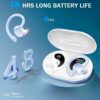

Description
The Rulefiss Q38 is a hook mounted sport earbud, and it is one of the few listings in this catalog that actually names its Bluetooth codecs. That single detail makes it easier to evaluate than most of its neighbors. It also publishes two different latency figures in the same listing and describes its noise handling in a way the structured data does not support, so the picture is mixed rather than clean.
Who this is built for
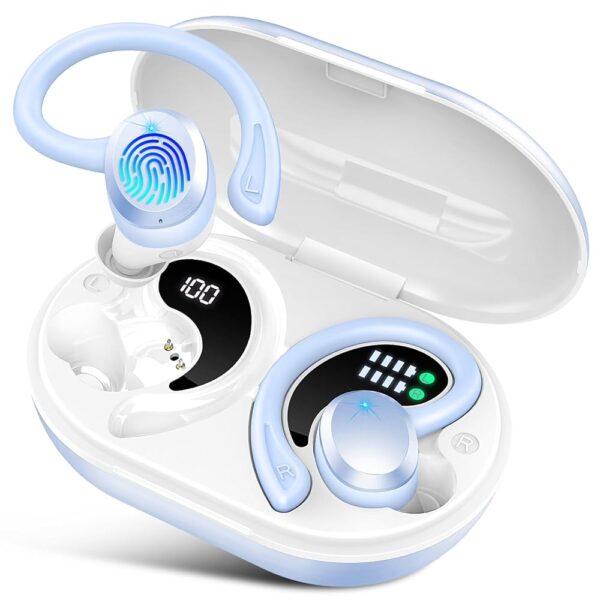
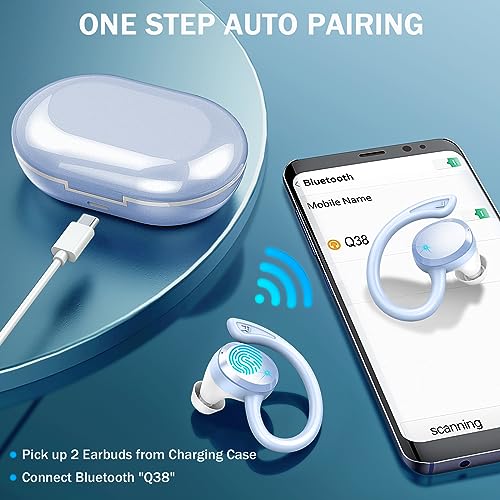
Rulefiss designs the Q38 around a 45 degree flexible ear hook, quoting a single earbud weight of 7 grams and shipping six silicone ear caps across three sizes. That is a gym and training product. The hook plus tip arrangement is the most reliable retention setup in true wireless, and it is what separates this from the bare bud designs that work loose during movement.
The Age Range field reads Teen, Adult. That deserves a note. There is no published volume limit on this product, no parental control and no companion app that could impose one, so nothing restricts how loud a connected phone drives these. A sealing earbud in a gym or on a bus invites the listener to raise the level until the music beats the room, and sustained high volume is how hearing loss accumulates without any warning. We would not describe these as suitable for a younger listener on the strength of an age field alone.
Because the tips seal, situational awareness drops. There is no transparency mode here, so cycling and road running in traffic are not appropriate uses regardless of what the marketing implies. Anyone who needs to hear traffic should be shopping the clip and hook designs in the open ear headphone category.
Connection: AAC and SBC, and two different latency numbers
Rulefiss publishes Bluetooth 5.3 with a 15 meter range and lists the supported profiles: HSP, HFP, A2DP and AVRCP. More usefully, the first feature bullet names the codecs as AAC and SBC. That is a real specification and it is worth something. SBC is the baseline every Bluetooth device supports. AAC is the codec Apple devices default to, so an iPhone owner will get AAC here rather than falling back to SBC, which is a genuine if modest advantage.
What AAC and SBC do not give you
Neither codec carries high resolution audio. The listing title advertises Hi-Fi stereo, and with AAC and SBC as the only options that description is not supportable; high resolution over Bluetooth requires aptX HD, aptX Adaptive or LDAC, and requires the source phone to support the same one. Neither is claimed here. Buyers who specifically want a high resolution codec should compare the EarFun Air Pro 4 review, which names its codecs and the device support each requires. Android owners looking for AAC handling done properly on an Apple oriented set can also compare the Apple AirPods 3 review.
Latency is where the listing contradicts itself. The structured Audio Latency field records 31 milliseconds. The second feature bullet says 51 milliseconds. Those are meaningfully different for anyone using these for gaming or video, and the listing gives no way to know which is current. The same bullet also claims that Bluetooth 5.3 improves transmission speed by 150 percent and stability by 50 percent over 5.2, and the first bullet claims the diaphragm increases audio frequency by 65 percent. None of these percentages names a baseline or a test method, and they should be discounted. Multipoint pairing and wear detection are not mentioned anywhere.
Battery: six to eight hours in the ear, forty eight with the case
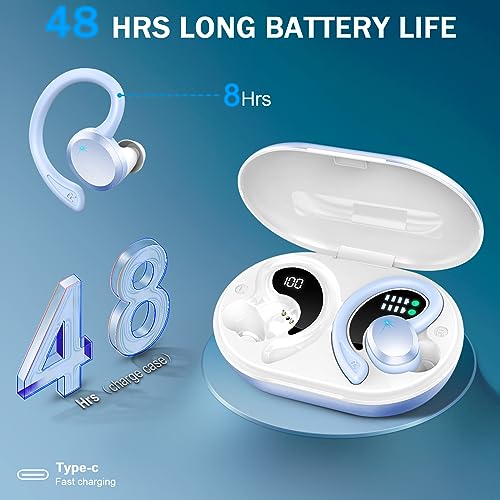
Two structured fields both record 48 hours, one labeled Battery Life and one labeled Carrying Case Battery Average Life, which places the combined total in the field meant for bud runtime. The feature bullets give the real per charge figure: up to 6 to 8 hours of playtime.
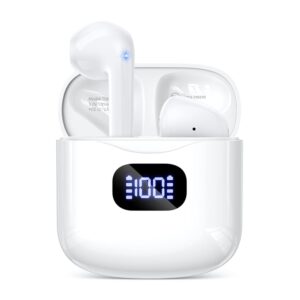
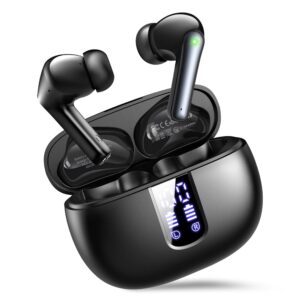
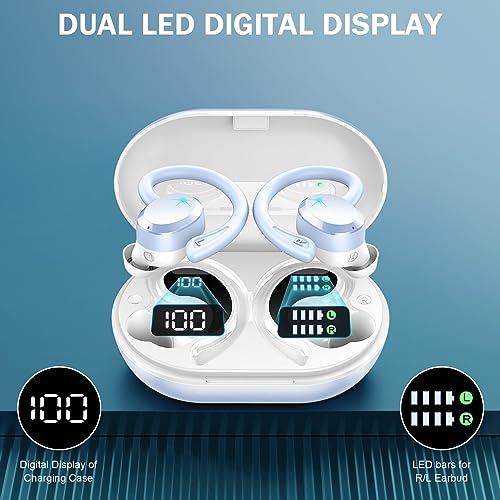
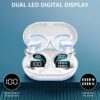
Plan around 6 to 8 hours from the buds and 48 hours in total. The case is 800 mAh and takes 1.5 hours to charge, and Rulefiss claims a 10 minute quick charge yields 2 hours of playback, which is a useful figure for anyone who forgets to dock the case. The case also carries a percentage display reading from 1 to 100 rather than a coarse three light indicator, which is a small but real convenience. All playtime ratings are best case measurements taken at moderate volume.
Fit, sound and the water rating
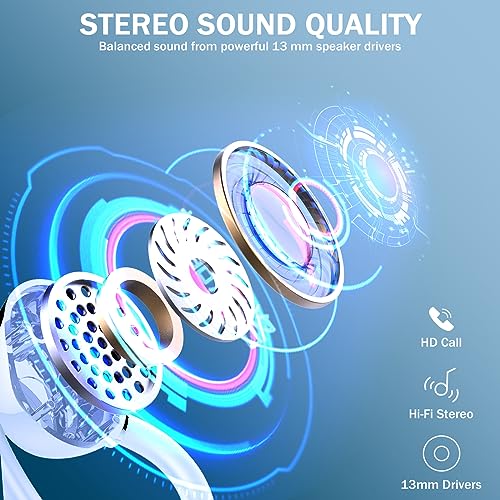
Six ear caps across three sizes ship in the box, and tip fit is the specification with the largest effect on how any sealing earbud sounds, since a leaking seal drains low frequency energy and leaves the result thin. The driver is 14.2 mm with a composite diaphragm, sensitivity is 108 dB and impedance is 32 Ohm, all of which are plausible and phone friendly figures. Frequency range is quoted as 20 Hz to 20,000 Hz, the standard audible span, while a separate Frequency Response field holds only the fragment 20 KHz.
The noise handling needs care. The listing title says noise cancelling headset, and the bullets describe clear calls. The structured Noise Control field says Passive Noise Cancellation, which is attenuation from the tip seal and nothing more. There is no active cancellation documented anywhere in this listing, and no decibel reduction figure is given. Buyers who want cancellation for a commute should treat this as absent and compare a set that documents it, such as the Sony WF-C700N review.
The water rating is written three ways. The product title says IP7 Waterproof, which is not a valid code, since the IP scheme requires two characters after the letters. Bullet four says IP-X7 with a hyphen, which is a formatting error for IPX7. The structured field says Waterproof with no code. IPX7 is the most likely intent, but a buyer should not have to reconstruct an immersion rating from three inconsistent sources. Even a confirmed IPX7 covers fresh water under test conditions only, never seawater, chlorinated pools or high pressure spray, and seals degrade with age and sweat salt. For a hook set whose rating appears consistently, the JBL Endurance Peak 3 review is a fair comparison.
Data problems and a model number mismatch
Ear Placement reads Over Ear while Form Factor reads In Ear and Earpiece Shape reads Hook; only the last is accurate. A Headphones Jack field reads USB-C, which describes the charging port rather than any audio jack. Number of Items reads 5. A Theme field holds seven unrelated values. The Model Name is Q38 while the item model number is EJ-012, and this catalog files the product under the EJ-012 identifier, so confirm which designation the seller uses. Item weight of 71.8 grams describes the whole package; the case alone is 55.18 grams. Rulefiss states a 4.4 out of 5 average across 15,533 ratings, one of the largest samples in this catalog, which we attribute rather than verify.
Who should buy it and who should not
Buy the Rulefiss Q38 if you want a hook fit for training, named AAC and SBC codec support, six ear caps and a case with a percentage display. Six to eight hours per charge and 48 hours total are competitive. Skip it if you want active noise cancellation, since only passive isolation is documented, or if you need a reliable latency figure for gaming, since the listing publishes both 31 and 51 milliseconds. Confirm the actual IP code with the seller before any water exposure. More sport designs sit in the true wireless earbud listings.