



Description
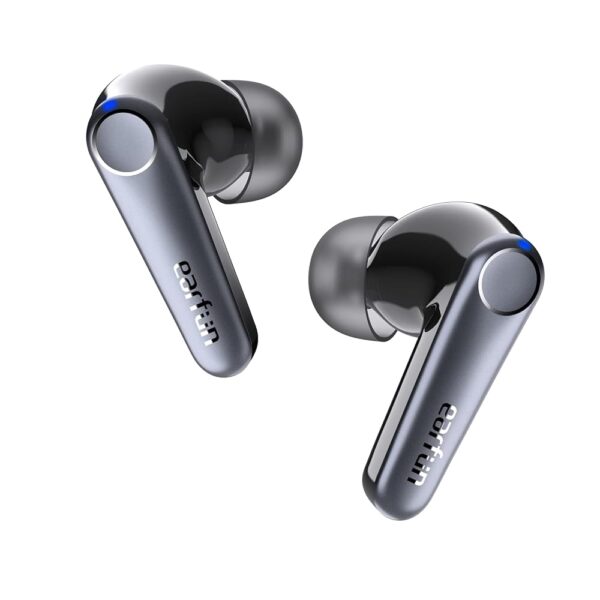
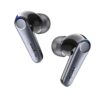
The EarFun Air Pro 3 has the most complete specification of anything covered so far in this catalog. It names its chipset, names its codec, publishes a latency figure, states multipoint outright, breaks its battery into buds and case, and ships four ear tip sizes. It even warns buyers directly that iOS devices cannot use its headline codec, which is the kind of disclosure most brands bury. There is one significant gap, and it is the water rating.
Who this pair is for
This is a feature dense cancelling earbud for someone who wants app control, two device switching and a codec that goes beyond the baseline without paying flagship money. EarFun lists calling, listening, cycling, exercising and running as the intended uses. The cycling entry carries the usual warning: this is a sealing, actively cancelling in ear design, and removing ambient sound on a road removes the cues you need to hear traffic. For road riding an open ear design is the right category.
One further note on the audience. The age range field reads All and the department field includes child. No volume limit is published anywhere. A product presented as suitable for children with no stated maximum output offers no protection against extended loud listening, and this review will not describe it as safe for a child’s hearing.
Connection: the codec question answered properly
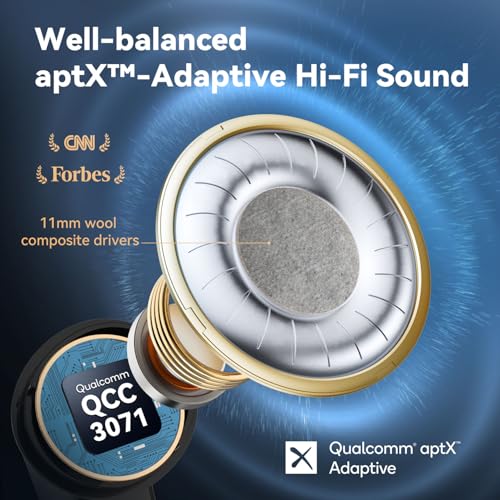
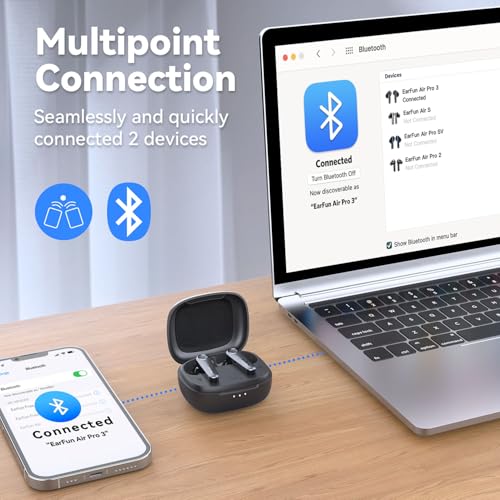
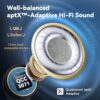
EarFun states the Qualcomm QCC3071 chipset and aptX Adaptive, Bluetooth 5.3, a 10 meter range and an audio latency of 55 milliseconds in both the bullets and the structured specification. Multipoint is stated explicitly as connecting and switching between two devices at once, which is the feature that most changes daily use and which the majority of listings in this catalog never mention at all.
What aptX Adaptive needs, and EarFun’s own warning
aptX Adaptive is a Qualcomm codec that varies its bitrate with the radio environment, trading resolution for stability as conditions change. It works only when the source device supports it, which in practice means an Android handset with a compatible Qualcomm chipset and the codec enabled. EarFun says so directly in the first bullet: iOS devices are not compatible with aptX Adaptive. That is an unusually honest sentence for a product listing and it should be taken at face value. On an iPhone you will be listening over AAC or SBC, and the codec you are paying for will not be available to you.
Check your own phone’s developer or Bluetooth settings for aptX Adaptive before buying on that basis. Note also that no aptX Lossless or LDAC claim is made here, so nothing on this page supports a lossless description, and aptX Adaptive itself is a lossy codec regardless of how well it performs. The 55 millisecond latency figure is low enough that video lip sync should not be visibly wrong, which is a real advantage over products that publish nothing at all or, like the JBL Live Pro 2, publish 120 milliseconds.
Battery: 9 hours in the buds, 36 in the case
EarFun states 9 hours from a single charge and 45 hours in total using the case, and the structured fields back it up exactly: battery life 9 hours, carrying case battery average life 36 hours, case capacity 520 mAh. Nine plus thirty six equals forty five. Nothing has been double counted and nothing has been inflated. Quick charging is quoted at 10 minutes for 2 hours of playtime, and the case supports wireless charging as well as USB-C.
The one figure missing is the same one missing from every cancelling earbud in this catalog: EarFun does not publish a separate playback time with noise cancellation switched on. Cancellation runs microphones and processing continuously and always costs runtime, so the real figure with QuietSmart active will be below 9 hours. Ask before buying if that matters, and treat the 9 hour number as a best case measurement at moderate volume.
Cancellation, fit and the missing IP code
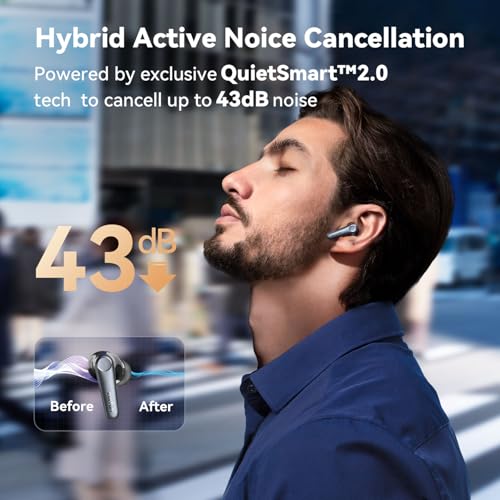
EarFun claims hybrid active noise cancellation branded QuietSmart 2.0, reducing environmental noise by up to 43 dB, with selectable cancellation modes in the app. Two things belong on that number. No test standard is named, so it cannot be compared with any other brand’s figure. And decibel reduction claims are peak values at particular frequencies, not an average across the band. Expect real reduction of constant low frequency drone such as engine and cabin noise, and much less against speech. Cancellation does not make an environment silent, whatever the marketing says.
Call handling uses six microphones with Qualcomm cVc 8.0 environmental noise cancellation, which processes your outgoing voice rather than what you hear. The distinction matters and EarFun keeps the two systems clearly separate in its own copy, which is more than most manufacturers manage.
Fit is the quiet strength here. Ear tips ship in extra small, small, medium and large. Four sizes is one more than the usual three and genuinely widens the range of ears this will seal in, which matters twice over on a cancelling earbud: seal decides both perceived bass and how much work the cancellation has to do. Drivers are 11 millimeter wool composite units, sensitivity is 100 dB and impedance 32 ohms, all plausible and all published.
The water rating is the gap. The specification field reads waterproof and no IP code appears anywhere on the listing, in the title, the bullets or the structured data. A further bullet asks you to dry the earbuds before returning them to the charging case, which is sensible advice and also an indication that the protection is limited. This review will not call the Air Pro 3 waterproof. Treat the rating as unpublished, ask EarFun for the code before training in it, and note that no consumer IP rating covers seawater or pressurized water and that seals degrade with age.
What else to weigh
The EarFun Audio app covers a 10 band custom equalizer, cancellation mode switching, touch control remapping and firmware updates. A firmware update path is worth more than it sounds on a Bluetooth product, because connection and call bugs are commonly fixed after launch.
The specification carries the usual noise. The batteries field claims three nonstandard batteries are required, the frequency response field reads 20 KHz as a single value which is not a response specification, and the headphones jack field reads usb. Item weight appears as 52 grams and 1.83 ounces, which do not agree; the 52 gram figure matches the carrying case weight field, so both are describing the case rather than the earbuds.
EarFun records the sales position as ranked 4,297th in Electronics and 577th in earbud and in ear headphones, on a 4.3 star average across 8,102 ratings since December 2022. The EarFun Air Pro 4 is the direct successor. For competitors that also name a codec, the CMF Buds Pro 2 states LDAC, while the Soundcore Liberty 4 NC and the Sony WF-C700N compete on cancellation. All appear in our true wireless earbud listings and the wider earbud headphones section.
Who should buy it, and who should not
Buy the EarFun Air Pro 3 if you use an Android phone with aptX Adaptive support, you want genuine multipoint, a 10 band equalizer and four tip sizes, and you value a battery split that adds up correctly. It is the best documented listing in this group by a wide margin. Skip it if you are on an iPhone and were buying for the codec, because EarFun tells you outright that it will not work. And do not treat it as a training pair until the manufacturer publishes an IP code, because the word waterproof on its own is not a rating.