





Description
What this pair is and who it suits
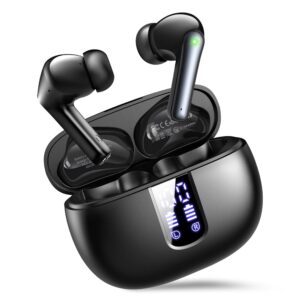
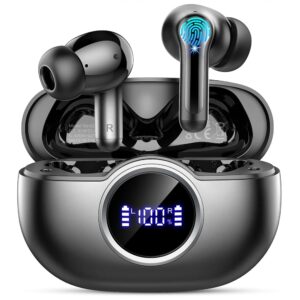
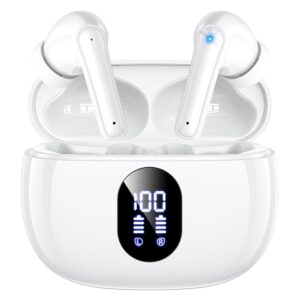
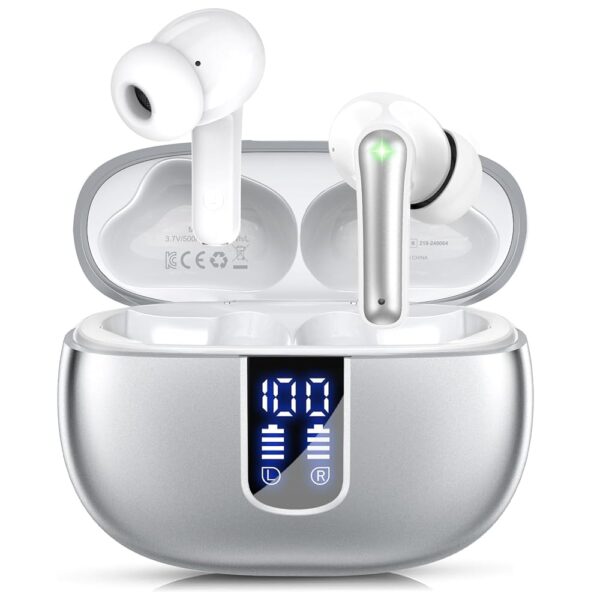
The foxotin T16 is a budget sealed in-ear true wireless earbud with a charging case that carries an LED charge display. It competes on three visible things: a long combined battery number, a large driver figure, and a case that tells you how much charge is left.
The buyer served here is someone who wants cheap, light earbuds for commuting, podcasts, chores and calls, who charges by what the display says rather than by habit, and who is not expecting active noise cancellation or a named codec. Anyone who needs verified specifications before committing should read the next three sections carefully, because this listing contains one of the clearest specification errors in the catalog.
The IP code in the title is not a real code
The product title advertises “IP7 Waterproof.” There is no such rating. An IP code has two digits after the letters, one for solids and one for liquids, and where the solids figure is not tested it is replaced with an X, which is why valid codes read IPX4, IPX5, IPX7 or IP57. “IP7” on its own is not a code the standard defines, so as published, the title states no water rating at all.
A bullet further down the same listing then claims IPX7 waterproof protection, and the specification table records the water resistance level as the bare word “Waterproof” with no code. Three statements, one of them invalid, one of them a real immersion rating, and one of them a word rather than a specification. We are not going to pick the flattering reading. If water protection matters to you, treat this product as unrated until foxotin publishes a valid code, and ask the seller directly. For what it is worth, if the IPX7 bullet is the accurate one it would mean fresh water immersion at roughly one meter for about thirty minutes, which would cover sweat and rain comfortably. It would still not cover seawater or high pressure water, and IP protection degrades as seals age.
Connection: Bluetooth 5.3 with a latency figure and no codec
foxotin lists Bluetooth 5.3 with a 15 meter range and claims a latency of 48 milliseconds. Publishing a latency number is unusual at this level and would be a point in the product’s favor, except that the number happens to be identical to the 48 hour battery claim in the same title, which is enough of a coincidence to be worth flagging. Bluetooth 5.3 itself improves connection stability and power behavior. It does not raise sound quality, and it is not a range specification.
No Bluetooth audio codec is named anywhere in the title, the bullets or the specification table. SBC, the baseline every Bluetooth device supports, is therefore the only codec you can assume. There is no published evidence of AAC, which is what iPhones and iPads use, and none of aptX or LDAC, which only function when the phone and the earbuds both support the same one. The bullets describe 3D stereo sound and HD voice technology, neither of which is a specification, and nothing here supports describing these as high resolution. Driver size is listed at 14.2mm with no response or sensitivity figure to go with it.
The impedance figure does not fit
The specification table lists impedance at 110 ohms. Wireless earbuds are typically 16 to 32 ohms, because the amplifier inside a bud that size cannot drive a high impedance load to a useful level. A 110 ohm figure on a battery powered earbud is not credible and should be read as a data entry error rather than a design choice.
Battery: 48 hours with the case, and no bud figure
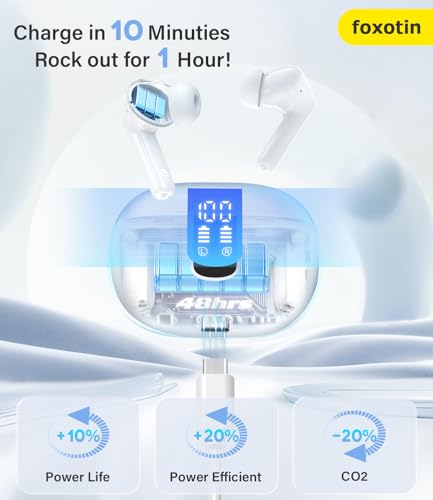
The title and the bullets both quote up to 48 hours of battery life with the charging case. A ten minute charge is quoted as returning about an hour of playtime. What the listing never states is how long the earbuds run on a single charge before they go back in the case, which is the number that actually governs whether they survive a flight, a shift or a long walk.
The specification table records Battery Life as 48 hours and the carrying case battery average life as 40 hours, which together imply something like eight hours from the buds, but the listing never says so and inferring specifications is not the same as reading them. Treat the bud runtime as unpublished. Always separate the two figures: the combined number is what you get across roughly five case refills, and it tells you nothing about a single listening session. The case holds 500mAh, weighs 41 grams and recharges in about two hours over USB-C, and it carries an LED display for the remaining charge, which is the most genuinely useful feature on the page.
foxotin also claims the battery technology delivers “10% more power efficiency and a 20% longer lifespan than standard Bluetooth earbuds.” No baseline product is named and no test is described, so there is nothing to verify. Quoted playtimes across the whole category are measured at moderate volume, and higher volume shortens them.
Fit, controls and the manufactured statistics
Three silicone ear tip sizes are included, small, medium and large, which is the standard selection and a real specification. Seal decides how much bass you hear on any sealed earbud, so if these sound thin the tip size is the first thing to change. The specification table lists noise control as sound isolation, which is accurate: the quietness comes from the tip blocking the canal, and there is no active noise cancellation anywhere on this product.
Controls are capacitive touch sensors handling music, calls, volume and the voice assistant. The listing claims the design minimizes accidental inputs “by 4%” and that the 45 degree ergonomic fit draws on “insights from over 10,000 auricle tests.” Neither claim has a baseline, a method or a source, and a four percent reduction in accidental touches is not a figure anyone could measure meaningfully. Read them as copy.
Two more fields are import noise rather than data. The “Theme” and “Cartoon Character” entries both contain a run of feature phrases such as “LED Power Display” and “Long-lasting Battery Life,” inherited from a template. The compatible devices field lists every iPhone model from the X to the 16, which is padding rather than a compatibility statement.
Where it sits, and what else to weigh
Amazon lists the T16 as ranked 1,620th in Electronics and 243rd among earbud and in-ear headphones, with a 4.8 star average across roughly 217 ratings. That is a high average on a small sample from a brand with no track record, which is worth weighing differently from the same score across several thousand reviews. Worth knowing before you shop: “T16” is a model designation used by several unrelated sellers in this catalog, including the bmani T16 wireless earbuds and the Catitru T16, which are different products from different brands. Check the seller name, not the model code.
Because these seal the ear canal, they reduce awareness of traffic and are not the right choice for cycling or road running. If you want a similarly priced pair from a brand with a longer history and better documented specifications, the TOZO T10 line and the Skullcandy Dime 2 are the comparisons to make. Everything in this shape lives in our true wireless earbud reviews, with the wider format in our earbud headphone reviews.
Buy it, or skip it
Buy the T16 if you want light, cheap earbuds with three tip sizes, a genuinely useful LED charge readout and a 48 hour case total, and you are treating the rest of the specification as decoration. Skip it if water protection matters, because the title’s IP code is not valid and the listing contradicts itself twice on the point. Skip it too if you need a bud runtime figure, a named codec, or an impedance number that makes physical sense.