

Description
The Wasart J55 is a budget true wireless set, ASIN B0CD18SLCR, listed since August 2023, holding a 4.4 star average across 4,744 ratings and ranked 2,585th in Amazon’s Earbud and In-Ear Headphones category. Nearly five thousand ratings is a large sample for this price bracket. The specification is also more complete than most, publishing an impedance figure, a driver size and a frequency range, which makes the one broken field on the page stand out more sharply.
Who this is built for
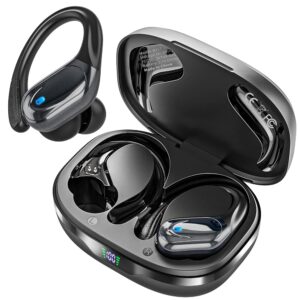
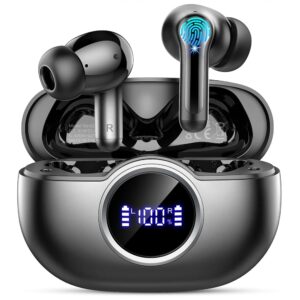
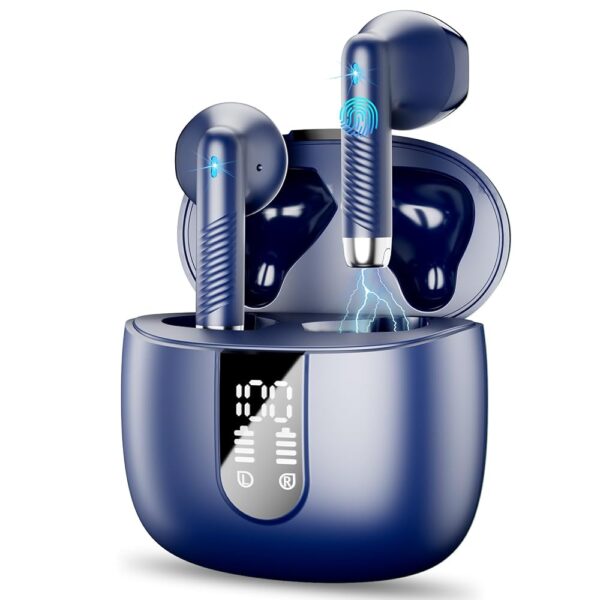
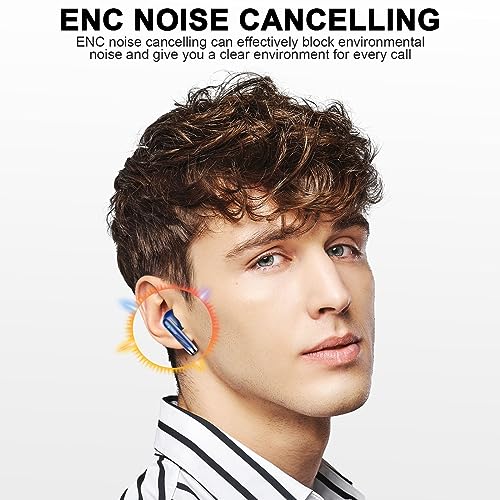
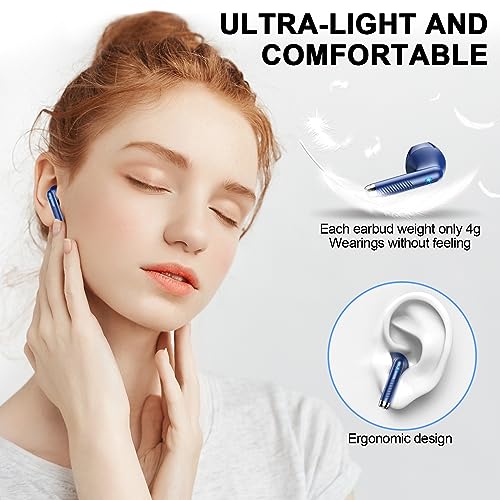
The listing points squarely at training and commuting. It quotes a 3 gram per bud weight, a pocket sized case with a dual LED digital display, and touch controls covering the full set of gestures. The buyer this suits wants something light and cheap that survives sweat, and who is happy with passive sealing rather than active cancellation. Noise Control is listed as Sound Isolation, meaning silicone tips blocking sound physically. There is no ANC anywhere in this specification, and the listing does not claim any, which is more honest than several competitors in the same bracket.
It is not the right product if you need cancellation on a plane or in an open office. For that, sets with a published hybrid ANC design such as the TOZO T9 answer the question directly rather than relying on the seal alone.
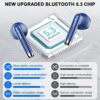
Connection: Bluetooth 5.3 and the profiles that are not codecs
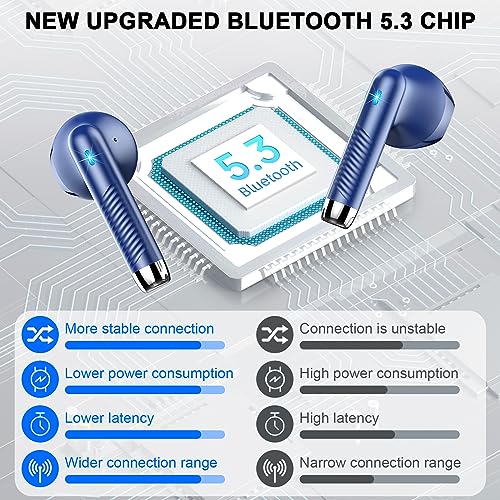
The listing states Bluetooth 5.3 and names the supported profiles: HSP, HFP, A2DP and AVRCP. Those are worth reading carefully, because they look like audio specifications and are not. HSP and HFP handle calls, A2DP handles stereo streaming and AVRCP handles playback controls. Every Bluetooth audio device supports them. None of them is a codec.
No codec is named anywhere on this page. There is no SBC, AAC, aptX or LDAC claim. Where no codec is published, assume SBC only, which is the baseline every device supports and the lowest quality tier in general use. The listing does not make a high resolution claim, and that restraint is worth noting, because plenty of sets in this bracket do while publishing exactly the same amount of evidence.
Latency, range and pairing
The bullet says the low latency is “more than 3 times faster than a conventional wireless earphones”. No baseline is defined and no figure in milliseconds is given, so that sentence carries no usable information. Range is quoted at 32 feet, the normal line of sight number, which drops through walls and bodies. The buds pair with each other automatically when taken from the case. Multipoint pairing to two devices at once, a companion app, transparency mode and wear detection are all absent from the specification. Assume none of them exist.
Battery: the arithmetic on this listing actually works
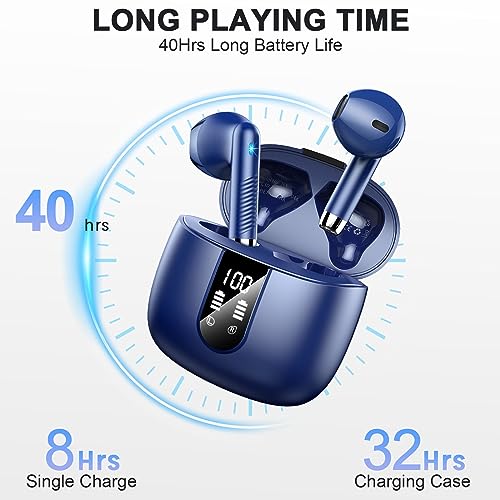
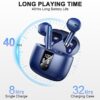
This is one of the better battery disclosures in the catalog. The bullet gives 8 hours of listening per charge from the buds and 32 hours held in the charging case, adding to the 40 hour total in the title. Eight plus thirty two is forty, so the three figures agree with one another, which is not something you can take for granted here. The specification block independently lists Battery Life as 8 Hours, confirming the per bud number.
Eight hours per charge is the figure to plan a day around. The 40 hour total is how long the whole system runs between wall charges, and it assumes four full recharges from the case. Both are best case numbers, measured at moderate volume, and there is no ANC to switch off, so the usual hidden variable does not apply here. USB-C quick charging is quoted without a specific minutes to hours conversion, and the case carries a dual LED digital display showing charge levels.
For a comparison in the same runtime band, the XIAOWTEK A40 Pro with its stated 50 hour total makes a longer claim in the same shape of product.
The audio figures, and the water code that does not exist
Two audio specifications are published, which is unusual. Impedance is 16 ohms and the drivers are 6 millimeter moving coil units, with a frequency range of 20 Hz to 20,000 Hz. Sixteen ohms is easy for a phone or a bud amplifier to drive. Six millimeters is small, which usually means less low end authority than a 10 or 13 millimeter driver, though enclosure design matters as much as diameter. The 20 Hz to 20,000 Hz range is the standard human hearing span and is quoted by almost every headphone made, so it distinguishes nothing. There is no sensitivity figure and no measurement tolerance attached to the range, so it is not a comparable number.
The water claim is the broken field. The title and the fourth bullet both say “IP7 Waterproof”, and the specification says “Water Resistance Level: Waterproof”. IP7 is not a valid IP code. Real codes carry two positions, one for solid ingress and one for liquid, which is why you see IPX4 for splashes and IPX7 for immersion. “IP7” cannot be checked and does not tell you which digit was intended. The correct reading is that no water rating is published. The bullet describes nano coating for sweat and rain, which is splash language, so treat these as sweat resistant at best. No IP rating, even a real one, covers seawater, pool chemicals or pressurized water, and seals degrade with age and heat.
Fit, controls and a use case the listing gets wrong
The earpiece is a rounded silicone tip and the buds are quoted at 3 grams each, which is genuinely light. The number of ear tip sizes in the box is not published, and that is a meaningful gap, because a sealed design that does not seal loses its bass and sounds thin. The included components field simply reads “Cable”, which tells you nothing about spare tips. Controls are capacitive touch with a full gesture set covering play and pause, volume, track skip, calls and the voice assistant, which is more complete than many rivals that drop volume control entirely.
Both the Specific Uses and Recommended Uses fields list Cycling. That recommendation should be rejected. These are sealed in ear buds with passive isolation and no transparency mode, which is exactly the design that removes your awareness of traffic. Use them on a treadmill or in a gym. For road use, the designs that leave the ear canal open are the correct product shape.
One further oddity: the specification includes an “Is Autographed” field reading No, which is inherited from a collectibles category and has nothing to do with headphones.
Alternatives worth putting alongside it
The occiam T9 sport earbuds cover the same workout brief at a similar price, and the MOZOTER DBK02 compete on call clarity and battery. A broader shortlist of comparable sets sits in the in ear and earbud style headphones section.
Who should buy this, and who should not
Buy it if 8 hours per charge and 40 hours total matches your day, you want a light bud with a full touch gesture set, and you value a listing whose battery arithmetic is internally consistent. The published impedance and driver size put it ahead of most of its direct rivals on transparency, and 4,744 ratings at 4.4 stars is a substantial signal.
Do not buy it expecting active noise cancellation, since none is claimed or specified. Do not treat “IP7” as an immersion rating; confirm the real code with the seller before exposing it to anything more than sweat. Do not use it on a bicycle despite the listing recommending exactly that. And ask how many ear tip sizes ship in the box, because the answer decides how these will sound to you.