



Description
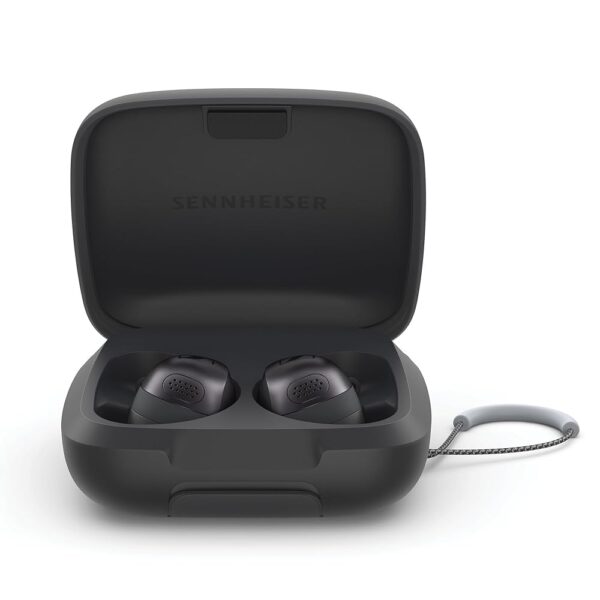
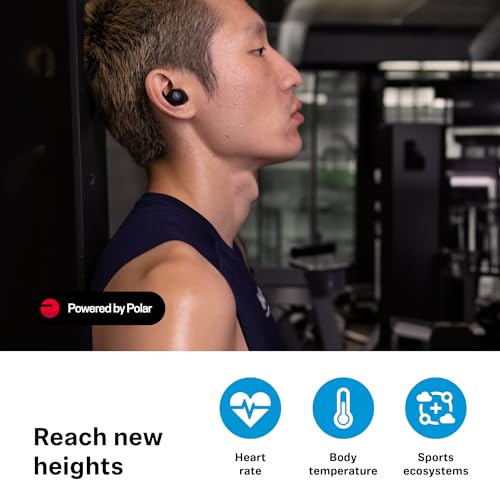
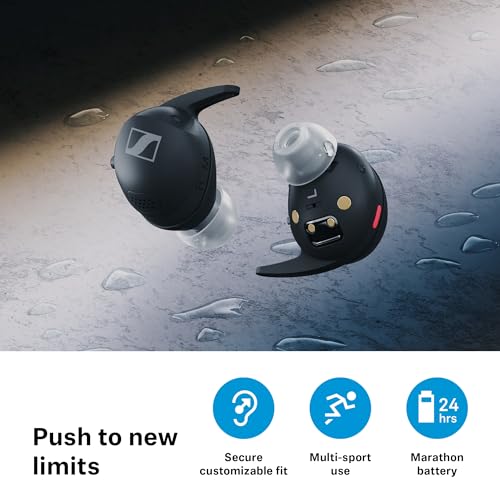
The Sennheiser MOMENTUM Sport is the company’s training focused true wireless set, ASIN B0CXFBRY8R, listed since April 2024 in graphite. It is unusual in this catalog because it is not primarily an audio product: it carries in ear sensors developed with Polar that read heart rate and body temperature and feed that data to fitness apps. It also carries the lowest customer rating of any premium set covered here, a 3.5 star average across 168 ratings, ranked 6,071st in Amazon’s Earbud and In-Ear Headphones category. Both facts belong in the same paragraph, because the sensors are the reason to consider it and the rating is the reason to be careful.
Who this is built for
The buyer is an athlete who already trains with a watch or a training app and wants heart rate from the ear rather than the wrist. Optical heart rate at the ear canal is generally less disturbed by wrist movement than a watch sensor, and the body temperature reading is genuinely uncommon on earbuds. Sennheiser describes syncing with apps and devices, and lists compatibility with fitness devices, fitness apps and sports watches.
Two cautions belong here. These sensors produce training metrics, not medical measurements, and nothing on the listing presents them as a diagnostic tool. Treat the numbers as trend data. Second, the sensor package is the premium in the price, so if you do not want ear based biometrics you are paying for hardware you will not use, and something like the Jabra Elite 8 Active covers the secure sports fit without it.
Connection: Bluetooth 5.2 and an unpublished codec list
The specification states Bluetooth 5.2. That is one version behind the 5.3 and 5.4 chips common on much cheaper sets, and the difference matters less than the marketing on those cheaper sets implies: version numbers affect connection stability, power draw and LE Audio groundwork, not sound quality.
What is not published is the codec list, and on a product at this price that is the specification a buyer most needs. There is no SBC, AAC, aptX, aptX Adaptive or LDAC claim anywhere in this listing. Without a named codec there is no way to assess the audio ceiling, and no high resolution claim would be supportable from this page. Anyone buying for sound quality rather than sensors should ask the seller which codecs the firmware carries and check whether their own phone supports the same one, because a codec only works when both ends have it.
Multipoint pairing is not mentioned in the specification. Neither is wear detection. Sennheiser’s Smart Control app is implied by the fitness syncing but is not named as a feature on this page.
Adaptive ANC and transparency
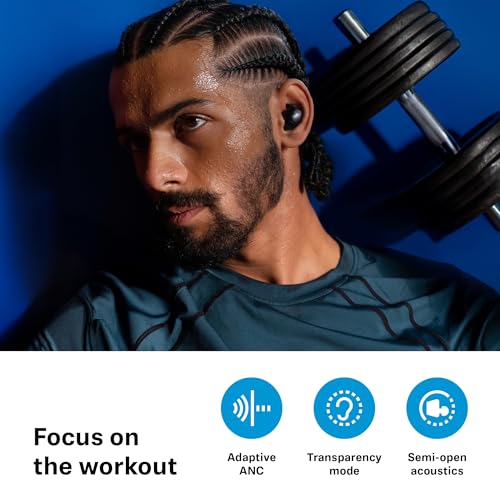
The first bullet lists adaptive ANC and a transparency mode. Adaptive cancellation adjusts its strength to the surrounding noise rather than running at a fixed level. No decibel reduction figure is published and no test standard is named, so there is no number to compare against a rival. What ANC of any kind does well is constant low frequency noise: gym air handling, road rumble, cabin drone. It does much less against speech and sudden sounds, and it never makes an environment silent.
The transparency mode is the more useful feature for this product’s intended use, since it passes outside sound through deliberately. It is not a substitute for hearing traffic properly. These are sealed in ear buds, so if you run or ride on roads, keep transparency on and do not rely on it as a safety system. Open designs are the safer product shape for road use, and the headphones that leave the ear canal open are collected separately for that reason.
Battery: Sennheiser splits the figures properly
The fourth bullet gives both numbers cleanly: 6 hours from the earbuds and 18.5 hours held in the case, adding to a 24 hour total. Six plus eighteen and a half is twenty four and a half, so the figures are internally consistent. Quick charging is quoted at 10 minutes for 45 minutes of playback.
Six hours per charge is short for a 2024 flagship, and the reason is visible in the product: the biometric sensors and adaptive ANC both draw power continuously. The listing does not say whether the 6 hour figure assumes the heart rate sensor is running, which is the variable that matters most for a long training session. If you plan a half marathon with sensors on, confirm that figure with the seller. All quoted playtimes are best case at moderate volume.
For comparison on runtime in a sports set, the Jaybird Vista 2 and the Beats Fit Pro both publish their split in the same way.
Fit, seal and the water rating
This is the strongest part of the specification. The box contains interchangeable silicone ear tips and ear fin sets, which is two independent adjustments: tips for the seal inside the canal, fins for stability in the outer ear. That combination is what keeps a bud in place through impact without relying on tip pressure alone, and it is also what makes the biometric sensors sit consistently against the skin, since a moving sensor reads poorly.
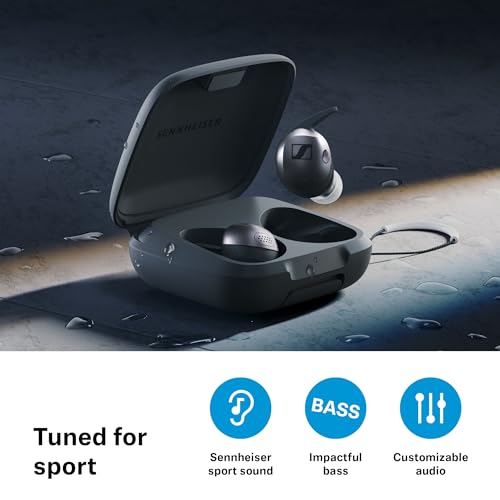
Water resistance is IP55, stated in the third bullet. That is a two digit code, so both halves mean something: 5 for dust, meaning limited ingress that does not interfere with operation, and 5 for water, meaning protection against low pressure water jets from any direction. IP55 is sweat and splash resistance and rain resistance. It is not an immersion rating and these are not waterproof. Do not swim in them, do not submerge them and do not hold them under a tap. The specification field separately reads only “Water Resistant”, which is a phrase rather than a code, so IP55 from the bullet is the figure to work from. No IP rating covers seawater or pool chemicals, and seals degrade with age and heat.
What the listing does not publish, and the alternatives
There is no driver size, no impedance and no sensitivity figure. The frequency range appears as “[20 Hz – 20,000 Hz]” with the square brackets left in from the import, and it is the standard human hearing span quoted by almost every headphone made. The item model number reads MeiL-INR145001S090A1, which is a warehouse string rather than a model name. There is also an “Is Autographed” field reading No, inherited from a collectibles category. Package weight is 6.7 ounces, which is the shipped box, not the buds.
Within Sennheiser’s own range, the MOMENTUM True Wireless 2 is the audio focused alternative without the sensor package. The broader shortlist of comparable sets sits in the true wireless earbuds section.
Who should buy this, and who should not
Buy it if ear based heart rate and body temperature during training is the feature you want, you already run a Polar or similar training platform, and you value ear tips and fins as separate fitting adjustments. On fit hardware and on honest battery disclosure this listing is above average.
Do not buy it purely for sound, because no codec is published at a price where that is the key question. Do not treat IP55 as waterproof. Do not plan long sessions around the 6 hour figure without confirming whether it assumes the sensors are active. And weigh the 3.5 star average from 168 buyers seriously: it is well below what a Sennheiser badge normally carries, and nothing in the specification explains it.