Description
The product, and the reason this review reads differently
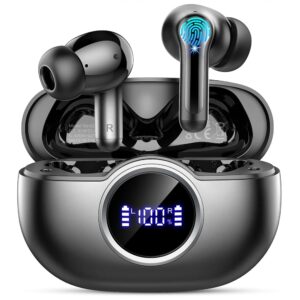
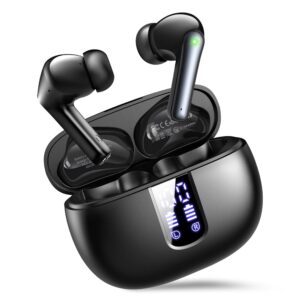
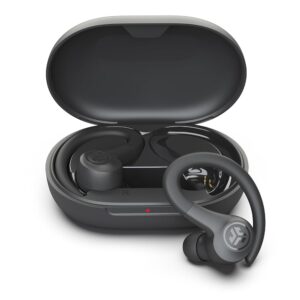
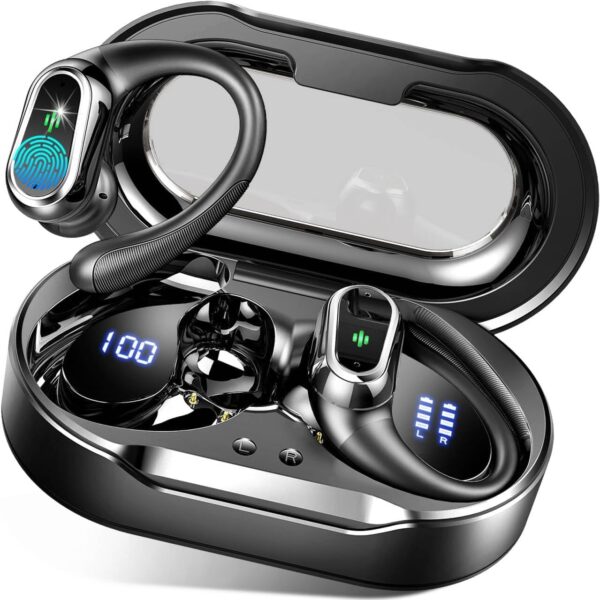
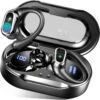
The Rolosar Q76 is a sealed in-ear true wireless earbud with soft ear hooks, sold for running and gym use with a transparent case carrying a dual LED charge display. On the face of it that is a conventional product in a crowded segment, and Amazon ranks it 145th in the whole Electronics category and 30th among earbud and in-ear headphones, with a 4.8 star average across roughly 629 ratings. Those are strong placements.
The listing behind them is one of the least internally consistent in this catalog. It publishes four different battery figures, two different Bluetooth versions, two different ranges and an IP code that does not exist. None of that means the earbuds are bad. It means you cannot plan around the specification, and this review is going to name every contradiction rather than pick the flattering reading.
The battery is quoted four different ways
Here is every figure on the page. The title says 75 hours. A bullet says about 10 hours of playback per charge with the case extending usage to 50 hours. The specification table lists Battery Life as 15 hours. A separate specification field lists the carrying case battery average life as 60 hours. The case is 430mAh and takes about two hours to charge over Type-C.
Ten and fifty come from the same sentence and are at least internally coherent, so the bullet is the most credible reading: roughly 10 hours from the earbuds, roughly 50 hours in total with the case. The 15 hour and 60 hour entries in the specification table match nothing else, and the 75 hour figure in the title matches nothing at all. Treat 10 hours as the planning number and treat every larger figure as unverified.
This is worth spelling out because it is the single most common way headline battery claims mislead. Bud runtime and total with case are two separate specifications, and when a listing quotes only the big number, the big number is the one built from repeated case refills. When a listing quotes four numbers, as this one does, the smallest one that appears in a complete sentence is usually the real single charge figure. The dual LED display on the transparent case is genuinely useful here, because it shows the actual state of both the buds and the case regardless of what the marketing says.
Connection: which Bluetooth version, and which range
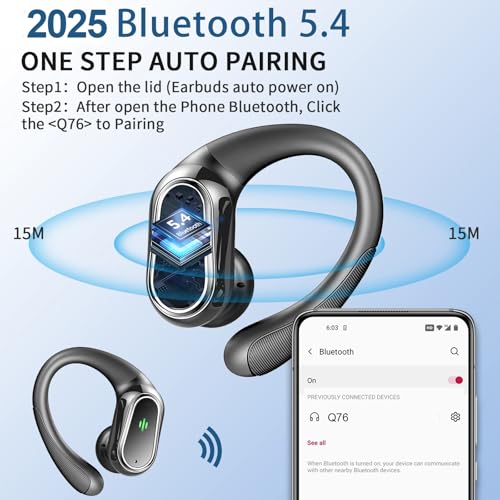
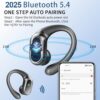
The title and the first bullet say Bluetooth 5.4. The second bullet then says “Benefit from Bluetooth 5.3.” Those cannot both describe the same product. The specification table sides with 5.4. If the version matters to you, treat it as unconfirmed.
The first bullet also claims 5.4 gives “2x faster transfer speeds than Bluetooth 5.3.” That is not what the revision changed. Bluetooth version numbers govern connection stability, power behavior and the availability of features such as LE Audio. They do not double throughput between a phone and a pair of earbuds, and they do not improve sound quality on their own. Range is quoted twice as well, 30 feet in a bullet and 15 meters in the specification table, which is roughly 49 feet. Both are line of sight figures and both will fall sharply through walls and bodies.
The Hi-Fi claim with nothing behind it
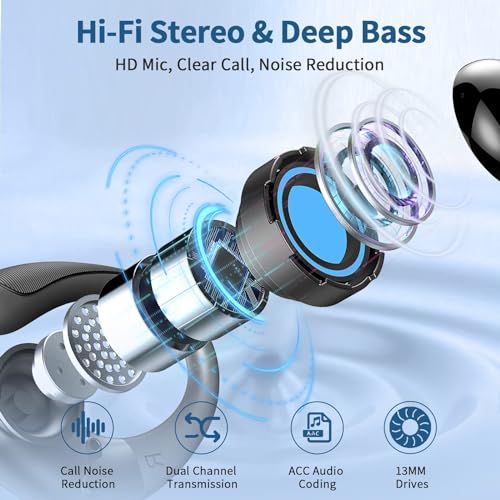
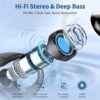
The second bullet is headed “Crystal-clear Call and Hi-Fi Sound Quality” and describes 14.2mm double layer diaphragm drivers producing strong bass, clear mids and bright treble. No Bluetooth audio codec is named anywhere in the title, the bullets or the specification table. That means SBC, the baseline every Bluetooth device supports, is all you can assume. There is no published evidence of AAC, which is what Apple devices use, and none of aptX, aptX HD or LDAC, the codecs actually marketed for high resolution audio, all of which require the phone and the earbuds to support the same one. A high fidelity claim with no codec behind it is unsupported by the published specification, and this review will not repeat it as fact.
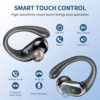
The noise cancelling in the title refers to the ENC microphone system, which processes your outgoing voice on calls so the person on the other end hears less background noise. The specification field for noise control reads “Passive Noise Cancellation, Sound Isolation,” which is the accurate description of what you hear: the ear tip blocking the canal. There is no active noise cancellation on this product for playback, and once you read past the title the listing does not claim any.
The IP code in the title is not valid
The title advertises “IP7 Waterproof” and a bullet repeats “an IP7 waterproof rating.” There is no such rating. An IP code carries two digits after the letters, one for solids and one for liquids, and where the solids figure has not been tested it is replaced with an X. That is why valid codes read IPX4, IPX5, IPX7 or IP57. “IP7” is not defined by the standard, so as published this listing states no water rating at all. The specification table then falls back to the bare word “Waterproof,” which is a word rather than a specification.
If the intended code was IPX7, that would mean fresh water immersion at roughly one meter for about thirty minutes and would cover sweat and rain comfortably. If it was IPX4, it would mean splashes only. There is no way to tell from this page which was meant. Until Rolosar publishes a valid code, treat the water protection as unstated and ask the seller before exposing these to anything more than sweat. No IP rating covers seawater or high pressure water in any case, and protection degrades as seals and port covers age.
Fit, junk fields and where it sits
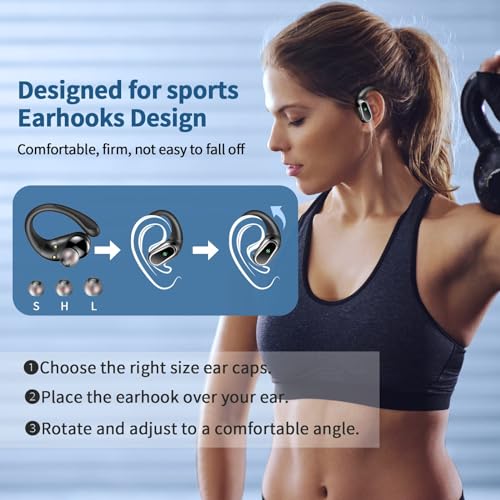
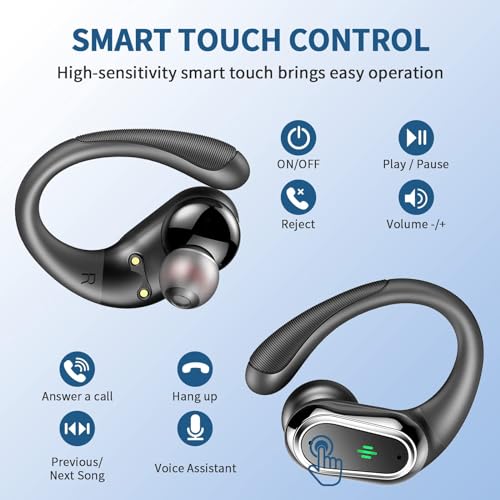
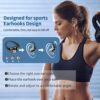
Three sizes of silicone ear tip are included, small, medium and large, alongside soft ear hooks that carry the retention load. Seal is what decides how much bass a sealed earbud produces, so trying all three sizes is the first thing to do rather than the last.
Several specification fields are not data at all. “Specific Uses For Product,” “Recommended Uses For Product,” “Theme” and “Cable Feature” each contain a full marketing sentence rather than a value. The battery field claims the product requires “3 C batteries,” which is impossible for a sealed rechargeable earbud. Item weight of 81 grams is the shipping package. Both the Ear Placement and Form Factor fields read “Over Ear,” which normally means a headphone with cups, when this is an in-ear bud with a hook. And the title advertises “2025” while the listing date shows September 2024.
Because these seal the ear canal, they are the wrong choice for cycling or road running, where hearing traffic matters more than isolation, and the open canal designs in our open ear headphone reviews are the honest alternative. Within the same hooked sports format, the Rulefiss Q38 sports earbuds, the Sajawass BX30, the occiam T19 and the Vislla T7PRO are direct competitors, several of which publish cleaner figures. The wider format sits in our true wireless earbud reviews.
Buy it, or skip it
Buy the Q76 if you want hooked retention, three tip sizes, a dual LED case display and roughly 10 hours per charge, and you are willing to buy on the strength of its review history rather than its specification. Skip it if you need a confirmed water rating, because the published IP code is not valid. Skip it too if you need to know the battery, the Bluetooth version or the range with any confidence, because this listing publishes four battery figures, two versions and two ranges, and never resolves any of them.