
Description
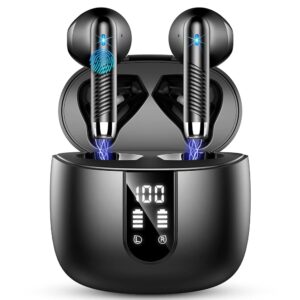
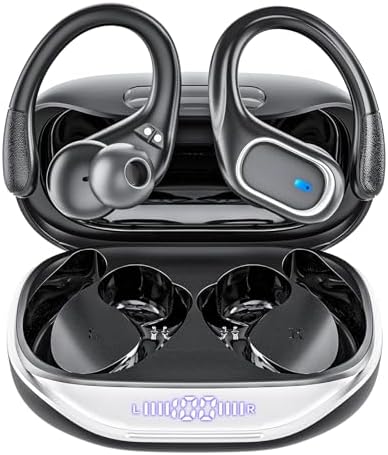
The Catitru T16 is an earhook style true wireless set in black, ASIN B0DKC6TXZT, listed since October 2024, carrying a 4.2 star average across 255 ratings and ranked 4,104th in Amazon’s Earbud and In-Ear Headphones category. It publishes more hardware detail than most sets at this price, including the actual battery capacities in milliamp hours, which is unusual and useful. It also states its total playtime twice, with two different numbers, which is the first thing to sort out.
Who the earhook design suits
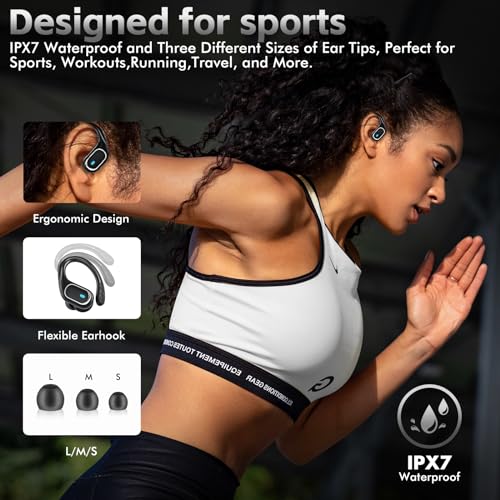
Earhooks are a fit solution rather than an audio one. A soft hook wraps over the top of the ear and carries the weight of the bud, so the bud stays put through impact instead of relying on tip pressure alone. That matters for high intensity training where a normal bud works loose, and for anyone who has lost an earbud on a run.
The tradeoffs are bulk and interference. Hooks compete for space with spectacle arms, hats and helmet straps, and they take a moment longer to put on than a plain bud. Three sizes of ear tips ship in the box alongside the hooks, which is the combination you want: hooks for position, tips for seal. If the hook shape appeals, the Beats Powerbeats Pro are the reference version, and the Jabra Elite Active 65t solve the same secure fit problem without a hook.
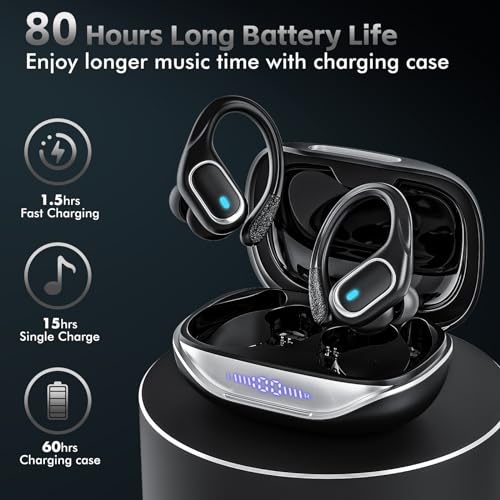
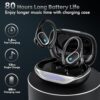
Battery: 80 hours in the title, 90 in the bullet
The product title says 80 hours of playtime. The first bullet says the total is “approximately 90 hours”. Those are two different claims on the same page, and neither is qualified. What the bullet does give you is the underlying hardware: a 70 milliamp hour battery in each bud, a 600 milliamp hour charging case, and up to 8 hours of continuous use per charge at a stated 50 to 60 percent volume.
Those capacities are worth doing the arithmetic on, because they are the most checkable numbers in the listing. A 600 milliamp hour case holding 70 milliamp hour buds gives roughly eight full recharges before charging losses, which at 8 hours each lands somewhere in the seventies of hours in total. That makes the 80 hour figure plausible and the 90 hour figure optimistic. Plan around 8 hours per charge, which is the number that actually governs your day, and treat the total as approximately 80.
Stating the measurement volume of 50 to 60 percent is a genuinely good disclosure, and the honest corollary is that at higher volume you will get materially less. The case charges over USB-C and also supports wireless charging, which is uncommon at this price, and it carries an external digital LED display for charge level. For a comparison on runtime claims in the same bracket, the Catitru i25 from the same brand publishes its figures in the same style.
Connection: Bluetooth 5.3, and nothing about codecs
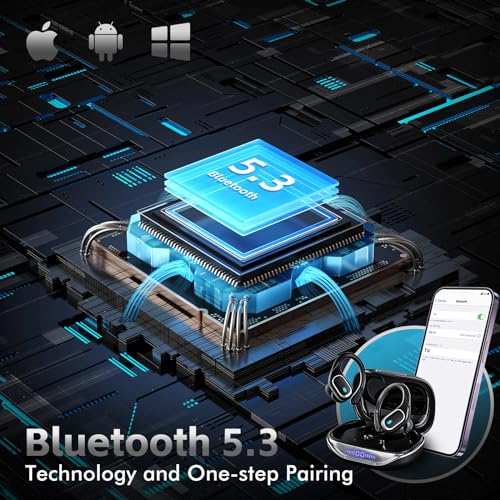
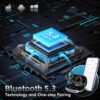
The listing states Bluetooth 5.3 with automatic reconnection when the case lid opens. Version 5.3 improves connection stability and power efficiency and adds groundwork for LE Audio; it does not raise sound quality on its own, and the bullet promising an end to “frustrating lag or connection drops” gives no latency figure in milliseconds to support it.
No codec is named anywhere on this page. There is no SBC, AAC, aptX or LDAC claim, so the working assumption is SBC only, which is the baseline every Bluetooth device supports and the lowest quality tier in general use. The listing does not make a high resolution claim, and none would be supportable if it did. No Bluetooth range figure is published either.
Multipoint pairing to two devices at once is not mentioned. Neither is a companion app, transparency mode, wear detection or firmware updating. Assume none of them are present.
Audio and call hardware
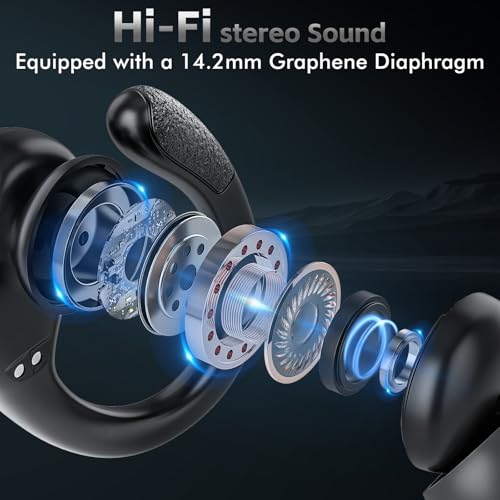
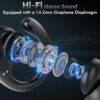
A 13 millimeter speaker is published, which is large for an in ear design and is more than most rivals disclose. There is no impedance, no sensitivity and no frequency response figure to go with it. Call handling is described as a built in microphone plus the snug fit filtering noise, with no microphone count, no ENC or CVC label and no call specification. Treat call quality as unknown.
The water rating, and what the bullet actually describes
The title and the second bullet both state IPX7. That is an immersion rating, covering fresh water to one meter for thirty minutes under laboratory conditions. The problem is that the same bullet then describes what the rating delivers as resisting “water splashes and sweat”, which is the language of IPX4, not immersion. The specification field separately reads only “Water Resistance Level: Waterproof”, which is a phrase rather than a code.
The conservative reading is that this set is built for sweat and rain, and that the IPX7 label should be confirmed with the seller before you rely on it for anything more. Even a genuine IPX7 excludes seawater, chlorinated pool water and pressurized water, seals degrade with age and heat, and the charging case almost never carries the rating that the buds do. The case here supports wireless charging, which means an exposed coil area, so keep it dry regardless.
These are sealed in ear buds with hooks and no transparency mode. They remove your awareness of traffic, so they are the wrong choice for cycling or road running. Use them on a treadmill or in a gym, and look to the designs that leave the ear canal open if you train on roads.
Other claims, oddities and alternatives
The sixth bullet states the T16 is “CarbonFree Certified” and describes energy efficient manufacturing. No certifying body reference number is given, and carbon offset certifications vary widely in what they actually verify, so treat that as an unverified marketing claim rather than a specification.
Two naming points are worth flagging for anyone searching. The model designation T16 is also used by an unrelated brand on another listing in this catalog, so confirm the brand as well as the model number when ordering. Package weight is 4.9 ounces, which is the shipped box rather than the buds, and no per bud weight is published anywhere.
For alternatives, the Raycon Fitness earbuds cover the same training brief with a published battery split, and the broader shortlist sits in the in ear and earbud style headphones section.
Who should buy this, and who should not
Buy it if the earhook fit is what you need, you want a wireless charging case and a charge display at this price, and 8 hours per charge suits your training. Publishing the actual cell capacities and the measurement volume puts this listing ahead of most of its rivals on transparency, and 255 ratings at 4.2 stars is a reasonable signal.
Do not buy it on the total playtime figure without deciding which number you believe, since the page says 80 in one place and 90 in another. Do not treat the IPX7 label as immersion protection while the bullet describes only splash resistance. Do not ride a bike in them. And ask the seller for a codec list and a per bud weight, because neither is published.