
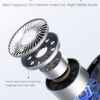
Description
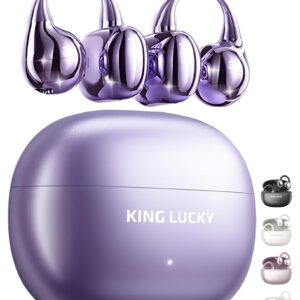
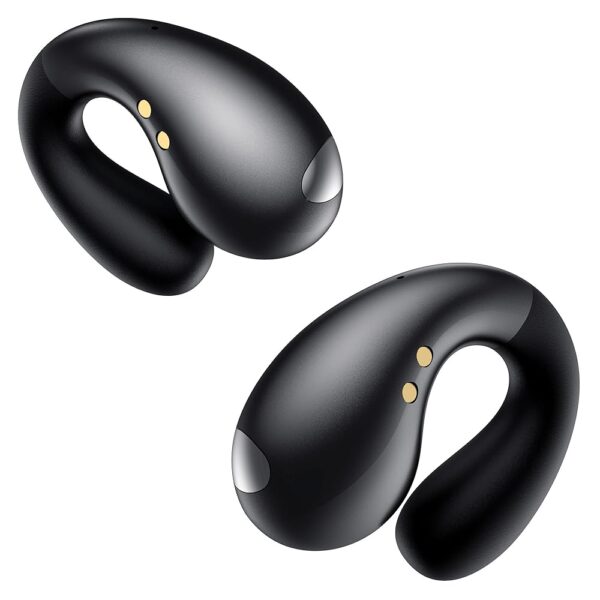
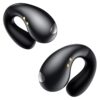
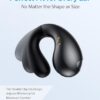
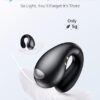
The Boytond S30i is a clip on open ear earbud: a small driver housing that sits in front of the ear canal, held by a flexible arm that hooks around the outer ear. Nothing enters the canal and nothing seals it. The listing describes the product as bone conduction, and that description does not match the hardware the same listing goes on to specify. Naming that contradiction is the first thing this review has to do, because it changes what a buyer should expect from the sound.
Bone conduction and air conduction are not the same thing
Bone conduction works by pressing a vibrating transducer against the cheekbone or the area in front of the ear, so that sound travels through bone directly to the inner ear and bypasses the eardrum. Air conduction, which is how every conventional speaker and earphone works, moves air that the eardrum then picks up. The two produce noticeably different results. Bone conduction leaves the ear canal completely unobstructed and is unusually resistant to wind noise, but it is weak in the low frequencies and can feel like a vibration against the skin at high volume.
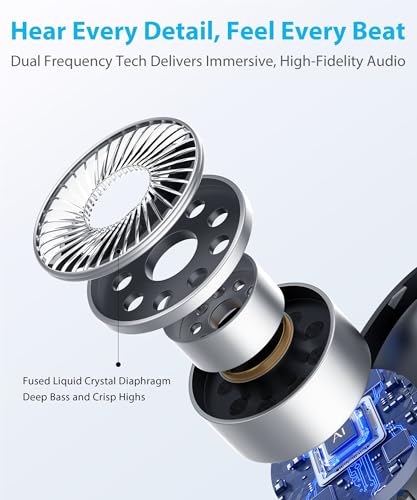
The Boytond listing calls the product bone conduction in its title and again in the feature bullets. The same bullet then states that the sound is powered by 16.3 mm drivers. A 16.3 mm dynamic driver is an air conduction speaker. Clip on designs of this shape are almost always air conduction, aiming a small speaker into the ear from just outside it. On the published specification, the bone conduction label is not supported, and a buyer who specifically wants bone conduction should not order this without asking the seller directly. For a product where the mechanism is stated properly, see our PSIER X11 bone conduction headphones review.
Who the open ear format actually serves
Whichever mechanism is inside, the practical effect of leaving the canal open is the same and it is the real reason to consider this product. The wearer keeps a normal path to ambient sound. A runner hears a car behind them. Someone at a desk hears a colleague without removing anything. A parent hears a child in the next room. Leaving the canal open improves awareness rather than guaranteeing it, since volume still masks traffic. It is nonetheless a genuine advantage that no sealed earbud with a transparency mode fully replicates, because transparency modes reconstruct ambient sound through microphones rather than passing it through.
The limits follow from the same physics. Without a seal, low frequency energy escapes into the room instead of pressurizing the ear canal, so bass is structurally thinner than a sealed design can produce. There is no isolation at all, so a plane, a train or a loud open plan office will simply be audible over the music. Anyone whose priority is blocking noise rather than hearing it should be shopping the sealed designs in the true wireless earbud listings instead.
Connection: Bluetooth 5.3, and nothing more on record
Boytond publishes Bluetooth 5.3 and describes the connection as faster. Bluetooth 5.3 does improve connection stability and power efficiency over earlier releases and adds groundwork for LE Audio, but it is a radio specification and does not by itself improve sound.
No codec, and a high fidelity claim that rests on nothing
The bullets describe vibrant, high fidelity stereo sound. No codec is named anywhere in this listing. Without one, SBC is the only codec a buyer can assume, since every Bluetooth audio device supports it, and SBC does not carry high resolution audio. Any high fidelity or lossless description requires a named codec such as aptX Adaptive or LDAC and requires the source phone to support that same codec, since both ends of the link must agree. Most iPhones support neither aptX nor LDAC at all. On this specification the high fidelity claim is unsupported. There is also no latency figure, no multipoint, no wear detection and no companion app mentioned.
Battery: ten hours on the clips, forty more from the case
Boytond states up to 10 hours of continuous playtime on a single charge and an additional 40 hours from the charging case. Those are two different measurements and both belong in any honest summary. Ten hours is what a single session gets. Fifty hours total is what the package delivers away from a wall outlet, assuming the case starts full.
Ten hours per charge is strong for this category and is one of the more credible advantages in the listing, since open ear designs carry no cancellation circuitry to drain the battery. As with every playtime figure, it should be read as best case at moderate volume. No charging time is published, no fast charge claim is made, and no case capacity is given. The structured specification table contains no battery fields at all, so both numbers come from marketing copy rather than from the data sheet.
Fit, controls and a waterproof claim with no rating
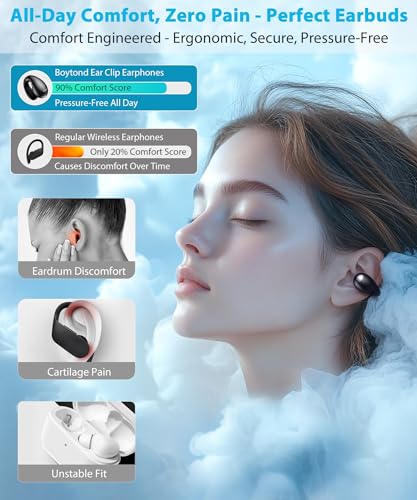
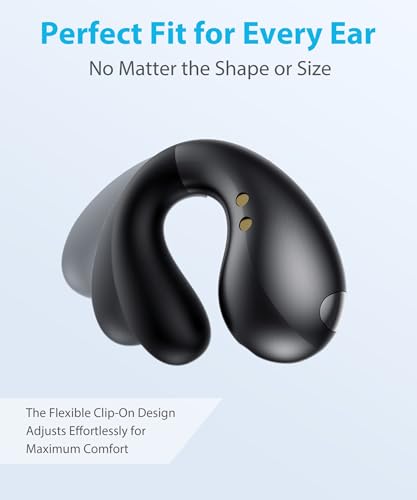
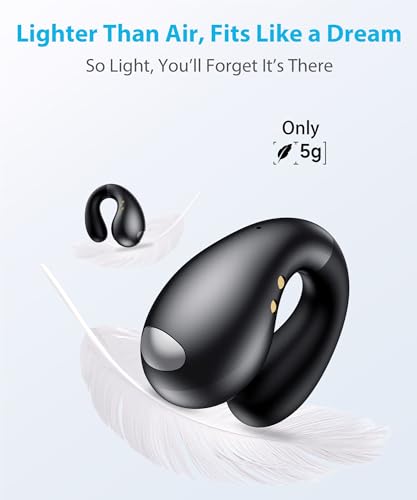
The specification table is otherwise sparse, with no material, control method, bud weight, impedance or frequency response published. The clip design is described as lightweight and secure with a specific mention of fitting small ears, which is a real consideration since clip on arms have a fixed geometry and cannot be adjusted the way a tip can be swapped. There are no ear tips here, so the usual advice about changing tips to fix thin sound does not apply. Fit is decided by the clip and by the wearer’s ear shape, and buyers with unusually large or small outer ears should treat fit as the main risk.
The product title says waterproof design. No IP code appears anywhere in this listing, and there is no Water Resistance Level field. Waterproof without a code is a marketing word with no test behind it, and we will not state a rating the listing does not give. A buyer who wants these for sweaty training or for use in rain should require a written IPX figure from the seller. No IP rating, even when published, covers seawater or high pressure water, and ratings degrade as seals age.
Data problems, and where else to look
Two fields contradict each other outright: Ear Placement is recorded as Open Ear while Form Factor is recorded as Over Ear, which is the description of a full sized headphone. The Style field reads S19 UltraComfy Collection while the model number is S30i, and this catalog separately carries a Boytond S19 ultra open earbud review as a distinct product, so buyers should confirm which model they are ordering. The feature bullets are written in styled Unicode letterforms rather than plain text, which is a listing tactic to stand out in search results and which renders unpredictably across devices. Boytond publishes a 4.4 out of 5 rating across 1,030 ratings and an Amazon rank of 2,588th in Electronics and 360th in earbud and in ear headphones, figures we attribute rather than verify.
For open ear designs with fuller specifications, the Soundcore AeroFit 2 review and the Shokz OpenFit review both cover products whose battery, ingress and driver details are published consistently. More of the format sits in the open ear headphone category.
Who should buy it and who should not
Buy the Boytond S30i if you want an open ear clip that leaves your hearing available during runs, workdays and household use, if 10 hours per charge suits you, and if you accept structurally light bass. Skip it if you specifically want bone conduction, because the driver specification points to air conduction, and skip it if you need isolation or a verified water rating. Ask the seller two things before ordering: whether the drive mechanism is a bone transducer or a speaker, and what the actual IP code is.