


Description
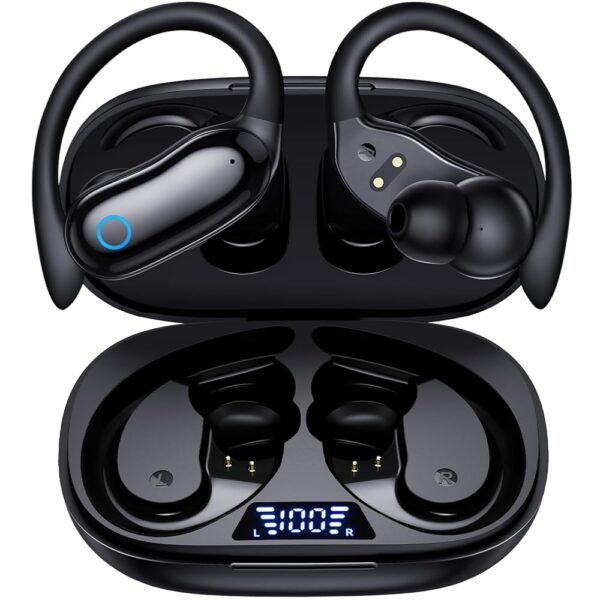
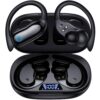
The GNMN V7 is a hook mounted sport earbud with a large 16 mm driver, a charging case carrying a dual battery readout, and a headline of 96 hours of playback. It is also the only product in this part of the catalog still shipping with Bluetooth 5.0 rather than 5.3 or 5.4, and that single fact shapes how it should be judged against everything sitting next to it.
The listener this is built for
Ear hooks exist to keep a bud in place when the head is moving, and GNMN builds the whole listing around that. Soft silicone hooks wrap the outer ear, three tip sizes ship in the box, and the copy is explicit about intense sweaty activity. This is a gym product, and a reasonable one on paper: hook plus tip is the most reliable retention arrangement available in true wireless, considerably more secure than a stem or a bare bud.
The tips seal the canal, which means situational awareness drops sharply. GNMN lists running among the intended uses, and that needs qualifying. Sealed buds with music playing mask an approaching vehicle, and there is no transparency mode in this listing to restore the cues a road runner needs. Treadmills and trails away from traffic are the right context; shared roads are not. Anyone who needs to hear traffic should be looking at the clip and hook designs in the open ear headphone category instead. There is a volume point attached: in a loud gym a sealed bud invites the listener to push the level until the music beats the room, and sustained high volume is how hearing damage accumulates without any warning signal.
Connection: Bluetooth 5.0 in a catalog of 5.3
The structured specification records Bluetooth 5.0 with a 10 meter range. The feature bullets describe advanced wireless Bluetooth technology and low latency without naming a version at all, which is a common way to avoid drawing attention to an older radio. Bluetooth 5.0 works perfectly well for stereo audio and calls. What it lacks relative to 5.2 and 5.3 is the improved connection maintenance in crowded radio environments, the lower power draw, and the groundwork for LE Audio that newer sets carry.
What that means in practice
The practical difference shows up in dense environments: a busy gym floor with dozens of phones and other earbuds, or a train platform. Older radios drop and stutter more often there. It is not a reason to rule the product out, but it is a reason not to pay the same as a 5.3 set, and it is worth knowing that a bullet promising a stable signal is not backed by the newest chipset. No codec is named anywhere in this listing, so SBC is the only one a buyer can rely on, and the low latency claim carries no figure in milliseconds. Multipoint, wear detection and app support are all absent. Buyers who want a documented codec and a newer radio should compare the Soundcore Space A40 review, which names LDAC and states the source device requirement.
Battery: eight hours in the ear, ninety six with the case
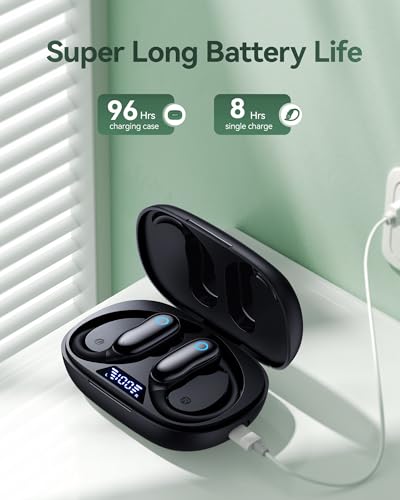
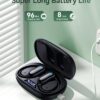
GNMN is clear on this point, which is more than several of its neighbors manage. A single full charge gives up to 8 hours from the buds, and the case brings the running total to 96 hours. Ninety six hours is not a session length; it is roughly eleven bud charges from a full case, and it assumes the case starts full. Eight hours is the number that governs any given workout, flight or shift.
Both figures are best case ratings measured at moderate volume, and there is no cancellation circuitry here to drain the reserve further. The case carries a dual LED display showing case and bud levels separately, which is genuinely useful and removes the guesswork. Curiously, the structured specification table contains no battery fields at all, so both numbers come from marketing copy rather than a data sheet, and no case capacity or charging time is published anywhere. Charging is over USB-C.
Fit, controls and the IPX7 claim
Three tip sizes ship in the box, listed as small, medium and large. Tip fit is the specification that most affects perceived sound on any sealing earbud, because a leaking seal drains low frequency energy and leaves the result thin. The driver is quoted at 16 mm in the bullet copy, which is large for an in ear and consistent with the emphasis on punchy bass, though no driver size appears in the structured table and no frequency response is published anywhere. Driver diameter on its own predicts very little about tuning.
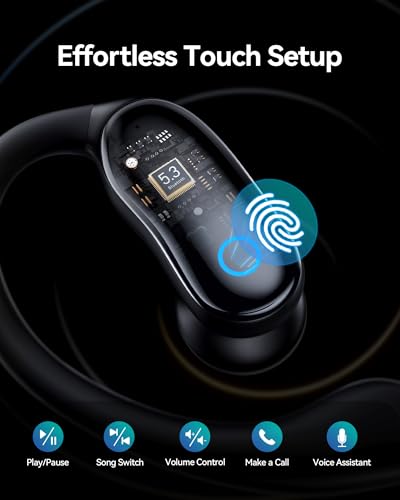
Controls are touch based, covering track changes, volume and calls. The bullets argue that touch is superior to a physical button, which is a matter of preference rather than fact; touch panels are faster but mistrigger when a wearer adjusts a hook or wipes away sweat, and a physical button does not. Three structured fields describe the controls differently, listing Control Type as Volume Control, Control Method as Touch and Controller Type as Touch, so the exact gesture set should be confirmed.
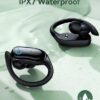
The water claim appears as IPX7 in both the title and the first feature bullet, while the structured Water Resistance Level field says only Waterproof with no code. Two of three sources agreeing on IPX7 is better than most listings in this catalog manage, but a buyer intending to submerge these should still get it in writing. A genuine IPX7 covers fresh water immersion under laboratory conditions. It does not cover seawater, chlorinated pools or high pressure spray, and seals degrade with age and with sweat salt accumulating around the housing. For a sport set whose rating is stated consistently across every field, the JBL Endurance Peak 3 review is a fair benchmark.
Listing inconsistencies, and where else to look
Three fields contradict each other on basic form factor. Ear Placement is recorded as Over Ear, Form Factor as In Ear and Earpiece Shape as Earhooks. Only the last of those describes the product accurately. Noise Control is recorded as None, which is consistent with the bullets and confirms there is no active cancellation and no transparency mode; whatever isolation exists comes from the tip seal. The Compatible Devices field lists nine categories including music production equipment and car audio systems, which is the same generic block that appears verbatim on other listings in this catalog and is a template rather than a tested list. Item weight is given as 0.3 pounds and 4.9 ounces, which agree with each other and describe the shipped package rather than the buds. GNMN states a 4.4 out of 5 average across 1,672 ratings, which we attribute rather than verify.
Buyers who want the same secure hook fit on a current radio should compare the JBL Endurance Race review or the Skullcandy Push Active review, both of which pair sport retention with newer Bluetooth versions and published ingress ratings. More options sit in the true wireless earbud listings.
Who should buy it and who should not
Buy the GNMN V7 if hook retention, a 16 mm driver and a 96 hour case total are what you want, and if you are training somewhere with a quiet radio environment. Eight hours per charge is competitive. Skip it if you want the connection stability of a current Bluetooth version, active noise cancellation, a named codec, or a latency figure you can check. Confirm the IPX7 rating with the seller before submerging them.

![SAMSUNG Galaxy Buds 3 Pro AI True Wireless Bluetooth Earbuds, Noise Cancelling, Sound Optimization, Redesigned Comfort Fit, Silver [US Version, Amazon Exclusive, 2Yr Warranty]](https://wirelessemporium.com/wp-content/uploads/2025/04/samsung-galaxy-buds-3-pro-ai-true-wireless-bluetooth-earbuds-noise-300x300.jpg "SAMSUNG Galaxy Buds 3 Pro AI True Wireless Bluetooth Earbuds, Noise Cancelling, Sound Optimization, Redesigned Comfort Fit, Silver [US Version, Amazon Exclusive, 2Yr Warranty]")