


Description
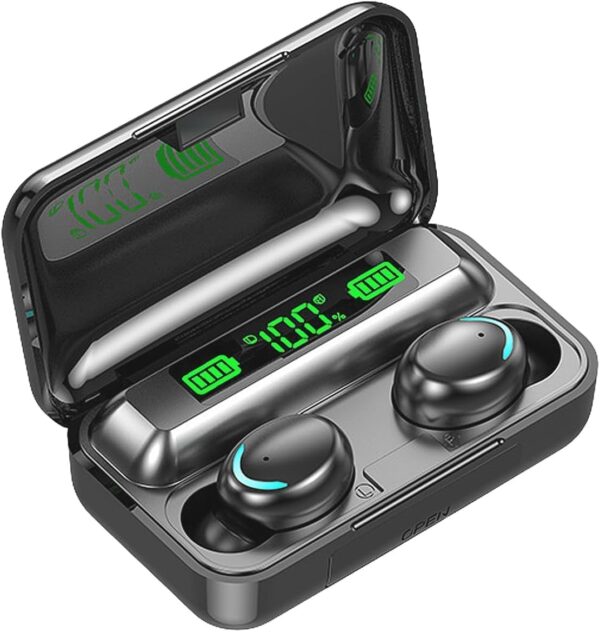
The DCBCODGAL F9 is a small sealing earbud sold on touch control, a charging case with a digital battery readout and a mirrored lid, and a water rating written in a code that does not exist. The listing is short, the specification table is incomplete in the places that matter most, and the single battery figure it publishes describes something different from what the wording suggests. Sorting that out is most of the value a review can add here.
Who this suits
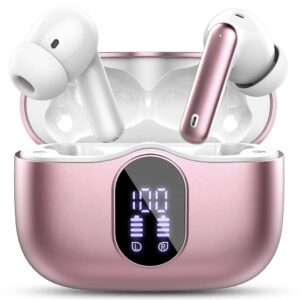
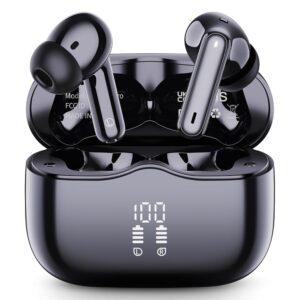
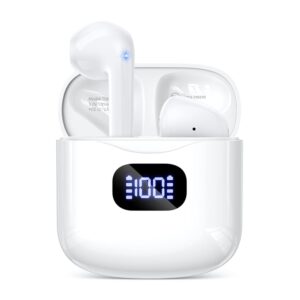
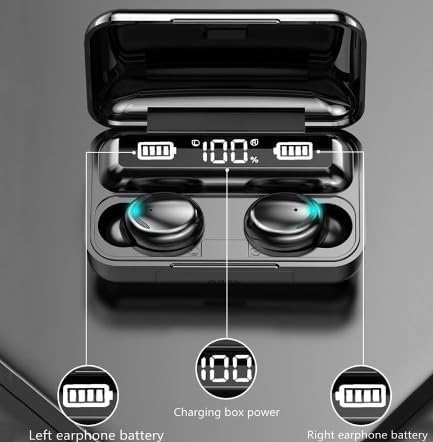
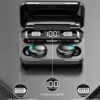
DCBCODGAL lists sport as the specific use and describes the F9 as a mini in ear design with silicone tips, aimed at work and exercise. That is a commuting and desk product with light gym duty. There is no hook and no wing, so retention depends entirely on the tip seal, and anyone whose ears reject stemless buds during movement will have the same experience here. The case carries a real time percentage display for both the case and the buds, which removes the usual guesswork, and the lid is finished as a small mirror, described in the listing as specially processed rather than glass.
Because the tips seal the canal, awareness of surroundings drops significantly. The listing suggests jogging and cycling among the intended activities, and we would qualify both. A sealed bud playing music masks the approach of a vehicle, and there is no transparency mode here to restore that. Riders and road runners should be looking at designs that leave the ear open, which we group in the open ear headphone category. There is a volume point attached to this: in a noisy street or gym, a sealed bud invites the listener to push the level until the music beats the room, and that is how hearing damage accumulates unnoticed. Set the level somewhere quiet.
Connection: Bluetooth 5.3 and an unsupported Hi-Fi claim
The listing gives Bluetooth 5.3 and a 10 meter range. Bluetooth 5.3 improves connection maintenance and power efficiency over earlier versions and provides groundwork for LE Audio. It is a radio specification and does not raise audio quality on its own.
Hi-Fi with no codec behind it
The product title uses the phrase HiFi. No codec appears anywhere in this listing: not AAC, not aptX, not aptX Adaptive, not LDAC. In the absence of a named codec the only one a buyer can rely on is SBC, the baseline every Bluetooth audio device implements, and SBC does not carry high resolution audio. A high resolution or Hi-Fi claim is only meaningful when a codec is named and when the source phone supports that same codec, since both ends of the link must agree. On the published specification, the Hi-Fi wording here is unsupported. Anyone who wants a codec they can actually verify against their own handset should compare with a set that states one, such as the EarFun Air Pro 3 review, which names aptX Adaptive and its device requirements.
Multipoint pairing is not mentioned. Wear detection is not mentioned. There is no app, no firmware update path and no latency figure. Those should be read as absences rather than assumed features.
Battery: one number, and it is the total
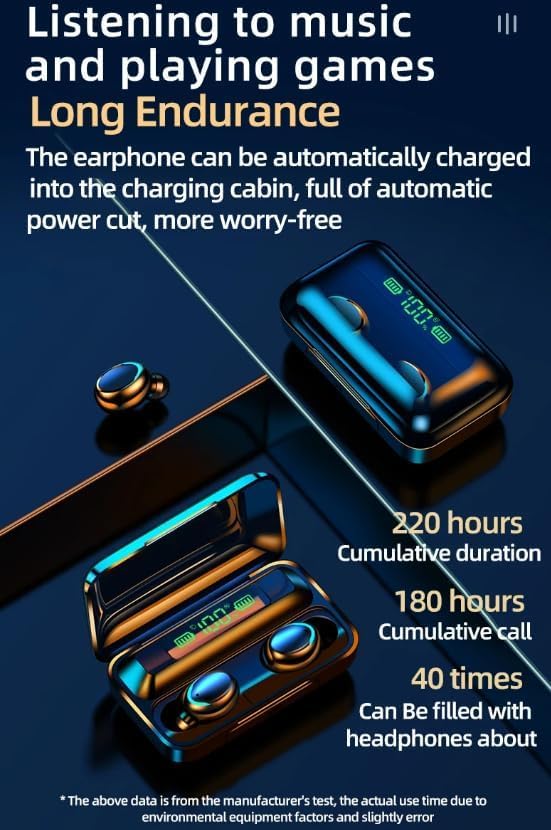
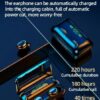
The structured Battery Life field records 15 hours. Feature bullet four says the earbuds provide an extra 15 hours of playtime with the portable charging case. Read together, the 15 hour figure is the combined total including case recharges, and it has been entered into the field meant for bud runtime.
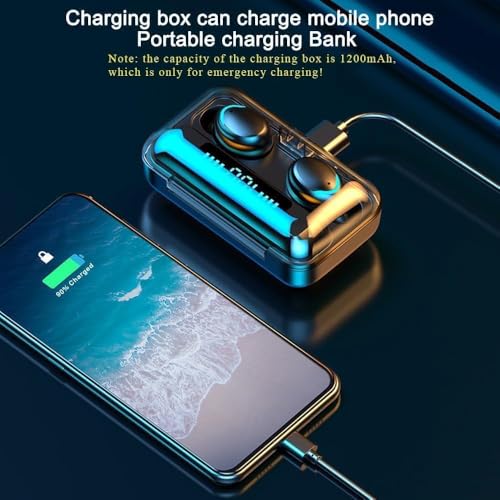
That matters, because it means this listing publishes no bud runtime at all. There is no way to know from the specification how long a single charge lasts before the buds must return to the case. Fifteen hours combined is also modest by the standards of this catalog, where 30 to 90 hour totals are common, which implies a small case battery and a small bud battery behind it. Charging time is listed at 2 hours. The listing gives no case capacity in milliamp hours and no fast charge claim. A buyer should ask the seller how many hours one charge delivers before ordering, and should treat whatever figure comes back as a best case measurement at moderate volume.
Fit, controls and an IP code that is not a real code
The included components field lists ear cushions without saying how many sizes. That is a meaningful omission, because tip size is the specification with the largest effect on how any sealing earbud sounds. A leaking seal drains low frequency energy and leaves the sound thin, and the usual fix is a different tip. If only one size ships, a substantial share of buyers will never hear these properly. No driver diameter and no frequency response are published either, so there is nothing further to evaluate the sound against.
The touch controls are the strongest documented feature. The listing describes answering and rejecting calls, hanging up, waking the voice assistant, play and pause, previous and next track, and volume increase or decrease by swiping on the bud. On bud volume control is not universal at this end of the market and is genuinely useful. Touch panels do mistrigger when the wearer adjusts the fit or wipes away sweat, and no way to disable them is described.
The water claim is the clearest error in the listing. The product title says IP7 Waterproof. IP7 is not a valid rating. The IP scheme uses two characters after the letters, a solids digit and a liquids digit, so the valid forms would be IPX7 or IP67. Feature bullet three does say IPX7, and the structured field says only Waterproof with no code. The most likely reading is that IPX7 is intended and the title simply dropped a character, but a buyer should not have to guess at an immersion rating. Even a confirmed IPX7 covers fresh water immersion under test conditions and never covers seawater, chlorinated pools or high pressure spray, and seals degrade as they age and as sweat salt builds up. Confirm the code with the seller before exposing these to anything more than sweat. For a sport set whose rating is stated consistently across the listing, the JBL Endurance Peak 3 review is a reasonable benchmark.
What else is missing, and where to look
The Model Name field holds the literal string Wireless earbuds while the model number is F9, which is a placeholder rather than a name. The feature bullets open and close with unrendered bracket characters left over from the source listing. Noise control is not addressed at all: the title mentions noise reduction headphones, but no field records active or passive cancellation and no microphone count is given, so there is no basis for assuming either. DCBCODGAL publishes a 4.1 out of 5 rating across 20 ratings and an Amazon rank of 17,297th in Electronics and 1,593rd in earbud and in ear headphones. Twenty ratings is a very small sample and should not be treated as evidence of reliability in either direction.
Buyers who want a comparable compact bud with a fuller sheet should look at the Soundcore Life P2 Mini review or the Philips TAT1219 review, both of which publish runtime and tip counts. More compact sealing designs sit in the earbud headphone listings.
Who should buy it and who should not
Buy the DCBCODGAL F9 if the case display and full touch control including volume are the features you want, and if 15 hours of combined playtime covers the gaps between charges. Skip it if you need a documented bud runtime, a named codec, active noise cancellation, or an immersion rating you can trust. Before ordering, ask two questions: how many hours one charge of the buds gives, and how many ear tip sizes are in the box.