Description
The buyer this is aimed at
The VRIFOZ U8I is a gym and running earbud. Every part of the listing points that way: the Specific Uses field says Sport, the recommended use says Exercising, and the title stacks workout, gym and running into the first fifteen words. The pitch is a durable, sweat resistant earphone with a long single charge runtime and a microphone that filters background noise on calls. It is not aimed at someone who wants noise cancellation, app control or premium codec support, and the specification confirms none of those exist here.
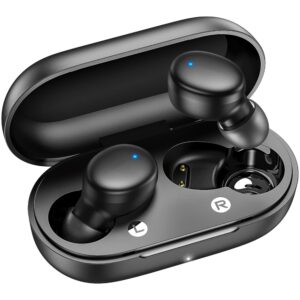
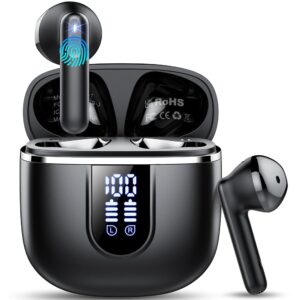
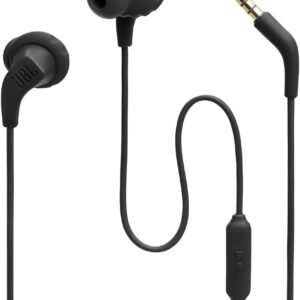
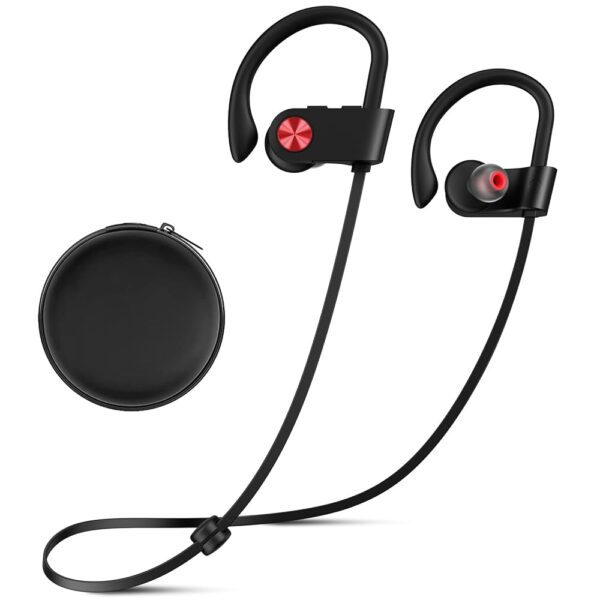
The published rating is 4.2 out of 5 across 1,574 ratings, and the listing places the model 750th in the earbud and in-ear headphone category. It first appeared in May 2022. One thing worth settling before anything else: this listing never describes a charging case. The Included Components field reads only CD, which is plainly an import error rather than a real accessory, and no case appears anywhere in the specification. Combined with a single continuous playtime figure and a Cable Feature entry reading Detachable, the physical format is not clearly established by the page. Confirm what actually ships in the box before you buy, because the difference between a case based true wireless pair and a corded design changes how you charge and carry it every day.
How it connects, and a version number that changes depending where you look
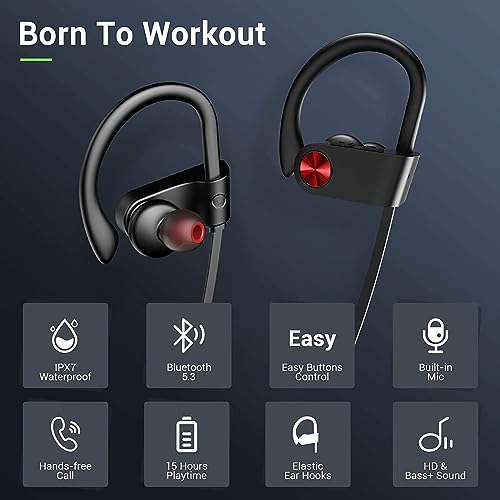
The specification field for Bluetooth Version says 5.2. The product title says Bluetooth 5.3. The feature bullet also says Bluetooth 5.3. Two of the three sources agree on 5.3 and the specification table says otherwise, and there is no way to resolve that from the listing itself. It is a small gap in practice, because the difference between 5.2 and 5.3 is marginal for a product like this, but it is a useful signal about how carefully the rest of the page was assembled.
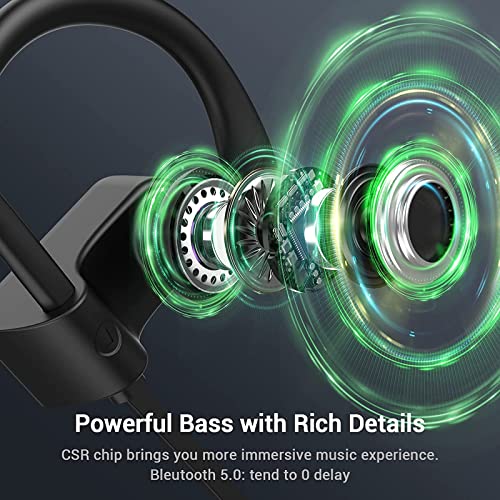
No audio codec is named anywhere. The bullets talk about upgraded dynamic drivers and CSR chips and use the phrase high fidelity, but a chipset brand is not a codec and the words high fidelity carry no technical meaning on their own. SBC is the only format you can rely on. AAC is not confirmed, and no aptX or LDAC variant is claimed. Nothing on this listing supports a high resolution or lossless description of the audio, and any such claim would be going past what VRIFOZ published. Compatible devices are listed broadly as Android and iOS phones, tablets, desktop and notebook computers, and MP3 players.
Noise cancelling on the microphone is not noise cancelling on your ears
This distinction catches a lot of buyers out and this listing walks straight into it. The title says noise cancelling mic and the bullets describe CVC 6.0 noise cancellation. That technology works on the outgoing signal, so the person on the other end of your call hears less of the traffic around you. It does nothing whatsoever to quiet the world for you while you are listening. The specification field is honest about it: Noise Control reads None. There is no active noise cancellation in this product, and there is no transparency mode either.
Battery, and a figure that moves by one hour
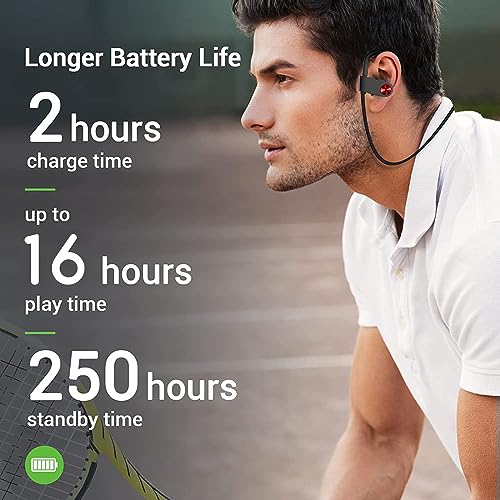
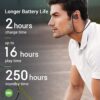
VRIFOZ claims 16 hours of continuous wireless listening in the title and in a feature bullet, alongside 250 hours of standby time and a 2 hour charge. The Battery Life field in the specification table says 15 hours. Take the lower figure as the safer planning number. Either way, because no charging case is described, this looks like a single number covering the whole product rather than the bud plus case arithmetic that dominates the rest of this catalog. That is genuinely simpler to reason about, but it also means that when the battery is flat you are plugging the product into a wall rather than dropping it into a case for a top up.
As always, a quoted playtime is a best case at moderate volume. There is no active noise cancellation circuit here drawing extra current, which helps, but call time and cold weather still shorten results. The 250 hour standby figure is a measure of how long the radio idles, not how long you can listen.
Fit, seal, controls and the IPX7 rating
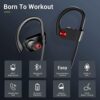
The water rating here is one of the better disclosures in this catalog. IPX7 appears in both the title and a feature bullet, and IPX7 is a real code: immersion in fresh water to one meter for thirty minutes. That is well beyond the IPX4 splash resistance most workout earbuds carry, and it means sweat and heavy rain are comfortably within scope. The specification field itself only says Waterproof, an adjective with no code, so the useful information is in the bullet rather than the table. Two limits apply to every IP rating and both apply here. No IP code covers seawater, chlorinated pool water or pressurized water from a tap or hose, and the seals degrade with age, heat and repeated charging port use. The X in IPX7 also means no dust testing was performed, so nothing is claimed about grit or sand.
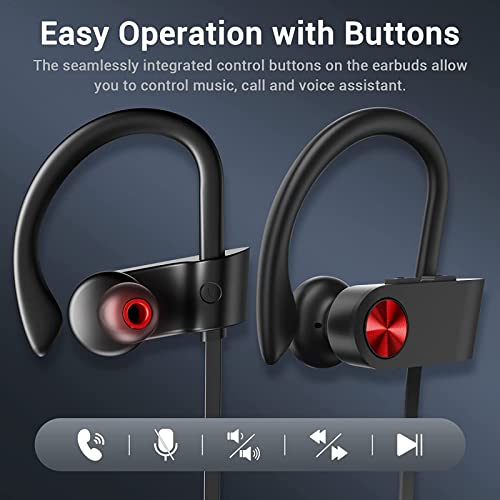
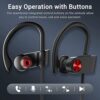
Fit information is thin. The listing does not state how many ear tip sizes are included, which is the specification that decides whether the product seals in your ear canal at all, and a poor seal is what makes any in-ear headphone sound thin and bass light. Controls are described in three different fields as Voice Control, Touch and Voice, and a button on the right earbud, which is not a coherent single answer. The bullets describe a button for volume, track skipping and call handling. The weight figures given, 0.08 kilograms and 2.89 ounces, agree with each other and almost certainly describe the packaged product rather than what sits in your ear. The Age Range field reads 20 to 60, which is an unusual way to fill in a field designed for Adult or Kid and should not be read as a specification.
What is not published, and what to read instead
Missing from this listing: driver size, frequency response, impedance, codec support, multipoint pairing, ear tip count, transparency mode, wear detection, app support and any confirmation of what is in the box. That is a long list, and it puts the burden on the buyer to verify before committing.
The U8I model designation is unusually common in this catalog, which itself is worth knowing. The Stiive U8I sold under a different brand name carries the same model code, and the Boean U8 built for running and gym use and the JOYWISE U8 Pro with its own waterproof claim sit in the same family of designs. The Otium U18 aimed at gym use is another close comparison. The wider in-ear headphone section and the true wireless earbud listings cover the rest of the field.
Who should buy it, who should not
Buy it if you want a sweat resistant workout earphone with a published IPX7 code and a single charge that runs most of a day, and you are comfortable with SBC audio and call side microphone filtering rather than real noise cancellation. Skip it if you need active noise cancellation, if you want a named codec, if multipoint switching matters, or if you need to know exactly how many ear tips arrive in the box. Treat the 16 hour claim as the optimistic end of a 15 to 16 hour range, and confirm what physically ships before ordering.