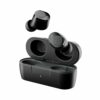
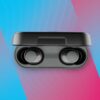
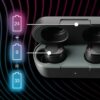
Description
Who the Jib True 2 is for
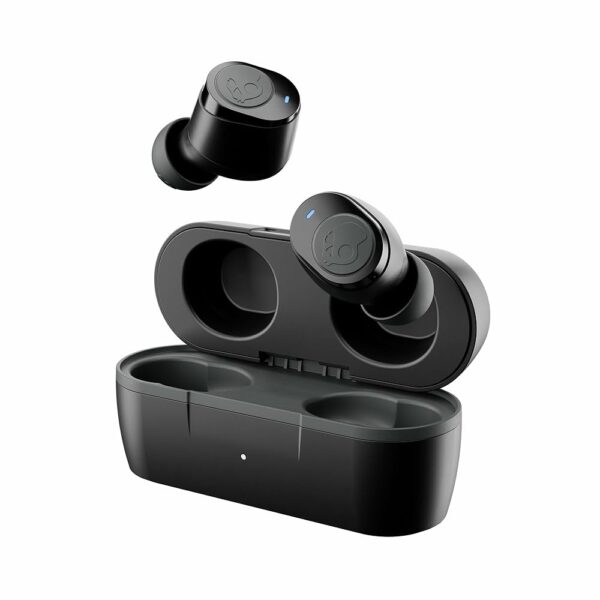
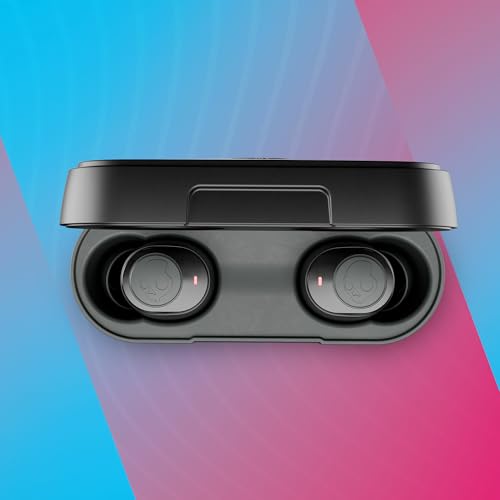
Skullcandy positions the Jib True 2 as the entry point to its true wireless range, and the listing’s own use case field reads like an attempt to cover everything at once: gym, personal, iPhone, Android, sports, gaming, school, travel and workouts. Strip the marketing and the actual proposition is narrower and clearer. This is a simple, light, low cost true wireless pair with a long combined battery figure, item finding built in, and no active noise cancellation. It suits a student, a commuter, or anyone who wants a spare pair that will not be a disaster if one bud goes missing, because the finding feature is aimed squarely at that.
The published rating is 4.3 out of 5 across 6,048 ratings and the listing places the model 477th in the earbud and in-ear headphone category. It first appeared in March 2022 and is manufactured in Vietnam. Skullcandy’s own description sells it on being the previous Jib plus fifty percent more battery life, which is a modest and believable claim rather than an extravagant one.
Connection, and one field that makes no sense
The specification gives Bluetooth 5.0 and a 10 meter range. No codec is named. As with most of this catalog, that means SBC is the guaranteed floor, AAC is unconfirmed, and there is no basis at all for a high resolution or lossless claim. Compatible devices are listed simply as smartphones and tablets.
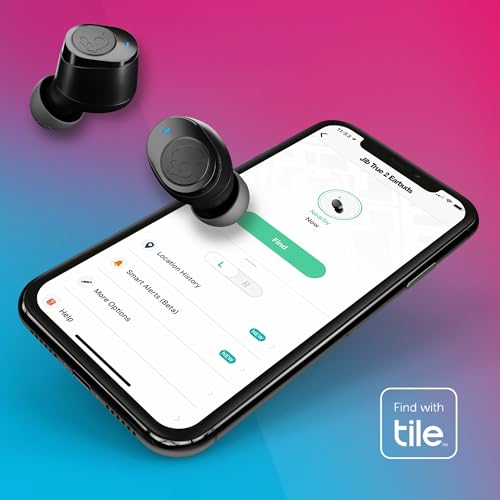
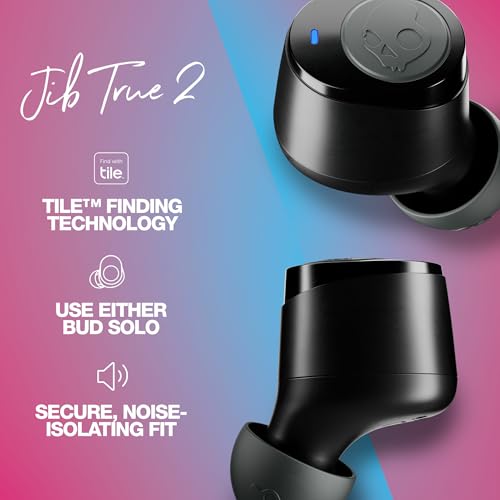
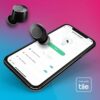
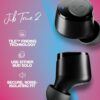
The most useful connection feature here is not about audio at all. Skullcandy builds Tile finding technology into both buds, so a misplaced earbud can be made to ring from the Tile app. For a product in this price bracket that is a genuinely practical inclusion, because losing one bud from a true wireless pair is the most common way these products die. The listing also describes a solo mode: either bud can be used on its own for calls or music, rather than one being a designated master.
Contradictory control fields
Three separate fields describe how you operate these and they do not agree. Control Type reads Media Control, Control Method reads App, and Controller Type reads Touch. Those are three different answers to the same question. Touch controls on the bud plus a companion app is the most likely reading, but the listing does not settle it, and nowhere does it name the app or describe an equalizer.
Battery, and why the quoted numbers do not match
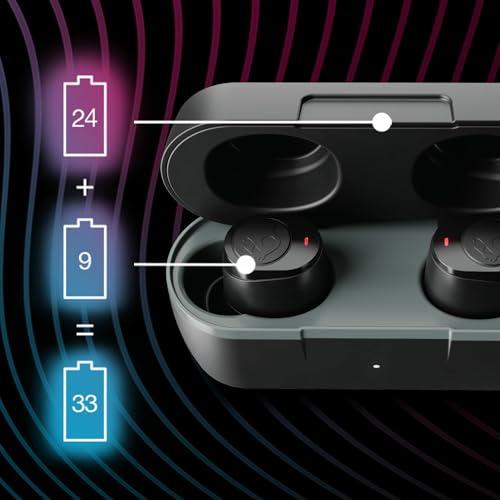
The headline needs care. Skullcandy’s product title says 32 hour battery. The Battery Life specification field also says 32 hours. The feature bullet, however, says 33 hours of power, broken down as 24 hours in the case and 9 hours in the earbuds. Nine plus twenty four is 33, not 32. The gap is small, but it shows the specification table and the marketing copy were populated separately, and it is the sort of inconsistency worth noticing before you trust any other number on the page.
The number that matters most is the one buried in the bullet: 9 hours from the buds themselves. That is your actual continuous listening session. The 32 or 33 hour figure is the total including case recharges, and it is the number most competing listings quote without saying so. Nine hours is a strong result for a product at this level, helped by the absence of an ANC circuit drawing current.
Then there is the field that is simply wrong. Charging Time reads 33 Hours. No true wireless earbud takes thirty three hours to charge. The playtime figure has been pasted into the charging field, and the actual charging time is not published anywhere on the listing. The included components list also specifies a micro-USB charging cable rather than USB-C, which is dated for a 2022 product and means an extra cable in your bag if everything else you own has moved on.
Fit, seal, controls and the real meaning of IPX4
The box includes ear gels in small, medium and large, so three tip sizes are published. That is the standard count rather than a generous one, and it matters because a poor seal drains bass and makes any in-ear headphone sound thin. Noise Control is listed as Sound Isolation, which is passive blocking from that seal and nothing more. There is no active noise cancellation on this model, and no transparency mode is described.
The water rating is where the listing needs correcting most firmly. The Water Resistance Level field says only Water Resistant, an adjective with no code. The feature bullet gives the actual rating: IPX4, described by Skullcandy as handling a little rain during an outdoor adventure. IPX4 means splashing water from any direction. It means sweat and light rain. It does not mean immersion, it does not mean you can rinse them under a tap, and it absolutely does not mean waterproof. Any description of this product as waterproof is wrong. Note also that the X in IPX4 means no dust rating was tested at all, so nothing is claimed about dust ingress.
One published figure looks implausible and should be treated with suspicion. Impedance is given as 140 ohms. True wireless earbuds with built in amplification almost universally sit in the 16 to 32 ohm range, and the JBL and Back Bay products in this catalog both list 16 ohms. A 140 ohm reading in a battery powered earbud is far more likely to be a data entry error than a design choice. The weights given, 48 grams and 1.69 ounces, agree with each other, and the case is listed at 60 grams.
What is missing, and the alternatives worth reading
Not published anywhere: codec support, charging time, multipoint pairing, transparency mode, wear detection, driver size, or the name of the companion app. The frequency range given as 20 Hz to 20,000 Hz is the standard boilerplate figure that appears on almost every headphone listing and carries no information about how the product actually sounds.
Within Skullcandy’s own range the natural comparisons are the smaller and simpler Skullcandy Dime 2 and its successor the Skullcandy Dime 3, both of which sit below the Jib True 2, while the Skullcandy Indy Evo with its sport oriented fit and the longer running Skullcandy Grind and its 40 hour total sit above it. Outside the brand, the JLab Go Air Pop is the most direct competitor at this level. The full true wireless earbud section and the wider in-ear headphone listings cover the rest.
Who should buy it, who should not
Buy it if you want a straightforward entry level true wireless pair, 9 hours per charge is enough, and built in Tile finding appeals because you have lost an earbud before. Skip it if you need noise cancellation, if micro-USB charging in 2026 is a dealbreaker, if you want multipoint, or if you were relying on the word waterproof. The honest rating here is IPX4, which covers sweat and rain and nothing more.
![SAMSUNG Galaxy Buds 3 Pro AI True Wireless Bluetooth Earbuds, Noise Cancelling, Sound Optimization, Redesigned Comfort Fit, Silver [US Version, Amazon Exclusive, 2Yr Warranty]](https://wirelessemporium.com/wp-content/uploads/2025/04/samsung-galaxy-buds-3-pro-ai-true-wireless-bluetooth-earbuds-noise-300x300.jpg "SAMSUNG Galaxy Buds 3 Pro AI True Wireless Bluetooth Earbuds, Noise Cancelling, Sound Optimization, Redesigned Comfort Fit, Silver [US Version, Amazon Exclusive, 2Yr Warranty]")