

Description
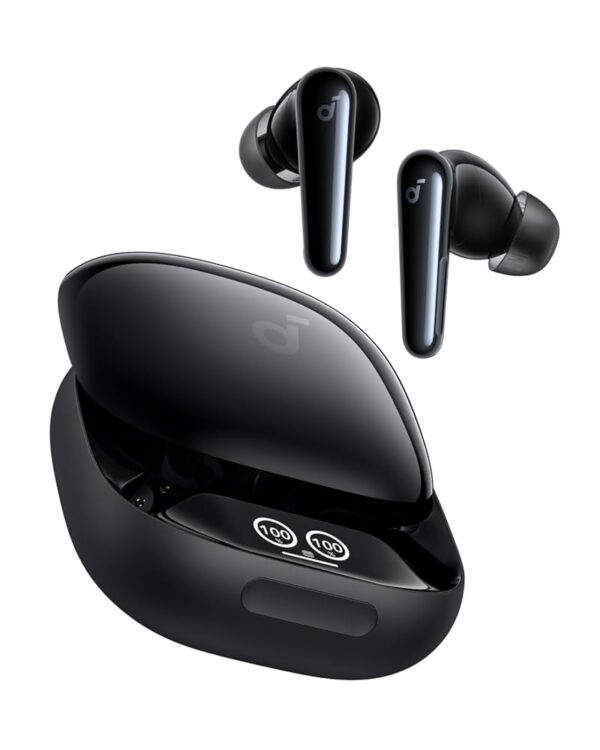
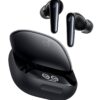
The Soundcore Liberty 4 Pro, model A3954 in glossy black, is Anker’s flagship sealed earbud and the most feature dense product from the brand in this catalog. It carries a seven sensor adaptive noise cancelling system, a two driver acoustic assembly, a touch bar and display built into the charging case, and an ear tip range that runs from XXS to XL. It is also selling a studio level high fidelity claim without naming a single Bluetooth codec, which is the contradiction at the center of this listing and the thing a buyer most needs to understand.
The listener this suits
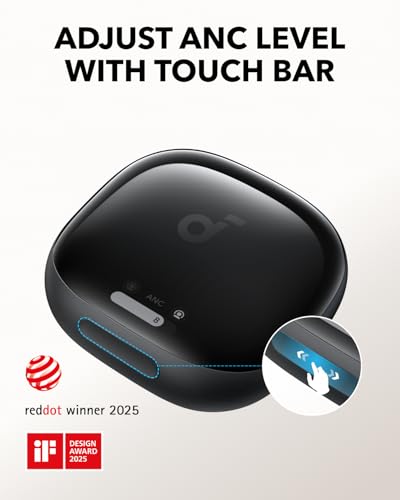
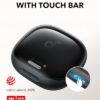
This is aimed at a commuter or traveler who wants strong cancellation and is willing to interact with the product rather than set it and forget it. The distinguishing feature is the case itself, which carries a touch bar and a display allowing cancellation levels to be adjusted with a swipe. That places control on the case rather than on the bud or in a phone app, which suits someone who keeps the case in a pocket and dislikes touch gestures on the ear.
The six size ear tip set is the other standout, and it deserves more attention than the sensor count. Anker ships XXS, XS, S, M, L and XL tips with medium pre installed. Most competitors ship three. On a sealed earbud the seal produces the bass and determines how well cancellation works, and a listener with unusually small or large ear canals is normally locked out of an entire product category. Six sizes is the most generous provision in this catalog, and for anyone who has struggled to seal a standard three tip set it is a stronger reason to buy this than any of the marketing bullets.
Noise cancellation: what is claimed, and what is measured
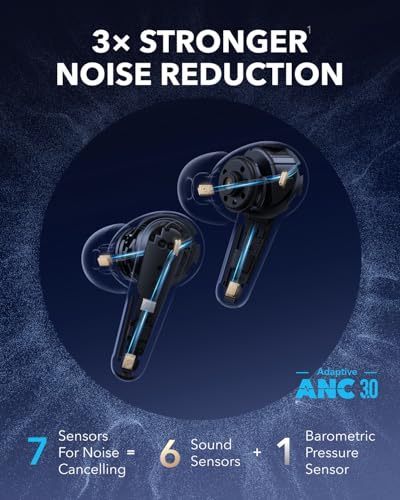
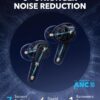
Anker describes seven sensors, six for sound and one barometric pressure sensor, capturing noise from every angle, with the system re evaluating the environment every 0.3 seconds. The barometric sensor is the interesting inclusion, since cabin pressure changes on an aircraft affect how a sealed earbud behaves and a pressure aware system can compensate.
The performance claim is three times stronger noise reduction. That figure has no baseline attached. Three times stronger than what, measured how, is not stated anywhere on the page, and no decibel figure and no test standard are given. Compare that with listings that at least publish a decibel number, and this one gives less to check rather than more.
What cancellation reliably does, on any product, is reduce constant low frequency noise. Aircraft cabin drone, engine and road rumble, ventilation and train noise are where it works. Speech, keyboard clatter, dishes and sudden sounds are where it does not, and no earbud makes a room silent. The listing’s own framing of planes and trains is the accurate one.
Sealed and cancelling means off limits on the road
No transparency or ambient mode is described anywhere in the bullets or the specification block, which is a notable omission on a product at this level. Whether or not one exists in firmware, nothing here claims it. A sealed cancelling earbud with no stated pass through mode should not be used for cycling or road running, where hearing a vehicle behind you is the safety input that matters. An open ear design from our open ear headphones category is the correct product for road use.
The Hi-Fi claim, and the codec that is never named
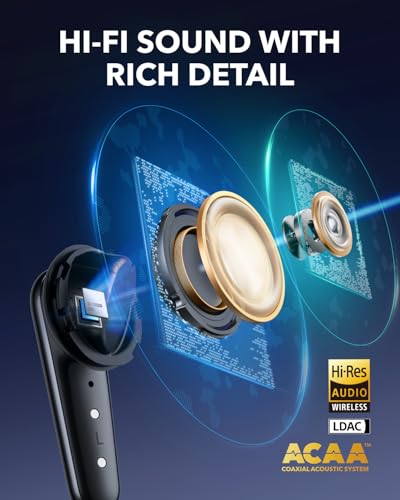
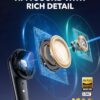
Anker markets studio level high fidelity music, citing an enhanced ACAA acoustic architecture, a 10.5mm bass driver, a titanium coated tweeter and a digital crossover. The hardware description is specific and credible as a design account. The problem is what is missing around it. No Bluetooth codec appears anywhere on this listing. Not SBC, not AAC, not LDAC, not any aptX variant.
That matters because over Bluetooth the codec, not the driver, sets the ceiling on what can reach the earbud. SBC is the universal baseline and is all that can be assumed here. Without a named codec there is no supported basis for describing this product as high resolution or studio level, and we are not going to describe it that way. If codec support is part of your buying decision, contact Anker with the model number A3954 before purchasing. For contrast, the same brand’s own AeroFit 2 names LDAC explicitly, which shows this is a listing omission rather than a company policy.
The specification block adds two figures that undermine confidence further. Frequency Response is given as 20 KHz, which is a single number and not a response. Sensitivity is listed as 126 dB, a figure far above the 95 to 105 dB range typical for earbuds and almost certainly a units error. Impedance at 8 Ohm is plausible. Bluetooth version is 5.3 with a stated range of 10 meters, and multipoint is not claimed anywhere.
Battery: a good bud figure buried under a duplicated total
The feature bullet publishes both numbers correctly: up to 10 hours between charges, extendable to 40 hours with the case. Ten hours from a sealed bud with active cancellation available is a strong figure, and 40 hours total is a four charge case. Fast charging is claimed at five minutes for four hours of playtime, which Anker attributes to a 5C battery, and full charging time is listed as 3 hours with a 580 milliamp hour case.
The specification block then loses the useful half of that. Battery Life is listed as 40 Hours and Carrying Case Battery Average Life is also listed as 40 Hours, meaning the combined total has been entered into both fields and the 10 hour bud runtime does not appear in the structured data at all. Anyone reading the specification table rather than the bullets would conclude the buds run for 40 hours, which they do not.
As always, the 10 hour figure assumes moderate volume and, in this case, almost certainly assumes cancellation switched off. Running adaptive cancellation that re evaluates the environment every 0.3 seconds costs power continuously, so plan for meaningfully less than 10 hours with the headline feature active. The Batteries field, incidentally, reads that three lithium polymer batteries are required without saying they are included, which is inconsistent with every other Anker listing in this catalog.
Water resistance, and what is missing
The Water Resistance Level field reads Waterproof. No IP code appears anywhere on this listing, in the title, in the bullets or in the specification block. A word without a code is not a rating. IPX4 covers sweat and splashes, IPX7 covers immersion, and the gap between them is the whole question. We will not describe this product as waterproof, sweat resistant or splash resistant, because Anker has not published a code here. That is a surprising omission on a flagship, and it is worth confirming with the manufacturer if you intend to train in these.
Also absent: no multipoint claim, no wear detection claim, no companion app named, no transparency mode, no support or firmware update commitment, and no weight for the buds themselves. Item weight is listed as 62 grams, also given as 2.19 ounces, which is the packaged figure. The case is 51 grams.
Cross shopping should start inside Anker’s own range, since the Soundcore Liberty 4 NC covers most of the same ground for less and the Soundcore P40i sits below both. Against other brands, the Sony WF-1000XM5 and the Bose QuietComfort Ultra Earbuds are the reference points for cancellation at the top of the market, and the Nothing Ear is the option to look at if named codec support is the deciding factor. More sealed designs sit in our wireless earbuds category.
Who should buy it, who should not
Buy it for the ear tip range above anything else. Six sizes from XXS to XL solves a fit problem that locks many people out of sealed earbuds entirely, and fit determines both bass and cancellation performance. Buy it if case mounted controls appeal, if adaptive cancellation for flights and trains is the priority, and if 10 hours of bud runtime with fast charging fits your routine. The rating is 4.3 out of 5 across 889 ratings, placing it 332nd in earbud and in ear headphones.
Do not buy it for the high fidelity claim, because no codec is named and the claim cannot be checked. Do not train in these on the assumption they are water rated, because no IP code is published. Do not read the specification table’s 40 hour battery figure as bud runtime, since that is the combined total duplicated into the wrong field. And do not use them for road cycling, since no ambient mode is claimed.