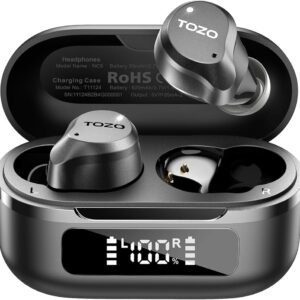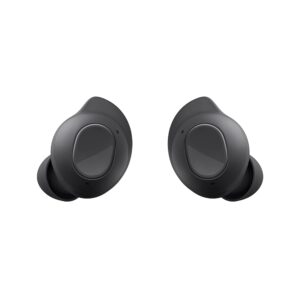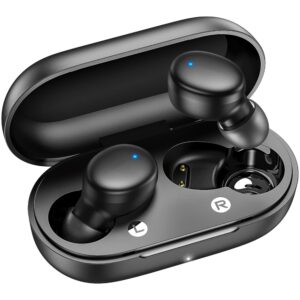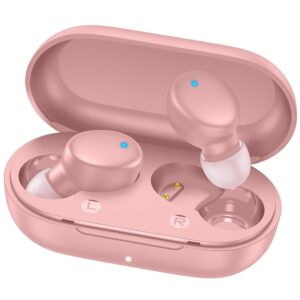


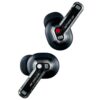



Description
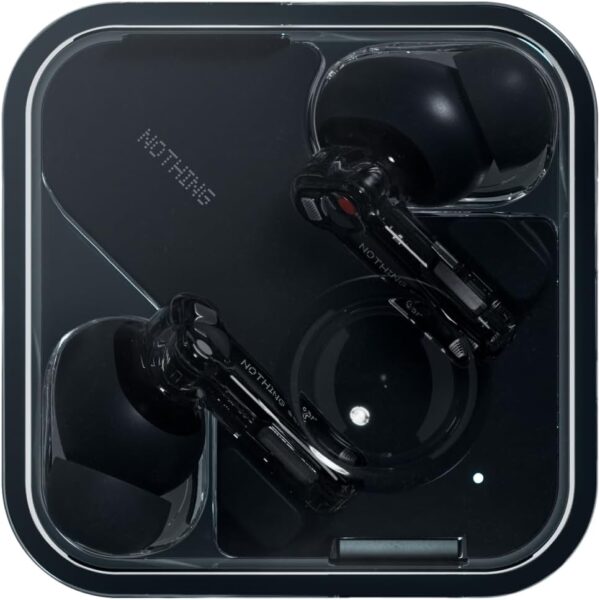
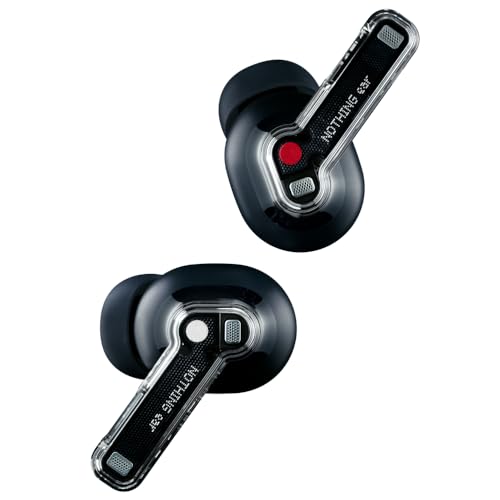
Nothing Ear, the black model listed under ASIN B0CXPQKHR3, is the flagship true wireless earbud from Nothing and one of the few products in this catalog that actually names its codecs. That single fact changes how much of the listing can be verified. Where most earbuds in this price bracket claim high resolution audio and leave the reader to guess how it is delivered, Nothing states LHDC 5.0 and LDAC by name, gives bit depths and sample rates for each, and prints the requirement that the source device support them. The rest of the listing is a mix of unusually specific engineering detail and specification fields that have clearly been mangled in transit, and both are worth separating.
The listener this is built for
This is an Android first product, and specifically a Nothing phone first product. Two of the headline features are gated. The ChatGPT integration, which lets you query the assistant by voice through the buds, is stated to work only on Nothing earbuds connected to a Nothing phone, set up through the Nothing X app. Game Mode, which reduces audio latency, is described as triggering automatically on a Nothing phone. Neither is a general Android feature and neither applies on an iPhone.
The codec situation compounds this. LDAC and LHDC are both Android side technologies. LDAC is supported natively in Android and is common on Sony, Samsung and Google handsets. LHDC has narrower device support and is most often found on Nothing, Huawei and some Xiaomi phones. Neither codec is supported by any current iPhone, which tops out at AAC. An iPhone owner buying these gets a competent AAC connection and none of the resolution advantage the listing is selling. That is not a fault in the product, but it is the single most important thing an Apple user should know before buying, and it is the reason a comparable sealed model such as the Sony WF-1000XM5 or something from our wireless earbuds selection deserves a look alongside it.
Connection and codecs, the part this listing gets right
Bluetooth version is listed as 5.3. As ever, that describes connection management, power behavior and available radio features rather than sound quality. What determines the ceiling on audio quality is the codec, and here Nothing publishes real numbers: up to 1 Mbps at 24 bit and 192 kHz over LHDC 5.0, and up to 990 kbps at up to 24 bit and 96 kHz over LDAC. Crucially, the listing itself states that these require devices that support LHDC or LDAC. That caveat is the difference between an honest resolution claim and an empty one, and Nothing prints it.
What that means in practice: if your phone supports LDAC and you enable it, you get a higher bitrate link than SBC or AAC can carry. If it does not, the connection falls back to SBC or AAC and the advertised figures do not apply. High resolution here is conditional on your phone, not a property of the earbuds alone. It is also worth knowing that LDAC negotiates its bitrate down when the radio environment is congested, so the 990 kbps figure is a ceiling rather than a constant.
Multipoint is claimed clearly, with the listing describing playing from a laptop and switching to answer a call on a phone. Microsoft Swift Pair, Find My Earbuds and pinch based controls on the stems are also listed, along with the Nothing X app for configuration.
The latency figures do not agree
The feature text states end to end latency below 120 milliseconds in Game Mode. The specification block lists Audio Latency as 11 milliseconds. Those two numbers describe different things and cannot both be a full path measurement. The 120 millisecond figure is the meaningful one for a buyer, since it is the end to end claim the manufacturer actually explains. The 11 millisecond field should be disregarded.
Battery: a total with no bud runtime behind it
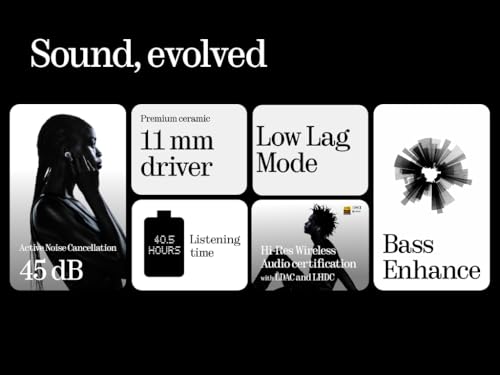
Nothing publishes 40.5 hours and attaches a condition to it, stating that this is achieved by topping up in the case with active noise cancellation turned off. That is the combined figure across the buds and the case, not the runtime of the buds themselves. The runtime of the buds alone on a single charge is never published as an absolute number anywhere on this listing. The only thing said about it is relative: that Ear lasts 25 percent longer than Ear (2) on a single charge. That is useless to anyone who does not already own the previous generation.
The specification block makes this worse rather than better. Battery Life is listed as 40.5 Hours and Carrying Case Battery Average Life is also listed as 40.5 Hours, which is the same combined number entered into two fields that are supposed to hold different values. The case is separately listed at 500 milliamp hours and 51 grams. A fast charge claim of 10 minutes for 10 hours of playback is given, and 2.5W wireless charging plus reverse charging from a compatible phone are listed.
The practical guidance is simple. Assume the 40.5 hour figure is a best case total with cancellation off. Assume real bud runtime with cancellation on is a fraction of it, and ask Nothing for the specific figure if a long single session matters to you. Every quoted playtime in this category is measured at moderate volume, and cancellation always costs power.
Noise cancellation, fit and the water rating conflict
Nothing claims up to 45 dB of active noise cancellation, describes it as hybrid in the Noise Control field, and adds an adaptive element that checks for leakage between the bud and the ear canal and increases cancellation to compensate. It is also stated to be 1.8 times stronger than the Ear (2). No test standard is named for the 45 dB figure and none is named for the 1.8 times comparison, which is normal for this category and is why decibel claims should be treated as manufacturer figures rather than independently verified ones.
What cancellation genuinely does is worth restating. It works on constant low frequency noise, which means cabin drone on an aircraft, engine and road rumble, ventilation and train noise. It is far less effective against speech, keyboard clatter and sudden sounds. No earbud makes a room silent, and the leakage compensation feature described here reinforces the point that seal quality, not processing, is the dominant variable.
Fit is handled with ear tips in small, medium and large, which is the standard three size set. Because this is a sealed in ear design, the seal is what produces the bass from the 11mm ceramic diaphragm driver, and a poor seal will make the product sound thin no matter which codec is negotiated. Being a sealed cancelling design, it is not appropriate for cycling or road running, where hearing approaching traffic is the priority.
Water resistance is contradictory on the page. The feature text states IP54 for the buds. The specification field labeled Water Resistance Level reads Waterproof. Those do not agree. IP54 means protection against dust ingress and against splashing water, which covers sweat and light rain. It does not mean immersion and this product should not be called waterproof. No IP rating covers seawater or pressurized water, and seals degrade with age and debris.
The import artifacts, and what to compare against
Several fields on this listing are plainly wrong and should be ignored rather than reasoned about. Frequency Range is listed as a single value of 5000 Hz, which is not a range and not a plausible figure for any headphone. The Batteries field reads that 3 C batteries are required and included, on a product that contains sealed lithium cells. Item weight of 61 grams, also given as 2.15 ounces, is the packaged weight rather than anything worn. No impedance figure is published and no support or firmware update window is stated.
For cross shopping, the same company’s cheaper line is the obvious first stop, and the CMF Buds Pro 2 covers much of the same ground for less. Note also that a second listing of this same generation appears in our catalog under a different ASIN as the Nothing Ear in the alternate finish, so check which variant you are buying. If codec support is the deciding factor, the Technics EAH-AZ100 is the closest rival that also publishes its formats, and the Soundcore Liberty 4 NC is the value option for cancellation with published numbers.
Who should buy it, who should not
Buy it if you own an Android phone that supports LDAC or LHDC, you want a manufacturer that states its codec requirements openly, and you value the 11mm ceramic driver and hybrid cancellation package. Owners of a Nothing phone get the most from it, since ChatGPT voice access and automatic Game Mode are both gated to that hardware. The listing sits at 4.3 out of 5 across 2,153 ratings and is placed 159th in earbud and in ear headphones.
Skip it if you use an iPhone, because the codec advantage that justifies the price does not reach you and both software headline features are unavailable. Skip it if you need a published bud only runtime figure, because the 40.5 hours is a combined total measured with cancellation off. And do not treat the Waterproof field as permission to submerge these, since Nothing’s own feature text says IP54.