

Description
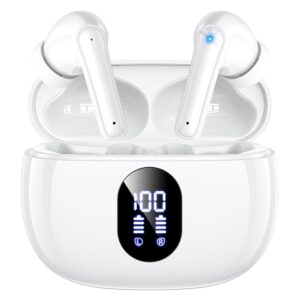
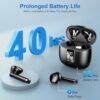
The QXQ J55 is an in ear true wireless set with an LED charge display on the case, four call microphones and a listing that quotes 40 hours of playtime in its first line. It arrived on Amazon in November 2024 and has collected 4.3 out of 5 from roughly 1,900 ratings, sitting 883rd in Electronics and 144th in earbud and in ear headphones at the time this listing was captured. The specification sheet is more interesting than the marketing, mostly because the two disagree in several places.
Who this is aimed at
This is a commuter and gym earbud sold on battery life and call clarity rather than audio pedigree. QXQ names running and workouts, describes an arc shaped body meant to stay put during movement, and puts the charge readout on the outside of the case. There is no app, which is part of the same story: this is a set you pair once and forget, not one you tune.
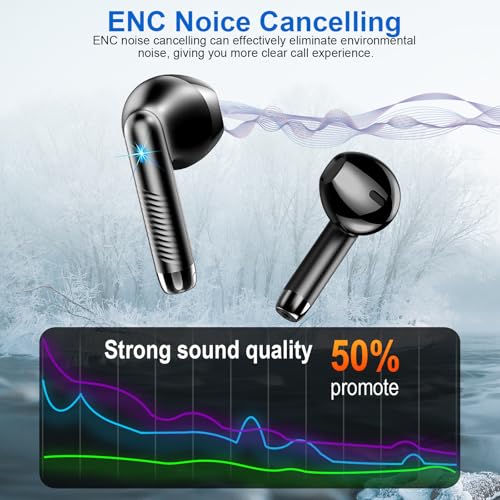
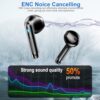
It is not aimed at anyone who wants isolation from a plane cabin. The listing describes ENC, which is microphone side processing for outbound call audio, and never claims active noise cancellation for the listener. That is an honest omission and worth crediting, because plenty of listings in this bracket blur the two. If listener side cancellation is the requirement, look at a set that names it explicitly, such as the Soundcore Space A40 with adaptive noise cancelling.
Connection, and what the version number does and does not mean
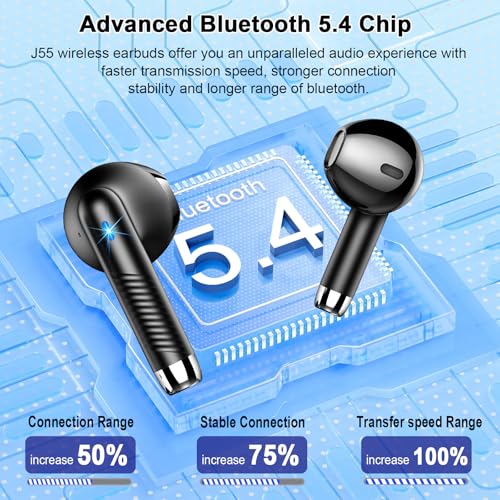
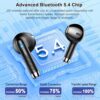
QXQ specifies Bluetooth 5.4 and a 15 meter range, and says the buds pair automatically after the first manual pairing. Bluetooth 5.4 improves connection stability and power efficiency and lays groundwork for LE Audio. It does not improve sound quality on its own, and it does not remove latency. The attribute table adds a small oddity here: the Style field reads Bluetooth 5.4, which is a version number filed under a cosmetic attribute, and there is a separate correct Bluetooth Version field that also reads 5.4.
The high resolution claim has nothing behind it
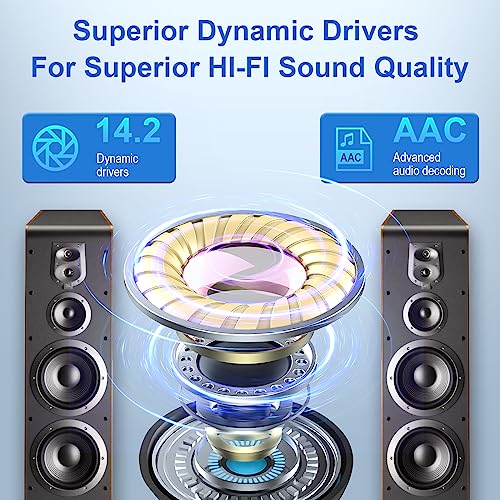
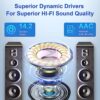
One bullet says the J55 uses a high resolution decoder and delivers 9D stereo surround sound. Neither phrase corresponds to anything measurable. There is no such thing as 9D audio, and a high resolution wireless claim only means something when a codec is named and the phone at the other end supports it. QXQ names no codec at all. There is no SBC, AAC, aptX or LDAC statement anywhere in the title, the bullets or the attribute table, so the high resolution language is unsupported by the published specification. SBC is the safe assumption because every Bluetooth device supports it, and SBC is not a high resolution transport. If codec support is a genuine requirement, the Cillso H97 earbuds at least state AAC and SBC in writing.
Multipoint, wear detection and transparency mode are all absent from the listing. On a set with no app, absent from the listing should be read as absent from the product.
Battery, and the two numbers that are not the same number
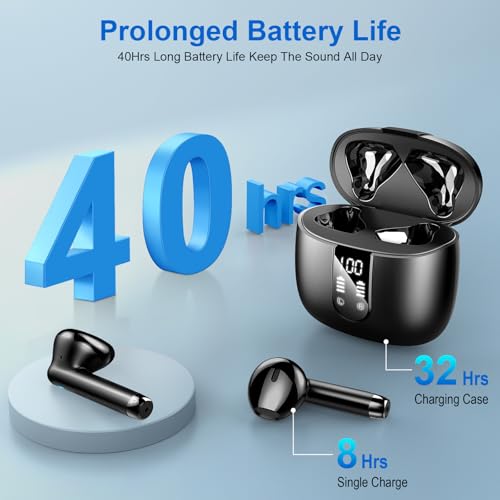
QXQ publishes 8 hours from a single charge of the buds and up to 40 hours in total once the case is counted, and the attribute table agrees with a Battery Life of 8 Hours. That is a cleaner split than most listings in this bracket manage, and the 8 hour figure governs a working day.
Both are best case numbers. A quoted playtime assumes moderate volume with no extra processing, and the four ENC microphones only run during calls, so call time falls short of music time. QXQ publishes no talk time and no case capacity in milliamp hours, so the 40 hour total cannot be checked against the hardware. Charging is over USB Type C and the dual LED indicators show case and bud levels independently.
Fit, seal, controls and the water rating that is not a real code
The J55 uses an arc shaped in ear body in silicone, which means it seals, and the seal decides whether the bass QXQ advertises actually arrives. This is where the listing has a real gap. The included components are a Type C cable, a manual, the case and two earbuds. No spare ear tips are listed and no tip sizes are published. On an in ear design that is a specification, not an accessory, because a tip that does not seal makes any earbud sound thin regardless of the driver behind it.
Controls are touch sensors handling power, play and pause, track skip, calls, volume and the voice assistant. That is a full control set for a product with no app, and it also means many functions mapped onto taps, which tends to produce accidental triggers when adjusting the buds.
On water, QXQ writes IP7 in both the product title and the bullets. IP7 is not a valid ingress protection code. A valid code needs two positions, so the intended claim was almost certainly IPX7, which is immersion in fresh water to one meter, or possibly IP67. The attribute table simply says Waterproof with no code at all, which resolves nothing. Because the published code is malformed, the safest reading is that sweat and rain resistance is likely and immersion is unproven. No IP rating covers seawater, high pressure water or hot water, and the gaskets that produce a rating degrade with age. If a verified immersion rating matters, prefer a listing that spells the code correctly, and treat a set like the TIFSKY P13 earbuds as the comparison point rather than an assumption.
What the listing does not publish
Beyond the missing codec and the malformed IP code, the attribute table carries the import damage that is common across this catalog. Item Weight is given as 3.52 ounces, which is roughly 100 grams and is not plausible for a pair of earbuds and a small case together. Product Dimensions read 1.18 by 0.79 by 1.18 inches, which describes the case rather than the product. The copy claims dual 14.2mm low distortion composite dynamic drivers, and the attribute table confirms only the Dynamic Driver type without a size, so the 14.2mm figure rests on the marketing copy alone.
There is no frequency response, no impedance, no sensitivity, no talk time and no ANC figure. None of that is fatal for a set sold on battery life, but a buyer comparing this against a mainstream model is comparing a full spec sheet against a partial one. Two reference points inside our catalog are the Bcaikair i17 with its own LED charge display and the Donerton W90 wireless earbuds, and the wider set of in ear options sits in our earbud headphone reviews.
One hearing safety note applies to any set marketed on punchy bass. Bass heavy tuning encourages higher listening levels because the ear is less sensitive to low frequencies, and QXQ publishes no volume limit and no listening level warning. Keep sessions moderate, and if you find yourself raising the volume on a train, the tip seal is more likely the problem than the volume.
Who should buy it and who should not
Buy the J55 if the priorities are a long combined runtime, a visible charge readout, four microphones for calls and a body shape meant to survive a workout. The 8 hour bud figure is genuinely useful, the Type C charging is right, and the rating history is reasonable for the volume of buyers.
Do not buy it expecting high resolution audio, because no codec is published to support that. Do not buy it for immersion, because the IP code on the listing is not a valid code. And do not buy it if a guaranteed seal matters to you, because no ear tip sizes are published and the seal is what the advertised bass depends on.