

Description
The case has no battery, and that explains the product
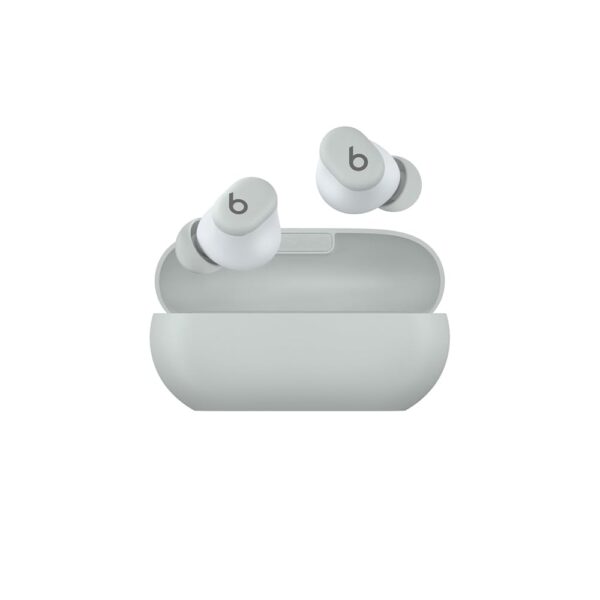
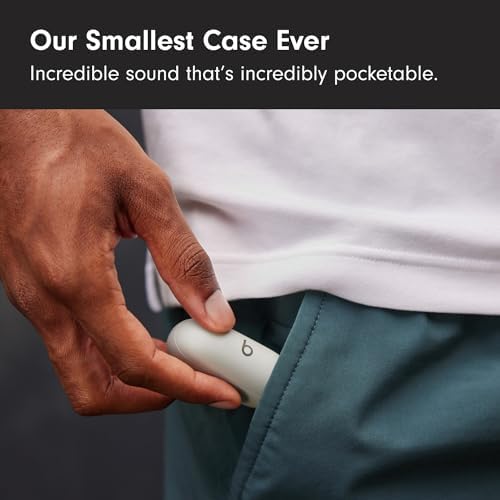
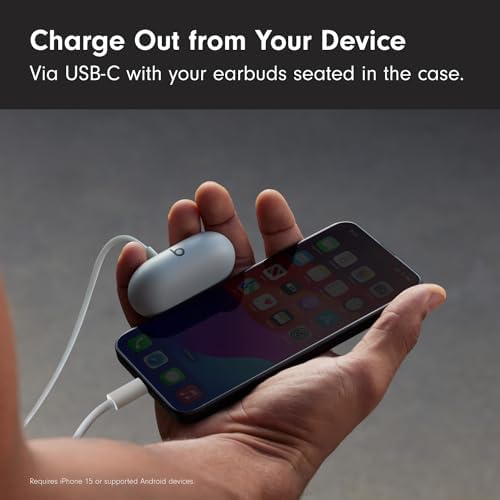
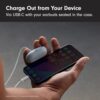
Beats Solo Buds is a true wireless earbud whose charging case does not charge anything. It is a carrying case with a USB-C port that passes power through, and Beats is straightforward that the way you top up on the move is to plug the case into your phone, tablet or laptop. There is no cell inside it. That is why Beats can describe it as the smallest case the company has made, and it is the single fact that shapes every other specification here.
What follows from it is unusual for the category. There is no combined runtime figure to separate out from the bud figure, because there is no case reserve to combine. The 18 hours in the product title is the bud runtime, full stop. That is the longest single charge figure of any true wireless earbud in this catalog, and it has to be, because when it runs out you need a cable and a device rather than a pocket sized battery. Whether that trade suits you depends on whether you already carry a power bank or a laptop, and whether you would rather have a case small enough to disappear in a pocket than one that adds three more charges.
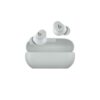
This listing is item MUVY3LL/A in Storm Gray. Beats sells Solo Buds in several colorways under separate item numbers, and this catalog carries at least one other, covered in our Beats Solo Buds review.
Connection, and what Beats does not publish
Beats advertises Class 1 Bluetooth for extended range and fewer dropouts, and the structured field puts a number on it: 100 meters. Class 1 does permit a higher transmit power than the Class 2 radios in most earbuds, so range genuinely is better in practice. The 100 meter figure is a line of sight laboratory number that also requires the source device to transmit at Class 1 power, so in a normal building with walls and a phone in your pocket expect considerably less. Beats describes Class 1 as industry leading, which is a marketing comparison rather than a measurement, and we are attributing it rather than repeating it.
No codec, no Bluetooth version, and no Apple chip
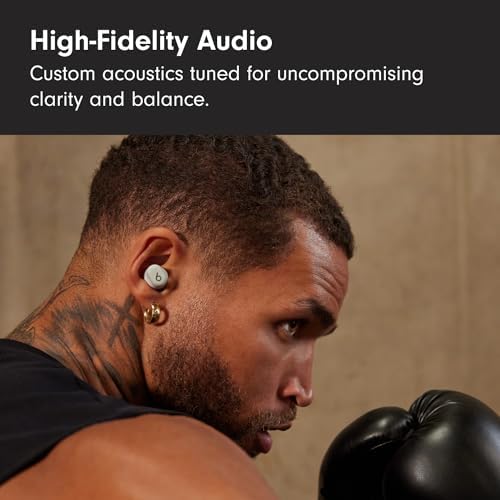
No Bluetooth audio codec is named anywhere. Not SBC, not AAC, not aptX, not LDAC. No Bluetooth version is published either. In practice Beats products use AAC on Apple hardware and SBC elsewhere, but this listing does not confirm it. Beats does claim high fidelity sound from its dual layer drivers, and with no codec named there is no published specification behind that phrase, so we are not describing this as a high resolution product.
Solo Buds also do not carry an Apple H1 or H2 chip, and none is mentioned. What you get instead is one touch pairing that Beats states works on both iOS and Android, which is a genuine convenience but a simpler mechanism than the account level pairing propagation you get from a chipped model. There is no active noise cancellation, and the structured field correctly says sound isolation, which is the passive isolation the ear tip provides. There is no transparency mode, no multipoint and no wear detection.
Battery, one figure and one caveat
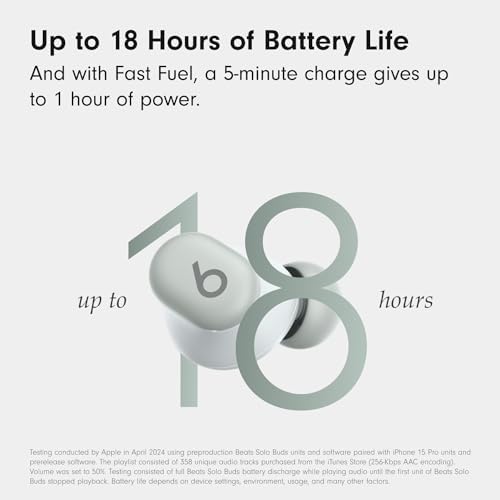
Up to 18 hours of listening on a single charge, with Fast Fuel giving up to 1 hour of playback from a 5 minute charge. Eighteen hours in the buds is a strong number and it is the whole story, since there is no case reserve to add to it.
The caveat is in capital letters in Beats’ own first bullet and it is worth repeating: the power adapter and the USB-C charging cable are both sold separately. Neither is in the box. That is a real cost and a real inconvenience on a product whose charging model depends on plugging the case into something. Budget for a cable at minimum.
As always, 18 hours is a best case at moderate volume and higher volume will shorten it. There is no active cancellation here to add a second variable.
Fit, seal and the rating that does not exist
Four ear tip sizes ship in the box. That is wider than the three most products in this catalog offer, and it matters, because seal is what decides perceived bass on any sealed earbud and it also determines how much outside noise the passive isolation blocks. On a product with no active cancellation, the tip is the only isolation you get, so getting it right is not optional.
Beats publishes physical figures properly here, which is rare: each bud weighs 5.7 grams, the case weighs 22 grams and the whole thing comes to 33.4 grams, with dimensions given for both bud and case. The acoustic description covers dual layer drivers positioned on an axial alignment and laser cut vents to relieve pressure, though no driver size is published.
There is no IP rating. The structured field says “Not Water Resistant”, which is unusually direct and, unlike a vague “water resistant” label, at least tells you where you stand. Take it literally. Do not train in these, do not wear them in rain, and do not assume sweat tolerance. Beats lists the product under fitness use, and that positioning is not supported by any water rating on this page.
Controls, a use to rule out, and the alternatives
Controls are physical buttons in the bud housings rather than touch panels, which is the more reliable arrangement because a button cannot be triggered by adjusting the fit. The structured fields list a confusing mix of volume control, app control, button control, Siri, touch control and voice control, so confirm the exact gesture map before assuming volume is available on the bud. Each earbud carries its own microphones with what Beats calls a noise learning algorithm for calls.
The recommended uses field lists cycling. We would rule that out. This is a sealed in ear design with passive isolation and no transparency mode, so there is no way to admit ambient sound short of removing a bud. Do not use it where hearing traffic is a safety requirement. If awareness while moving is what you need, our open fit headphone listings are the correct category.
If the missing case battery is the dealbreaker, our Beats Studio Buds review covers a model with a powered case and active noise cancellation, and our Beats Fit Pro review covers the wingtip sports option. If you would rather have one long lasting battery in a neckband with no case at all, see our Beats Flex review. Broader alternatives sit in our wireless earbud listings and our earbud headphone listings.
Buy or skip
Buy it if you want the smallest possible case, 18 hours from a single charge covers your day, four ear tip sizes solve a fit problem, and you are comfortable charging from a phone or laptop rather than a powered case. Skip it if you want active noise cancellation, since there is none. Skip it if you need any water protection at all, because Beats states plainly that there is none. Skip it if you expect a case that tops the buds up on its own, and budget separately for the cable and adapter that are not included.