

Description
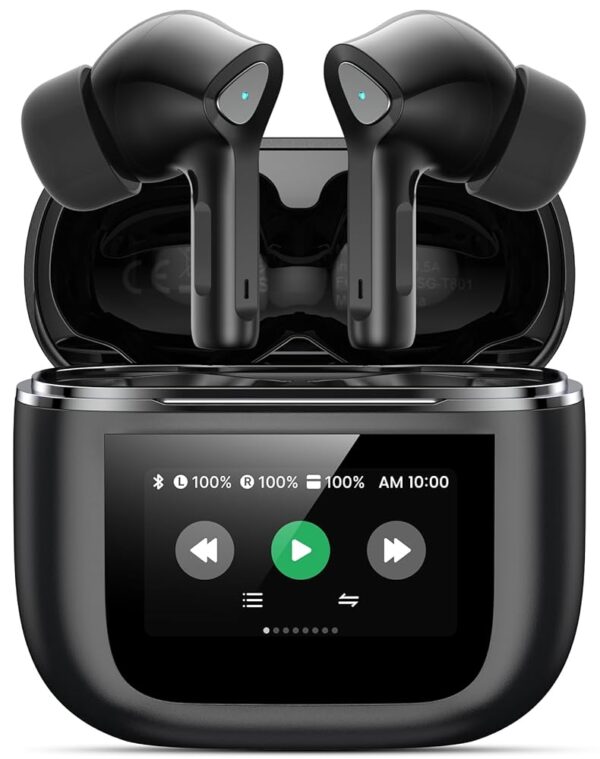
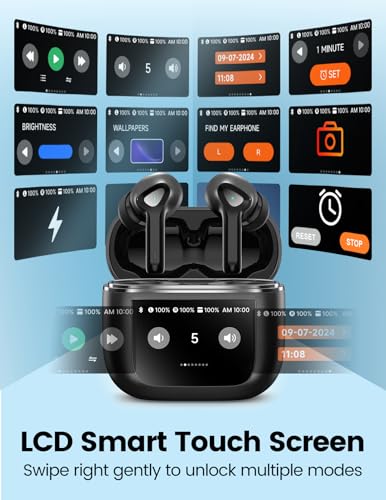
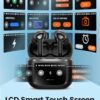
The TWOSKY T801 is an in ear true wireless set whose main selling point is not the earbuds at all. It is the case, which carries a large LED touch screen showing the date, the time, the connection status and the battery level, and which also runs a find my headphones function, a camera shutter, an alarm, a brightness control, volume and track skip, and a lyrics display. Whether that is useful or a novelty is a personal call. What matters for this review is that the battery headline attached to it needs unpacking.
The listener this suits
TWOSKY lists this for business, fitness, running, gym use, calls, gaming, school, sleeping, travel and motorcycling, which is the standard everything list and should not be read as a claim about any single one of them. Motorcycling in particular deserves a flag: a sealing in ear earbud under a helmet removes road and engine cues and is a poor idea regardless of what a listing recommends. The Noise Control field reads Sound Isolation, which confirms the buds seal passively rather than cancelling actively.
The realistic use case is a desk, a commute or a gym session where the screen on the case is genuinely convenient. If awareness of your surroundings matters, this is the wrong shape of product and an open design belongs on your list instead, such as those in our open ear headphone reviews.
Connection and the specifications that are not published
The T801 uses a Bluetooth 5.3 chip with a Hall switch, so opening the case triggers pairing to a previously connected device. Bluetooth 5.3 improves connection stability and power efficiency. It does not improve sound, and TWOSKY does not claim it does.
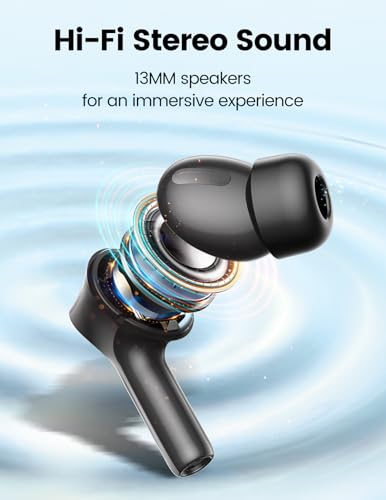
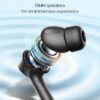
What is missing is more notable. No audio codec is named, so SBC is the only transport that can be assumed and no high resolution reading is supportable. No Bluetooth range figure is published. No latency figure is published, which matters on a product listed for gaming and video. No multipoint, no wear detection, no transparency mode and no app are mentioned, so treat all of them as absent. The second bullet claims unparalleled sound quality from a 13mm double layer diaphragm driver, and there is no published measurement of any kind behind that phrasing.
Battery, and the assumption hidden inside the 50 hour claim
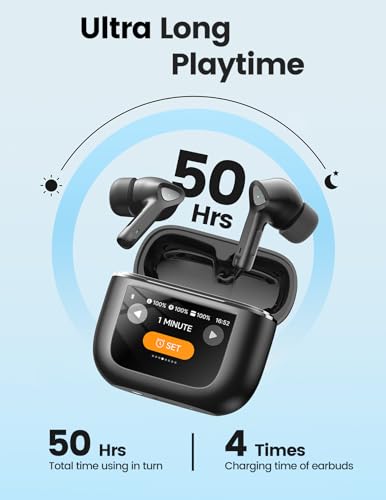
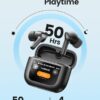
This is the most important paragraph on the page. TWOSKY publishes 5 hours of use at a time, a 500 milliamp hour case that charges the buds four times, and a total of 50 hours. The attribute table agrees on the 5 hour bud runtime. But five hours multiplied by five cycles is 25 hours, not 50, and the listing itself explains the gap in a phrase most shoppers will skim past: 50 hours of playback in turns.
In turns means using one bud at a time while the other charges. That is mono listening, not stereo, and it is the only way the 50 hour figure works. If you wear both buds like a normal pair of earbuds, the realistic total is around 25 hours, and each session runs 5 hours before a case visit. The 50 hour number is not false, it simply describes a listening mode most buyers will never use. Name the assumption rather than repeating the headline. Case charging time is not published, and no case runtime field exists in the attribute table.
Fit, controls and the ear tip count that does not add up
The control interface is a force sensor on the side of each bud rather than a capacitive touch pad, operated by a pinch. That is worth knowing because pinch controls are far less prone to accidental triggering than touch surfaces when you are adjusting the bud in your ear. The attribute table nonetheless records the Control Method as Touch and lists five separate control types across its fields, which is import noise rather than specification.
Ear tips are contradictory. A bullet says the T801 comes with four sizes of ear caps to suit more ear canals. The Included Components field lists three ear caps, described as S, M on ears and L. Four sizes and three sizes cannot both be right, and the safest planning assumption is three, with the medium already fitted. This matters because seal decides whether the advertised bass arrives, and a set that ships one fewer size than advertised is a set that may not fit you.
On water, a bullet describes IPX7 nanocoating technology sealing the surface of the earbuds against sweat and rain. The attribute table says Water Resistance Level: Waterproof with no code. IPX7 means immersion in fresh water to one meter for thirty minutes, while the bullet text around the code describes only sweat and rain protection, which is a weaker scenario. Because the structured data carries no code and the bullet describes splash resistance while naming an immersion rating, treat sweat and rain as covered and immersion as unconfirmed. No IP rating covers seawater, hot water or high pressure water, and coatings degrade with age and sweat exposure.
What the attribute table gets wrong
Several fields on this listing hold text that does not belong in them. The Theme field contains an entire product description reading Bluetooth Wireless Stereo Bass Earbuds with Touch Screen Charging Case. The Style field does the same. Headphones Jack reads Wireless, which is a connectivity answer to a connector question. Number of Power Levels reads 5, a field inherited from an unrelated product category. Item Weight is 1.6 ounces, which describes the case and buds together rather than a bud, and no per bud weight is published. Product dimensions of 0.61 by 0.87 by 0.92 inches describe a single bud rather than the screen equipped case the listing is built around.
The usable specifications are a 13mm double layer diaphragm driver, a frequency range of 20 Hz to 20 kHz, a 500 milliamp hour case and a 5 hour bud runtime. Amazon showed 4.4 out of 5 from 995 ratings, ranked 174th in Electronics and 34th in earbud and in ear headphones, first listed in November 2024. If the LED case is the appeal, the ZZU T18 with its own dual LED display is the closer comparison and publishes a longer bud runtime. For different shapes at the same level, look at the Qecnato T12 sports earbuds and the FOYCOY C17 Bluetooth earbuds, and the wider set is in our wireless earbud reviews.
Who should buy it and who should not
Buy the T801 if the screen on the case appeals and a 5 hour bud runtime fits how you listen. The pinch force sensor is a better control method than a touch pad for anyone who has triggered a track skip while adjusting a bud, and the Hall switch pairing is convenient.
Do not buy it on the strength of the 50 hour figure, because that number assumes you wear one bud at a time. Do not count on four ear tip sizes, because the contents list says three. And do not expect a published codec, latency figure or Bluetooth range, because none of the three appears on this listing.