


Description
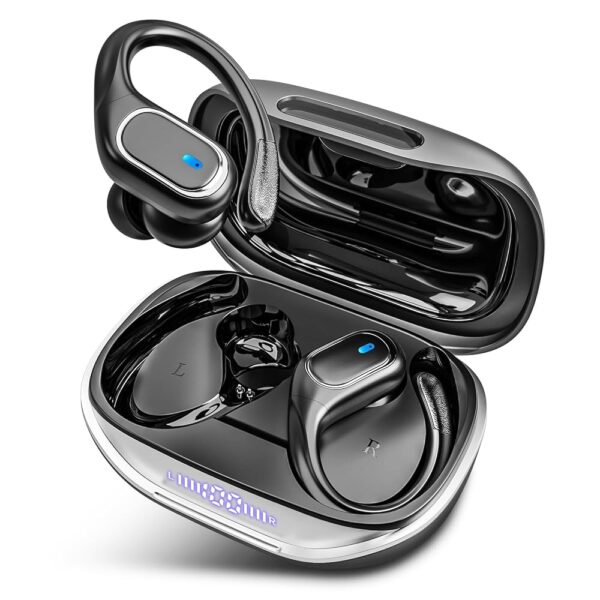
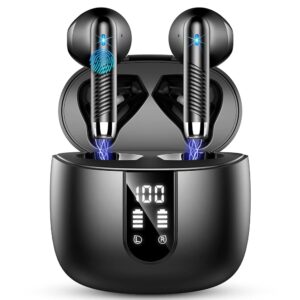
The Catitru T16 is a hooked sports earbud with a wireless charging case, a digital display and a playtime headline that the listing states two different ways on the same page. It carries 4.9 out of 5 from 815 ratings and sits 67th in Electronics, which is an unusually strong position for a listing first published in February 2025. It also has one of the thinnest specification tables in this catalog.
Who this is aimed at
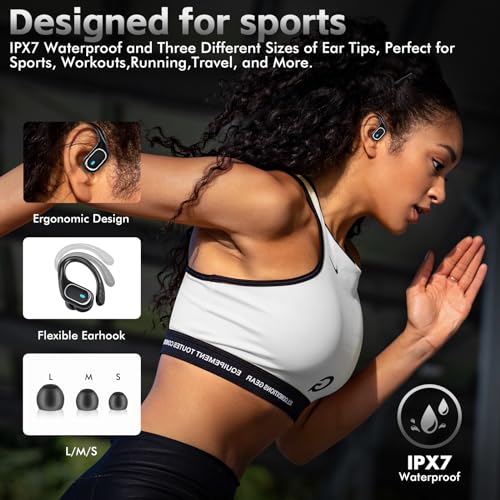
The elastic silicone ear hook is the design argument, and it exists for the same reason every sports hook exists: a bud that shifts during a set or a run is worse than a bud that sounds slightly wrong. Catitru pairs the hook with three ear tip sizes, which is the right number for a sealing design, so both halves of the fit problem are addressed.
What that combination does not do is keep you aware of your surroundings. A sealing bud with a hook blocks ambient sound physically, so it is well suited to a gym and poorly suited to a road. If you run or ride where traffic matters, an open design that leaves the ear canal clear belongs on your list instead, and the group is collected in our open ear headphone reviews.
Connection, and what is simply not published
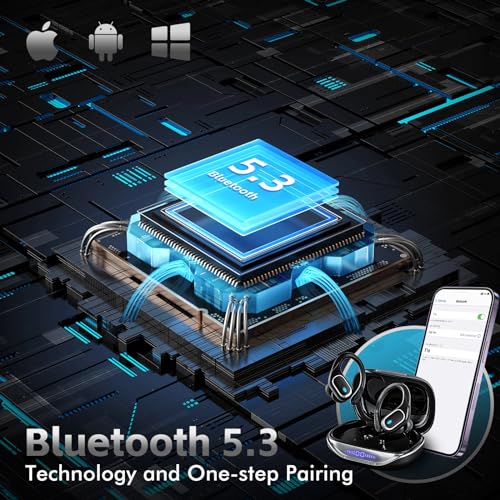
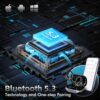
Catitru specifies Bluetooth 5.3 in the bullets and describes automatic reconnection when the case lid opens. What a newer Bluetooth version actually changes is pairing speed, connection stability and power draw, and the copy describes exactly that, which is fair.
The attribute table, however, contains no Bluetooth version field at all, no Bluetooth range, no driver type, no impedance, no frequency response and no battery life field. It lists connectivity, materials, weight and dimensions and very little else. For a product ranked this highly that is a thin data set, and it means most of what follows rests on marketing copy rather than structured specification.
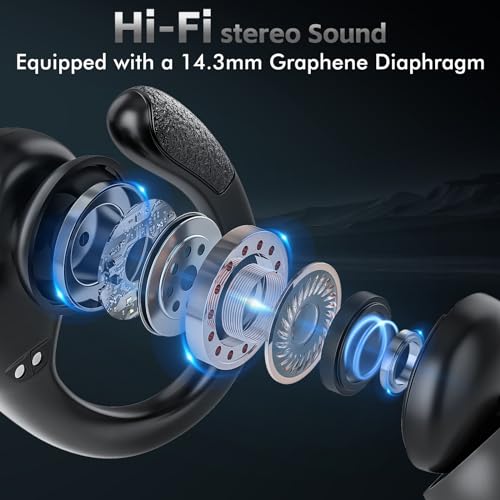
No audio codec is named anywhere. There is no SBC, AAC, aptX or LDAC statement, so SBC is the only transport that can be assumed and no high resolution reading is supportable. The third bullet describes impeccable and exceptional sound from a 14.2mm speaker, which is language rather than measurement. Multipoint, wear detection, transparency mode and app support are all unmentioned, so treat them as absent.
Battery, and two totals that disagree
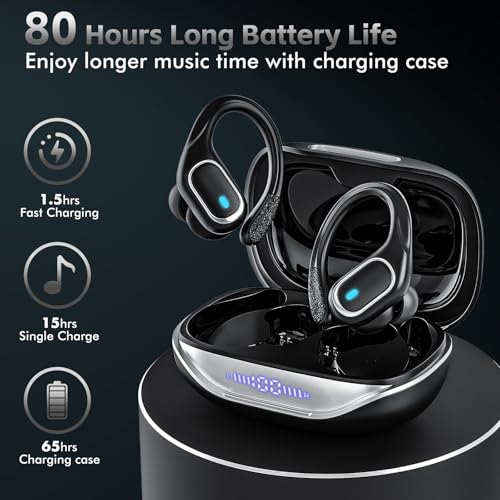
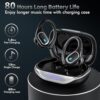
This is the part worth reading carefully. The product title advertises 80 hours of playtime. The first bullet says the 600 milliamp hour case gives a total playtime of approximately 90 hours. Those are two different claims about the same product on the same page, and there is no third figure in the attribute table to break the tie. Name the discrepancy rather than picking one, and treat the lower figure as the planning number.
The bud runtime is where Catitru does something genuinely useful. The listing gives 8 hours from a 70 milliamp hour cell and states the test condition: 50 to 60 percent volume. Almost no listing in this catalog publishes the volume assumption behind its battery figure, and it matters, because a quoted playtime measured at half volume will not survive an hour at full volume. Take the 8 hours as a realistic moderate volume figure and expect less if you listen loud.
Charging is over USB Type C and the case supports wireless charging, which the title states. An external digital LED display on the case shows the remaining level. No case charging time is published.
Fit, tips and a water rating described two ways
Three sizes of silicone ear tips ship in the box alongside the buds, a Type C cable, the case and the manual. That is enough range for most ears and it matters more than the driver specification does, because a tip that does not seal loses low frequency energy before the 14.2mm driver has a chance. Work through all three rather than defaulting to the fitted medium.
On water the listing contradicts itself. The second bullet states an IPX7 waterproof rating and then describes what that rating covers as resisting water splashes and sweat. Those are not the same thing. IPX7 means immersion in fresh water to a depth of one meter for thirty minutes, which is far stronger than splash resistance, and the attribute table gives only Water Resistance Level: Waterproof with no code at all. Because the code appears once and is immediately described in weaker terms, the defensible reading is that sweat and rain are covered and immersion is unconfirmed. No IP rating covers seawater, hot water or high pressure water, and the seals that produce a rating degrade with age and sweat exposure. A listing that states its code consistently, such as the Hupoaf H87 hooked sport earbuds, is easier to plan around, though that one has its own coding problem.
What the data gets wrong, and the alternatives
Two attribute fields describe a different product. Ear Placement reads Over Ear and Form Factor reads Over Ear, both of which describe a full sized headphone rather than an in ear bud held by a hook. The Batteries field claims one A battery is required, which is inherited nonsense for sealed lithium cells. Item Weight is given as 5 ounces, which is the retail package rather than a bud, and no per bud weight is published anywhere.
The 4.9 out of 5 average across 815 ratings is worth flagging on its own. An average that high across that many ratings is uncommon, and it sits alongside a category rank of 67th in Electronics and 17th in earbud and in ear headphones on a listing only months old. None of that is evidence of anything by itself, but it should be weighed alongside how little the listing actually specifies.
Catitru sells several similar models through this catalog, including the Catitru BX17 with an 80 hour claim of its own, so buyers should compare model numbers carefully rather than assuming the brand ships one design. For different takes on the hooked sports shape, the Stiive U8I sports earbuds and the FOYCOY C17 Bluetooth earbuds are the closest comparisons, and the full group sits in our wireless earbud reviews.
Who should buy it and who should not
Buy the T16 if you want a hooked sports bud with a wireless charging case and three tip sizes, and if an 8 hour bud runtime measured at moderate volume suits how you listen. The published volume condition on that figure is genuinely more useful than a bigger number with no condition attached.
Do not plan around either the 80 hour or the 90 hour total, because the listing gives both. Do not rely on the IPX7 line, because the same bullet describes splash resistance. And understand before ordering that almost nothing is published about the radio, the driver or the electrical specification.
![SAMSUNG Galaxy Buds 3 Pro AI True Wireless Bluetooth Earbuds, Noise Cancelling, Sound Optimization, Redesigned Comfort Fit, Silver [US Version, Amazon Exclusive, 2Yr Warranty]](https://wirelessemporium.com/wp-content/uploads/2025/04/samsung-galaxy-buds-3-pro-ai-true-wireless-bluetooth-earbuds-noise-300x300.jpg "SAMSUNG Galaxy Buds 3 Pro AI True Wireless Bluetooth Earbuds, Noise Cancelling, Sound Optimization, Redesigned Comfort Fit, Silver [US Version, Amazon Exclusive, 2Yr Warranty]")