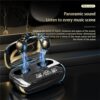

Description
This is a budget true wireless set sold under the brand name Generic, with the manufacturer field reading SPORTS EARBUDS and the model number recorded as “black A”. That naming tangle is the first thing to understand about the listing, because it tells you there is no established brand behind the product and no model history to research. Amazon lists it as ASIN B0DTQ25T3H, first available in March 2025, carrying a 3.4 star average from 4 ratings and ranked 3,685th in the Earbud and In-Ear Headphones category. Four ratings is not a usable sample, so everything below works from the published specification.
Who this set is aimed at, and who it is not
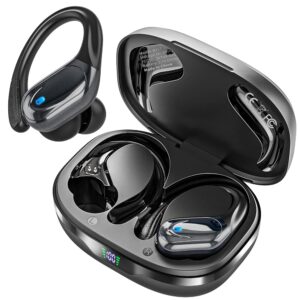
The listing positions this as a training earbud. The bullets talk about running, camping and working out, and the case is built around a sliding cover with a battery percentage readout. The buyer this suits wants a cheap, replaceable pair for the gym bag, cares more about not ruining an expensive set with sweat than about resolution, and is happy to press a physical button rather than tap a touch panel. Physical buttons do not misfire when your hands are wet, so that choice is defensible.
This is not a set for anyone who needs reliable call quality on a work call, anyone who wants noise cancellation, or anyone shopping on measurable sound quality. There is no ANC claim in the specification at all, despite the phrase “noise cancelling” appearing in the product title. That is a straight contradiction between the title and the spec sheet, and the safe reading is that the title refers to microphone side noise suppression during calls rather than to cancellation of what you hear. If ANC is the reason you are shopping, a set with a published hybrid ANC design such as the Soundcore A20i true wireless earbuds answers the question more directly.
How it connects, and what the version number really buys you
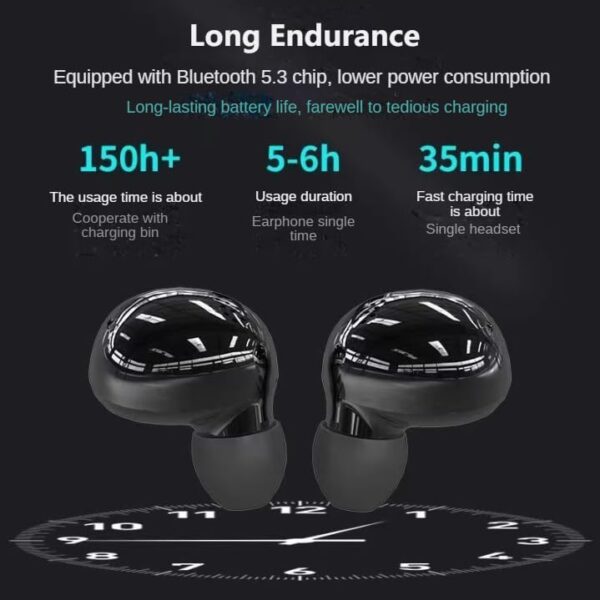
The listing gives two different Bluetooth versions. The product title says Bluetooth 5.4. The description says “Equipped with Bluetooth 5.3 chip” and lists “Bluetooth standard: V5.3”, and the feature bullets say 5.3 twice more. Four mentions of 5.3 against one mention of 5.4 in the title suggests the title is the outlier, but we cannot resolve it, so treat the Bluetooth version as unconfirmed and assume 5.3 if the number matters to you.
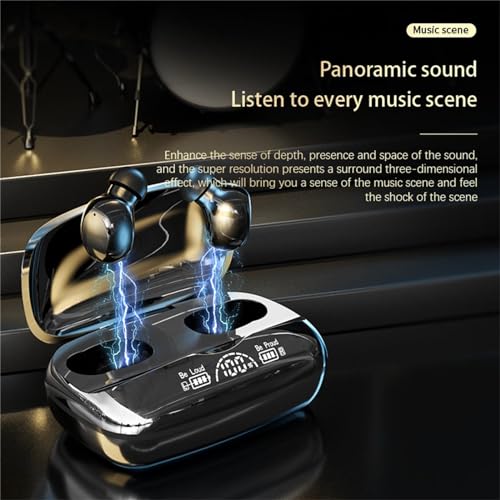
It matters less than the marketing implies. A newer Bluetooth version changes connection stability, power draw and the availability of LE Audio features. It does not by itself make anything sound better. What would change the sound is the codec, and this listing does not name one anywhere. No SBC, no AAC, no aptX, no LDAC. The description instead claims “super resolution” and a “spatial three-dimensional sound field”, which are marketing phrases with no measurable definition. Where a codec is not published, the honest assumption is SBC only, which is the baseline every Bluetooth device supports and the lowest quality tier in common use. Any high resolution reading of this product is unsupported by its own specification.
Range, pairing and the master free design
The listing quotes roughly 33 feet of range, the ordinary line of sight figure for a Class 2 radio, which drops through walls and bodies. It also states that neither bud is a master, so either one can be used alone, which is useful for a single ear commute or call. Multipoint pairing, an app, wear detection, transparency mode and a firmware update path are not mentioned anywhere. Assume none of them exist.
The battery picture, and the number the listing will not give you
This is where the listing is thinnest. The description quotes “Talk time: About 4 to 8 hours” and gives an empty field for available range. There is no separate music playback figure for the buds, and there is no total figure including the charging case. That is the reverse of the usual problem: most listings quote only the combined case number and hide the per bud runtime, while this one quotes only a wide talk time band and hides the total.
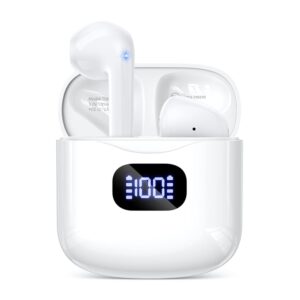
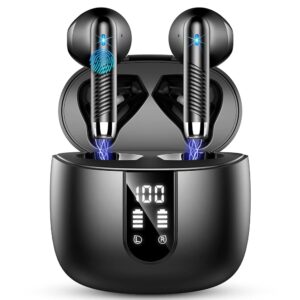
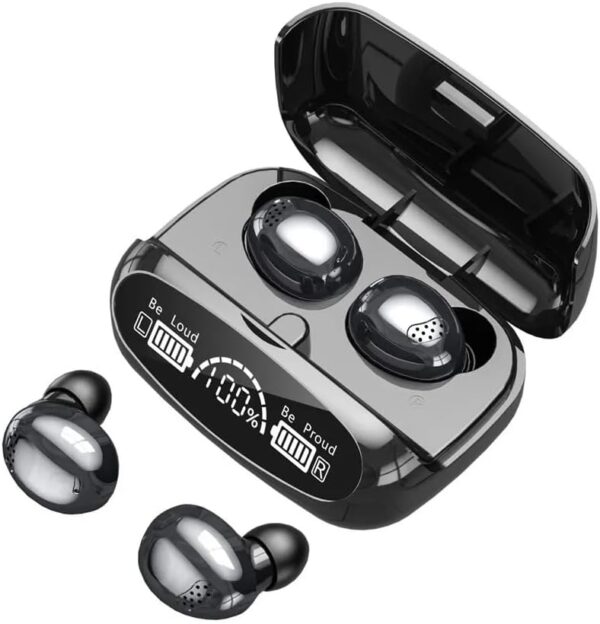
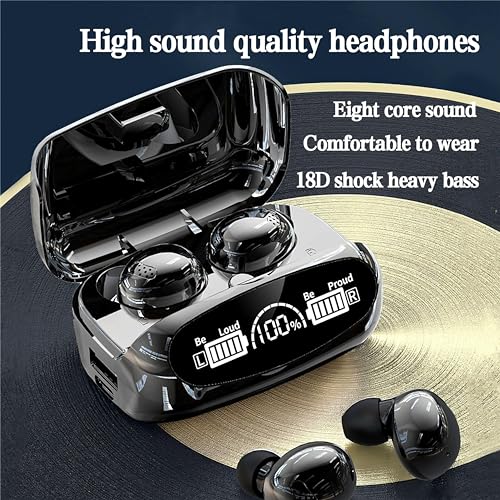
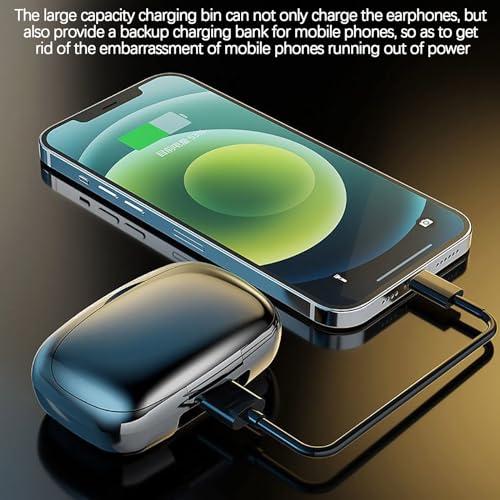
A four to eight hour spread is a very large margin, and talk time is normally shorter than music playback because the microphones and the two way link stay active. Any quoted figure is a best case at moderate volume, and this one is vague even by that standard. If battery decides the purchase, buy from a listing that separates the two numbers, such as the TOZO T10, which states a per charge figure and a total figure. The LED readout on the case here is a real convenience, since it shows case and bud charge as a percentage and in quarter segments, but a display is not a substitute for a published runtime.
Fit, seal, controls and the water rating
The listing states IPX7 in the title and in the specification block. IPX7 is an immersion rating, meaning the sealed unit is rated to survive one meter of fresh water for thirty minutes under test conditions, which is stronger than the IPX4 splash rating most training earbuds carry. Two cautions apply. No IP rating covers seawater, chlorinated pool water or pressurized water, and the seals degrade with age and heat. Treat IPX7 as insurance against a soaking, not a license to swim.
Ear tips are not itemized. The listing does not say how many tip sizes ship in the box, and tips are the single specification that decides whether an in ear set sounds full or thin. A poor seal removes bass before it reaches you, so a buyer who cannot get a seal will conclude the earbuds sound weak when the tips are the actual problem. The package contents list only the case, the two buds, a USB-C cable and a manual, which suggests one fitted pair and no spares. That is worth planning for.
These are sealed in ear buds. Sealing them into your ears removes traffic and bicycle awareness, so they do not belong on a road ride or a road run. If outdoor awareness is your requirement, the open designs collected under headphones that leave the ear canal open are the correct shape of product, not this one.
What the listing does not publish, and where to look instead
The specification block contains fields that do not belong to this product. “Included Components” reads “Blu-ray”, which is inherited junk from another category. “Age Range (Description)” reads “18”, a bare number with no unit attached. There is no driver size, impedance, frequency response, microphone count or ANC figure, and the 2.39 ounce weight is the package, not the buds.
If those gaps bother you, the alternatives worth comparing are ones that publish more. The GNMN V7 sports earbuds sit in the same price tier with a similar sweat resistance pitch, and the occiam T9 sport earbuds cover the same running use case. For a broader shortlist across this shape of product, the in ear and earbud style headphones section collects the comparable sets in one place.
Who should buy this, and who should skip it
Buy it if you want an inexpensive sweat resistant pair for the gym, you value the IPX7 immersion rating over sound quality, and you can accept that the runtime is quoted as a four to eight hour band with no total figure. The physical buttons and the single bud independence are genuine advantages at this price.
Skip it if you need noise cancellation, a named codec or multipoint, or if you plan to wear it near traffic. Skip it too if you want a track record: 4 ratings on a Generic branded listing is not enough to predict how it holds up. Confirm the Bluetooth version, the bud only runtime and the ear tip count with the seller, because the listing answers none of the three.