



Description
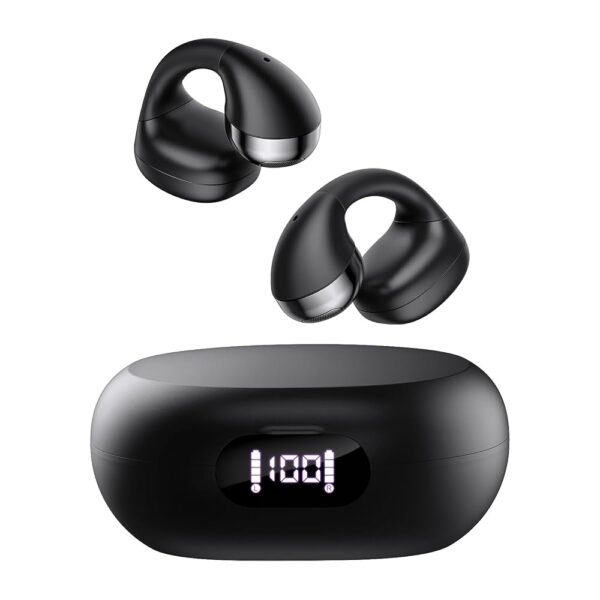
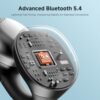
The CXK EP03 is a clip on open ear headphone sold by Shenzhen Jiechen Technology, listed with Bluetooth 5.4, a charging case carrying an LED battery display, and a headline claim of 30 hours of playtime. It belongs to the fast growing budget end of the clip on category, where the physical design borrows heavily from products such as the Bose and Huawei clip on models at a fraction of the outlay. The listing is generous with adjectives and sparse with numbers, so this review separates the two and states clearly what is missing.
Who a clip on open ear product is for
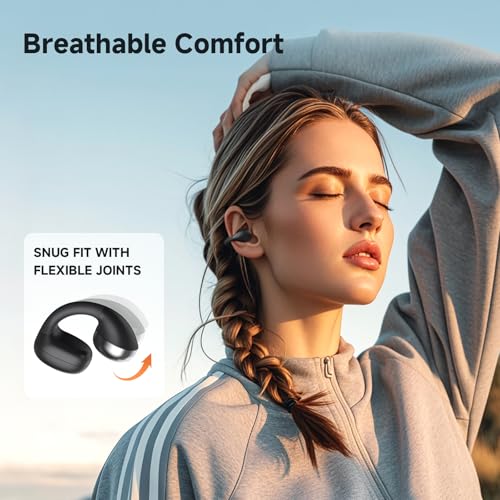
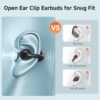
Nothing here goes into the ear canal. A driver housing sits outside the canal opening, a counterweight rests behind the ear, and a flexible bridge clips the two together around the ear cuff. CXK makes the awareness argument directly, describing the ability to hear traffic, conversations and alarms while listening, and framing it as a safety benefit for outdoor activity and commuting. That argument is sound. An open canal delivers ambient awareness in a way that no transparency mode on a sealed earbud fully reproduces, because there is no microphone and no processing in between.
The corresponding weakness is that this format provides no isolation at all. Noise Control is listed as None. On a plane, a subway or a loud street the ambient noise competes with the music directly, and the natural response is to turn the volume up. This listing publishes no volume limiter and no output figure of any kind, so nothing restricts how loud it goes. If most of your listening happens in noisy places, a sealed design from our wireless earbuds section is the appropriate tool and this is not.
The bass claim and the design contradict each other
The listing promises high fidelity sound with deep bass, rich mids and crisp highs, and in a separate bullet promises minimized sound leakage. Both claims sit awkwardly against the physics of an open ear design. Low frequency energy in an earbud comes from sealing the canal and pressurizing the small volume of air inside it. With no seal, that pressure cannot build, and open ear products across every price point are consistently light on bass compared to sealed ones. Leakage is the same mechanism seen from the other side: sound that reaches the ear across an air gap also reaches anyone nearby. Manufacturers reduce leakage with directional driver placement and phase cancellation, which helps but does not eliminate it. Treat both claims as design intent rather than measured performance, because no measurement is published to support either.
Connection: Bluetooth 5.4, described in terms it does not deliver
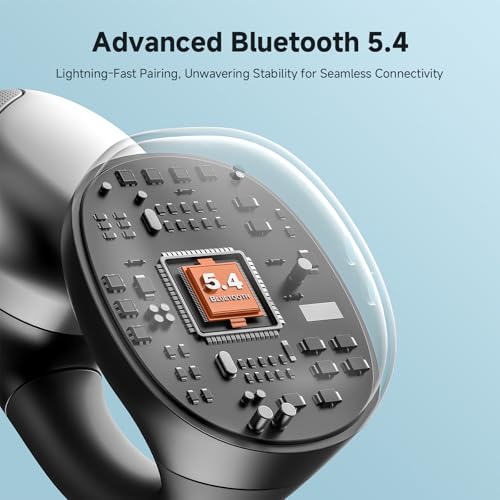
CXK lists Bluetooth 5.4 and then explains it as offering faster data transfer speeds, improved range and more stable connections compared with Bluetooth 5.3. That description overstates what a point release changes. Bluetooth version numbers govern connection management, power efficiency and the availability of newer radio features. Audio quality over Bluetooth is determined by the codec, not by the version number, and range in practice is set by antenna design, transmit power and the walls and bodies between the two devices. A 5.4 chip is not a reason to expect better sound than a 5.3 chip.
No Bluetooth codec is named anywhere on this listing. SBC is the universal baseline and can be assumed; nothing else can. Because no codec is published, the phrase high fidelity on this page is unsupported by the specification, and no high resolution or lossless claim can be made for this product. Multipoint is not claimed. Wear detection is not claimed. There is no companion app mentioned, which also means no equalizer, and on an open ear design an equalizer is the main tool available to compensate for the missing low end.
The compatible devices field lists smartphones, tablets, laptops, desktops, gaming consoles, smart speakers, televisions, car audio systems and cellphones. That is a list of everything with a Bluetooth radio rather than a tested compatibility statement. It carries no useful information, and in particular it should not be read as a claim of low latency for gaming or of reliable television pairing, since no latency figure is published.
Battery: one number where there should be two
The listing states that the EP03 provides up to 30 hours of uninterrupted playtime on a single charge. The specification field reads 3E+1 Hours, which is scientific notation left over from a data import and simply means 30. The problem is not the formatting, it is the framing. Thirty hours from a single charge of a pair of clip on earbuds this size is not consistent with the battery volume such a housing can hold. The overwhelming likelihood is that 30 hours is the combined total including recharges from the case, and that the runtime of the buds themselves is a much smaller figure that the listing never publishes.
We are not going to guess what the bud runtime is. What matters for a buyer is that this listing gives one number where honest listings give two, and that the number given is described in a way the hardware does not support. Ask the seller for the runtime of the buds alone on one charge before relying on this product for a long day. There is also no charging time published, no fast charge claim, and no battery capacity in milliamp hours for either the buds or the case.
The LED digital display on the case is a genuinely useful inclusion at this level, since it shows remaining case charge as a number rather than as three ambiguous indicator lights. It does not, however, tell you anything about the buds themselves.
Fit, durability and a water rating that does not exist
Fit follows the clip on pattern, with soft skin friendly materials listed as plastic, silicone and fabric, and no size options because nothing is inserted into the canal. That is the central risk with this format. There are no ear tips to swap and no adjustment mechanism, so the clip either matches your ear geometry or it does not. Buyers with smaller or shallower ear cuffs frequently find clip on designs slide, and there is no remedy when that happens.
The title markets the product for workout use, but the listing publishes no IP rating whatsoever. There is no Water Resistance Level field, no IPX code and no sweat resistance claim in any bullet. That is a meaningful gap for a product being sold for exercise. Without a published code we will not describe this product as sweat resistant, splash resistant or safe in rain, because the manufacturer has not said it is. If sweat resistance matters, buy something that publishes a code, and remember that no IP rating covers seawater or pressurized water and that seals weaken with age.
The included components field lists only a user manual. No charging cable is itemized, which may be an incomplete listing rather than an incomplete box, but it is worth confirming before purchase. Item weight is given as 3.2 ounces against package dimensions of 3.94 by 3.5 by 1.46 inches, so the figure describes the packaged product and not what is worn.
What to compare it against
The direct structural comparisons are the premium clip on designs. The Bose Ultra Open Earbuds and the Huawei FreeClip use the same cuff clip approach and both publish considerably more of their specification, including battery figures split between buds and case. Within the budget tier, the Boytond S19 Ultra and the Aubor H13 are the closest equivalents on price and construction. If a secure grip for exercise is the priority, an over ear hook design such as the Soundcore V30i is generally more forgiving across ear shapes than a clip, and it publishes both an IP rating and a split battery figure. The rest of the format sits in our open ear headphones category.
Who should buy it, who should not
Buy it if you want to try the clip on format at low cost, you listen mostly in quiet or moderate environments, and you value hearing your surroundings more than you value bass response or isolation. The customer rating stands at 4.5 out of 5 across 133 ratings, which is a small sample but a favorable one, and the case display is a practical touch.
Do not buy it as workout gear on the strength of the title, because no water or sweat rating is published anywhere. Do not expect the 30 hour figure to describe the buds on one charge. Do not expect any codec beyond the baseline, any app, any equalizer or any multipoint, since none of those are claimed. And if bass is what you listen for, this design cannot deliver it regardless of what the description says.
![SAMSUNG Galaxy Buds 3 Pro AI True Wireless Bluetooth Earbuds, Noise Cancelling, Sound Optimization, Redesigned Comfort Fit, Silver [US Version, Amazon Exclusive, 2Yr Warranty]](https://wirelessemporium.com/wp-content/uploads/2025/04/samsung-galaxy-buds-3-pro-ai-true-wireless-bluetooth-earbuds-noise-300x300.jpg "SAMSUNG Galaxy Buds 3 Pro AI True Wireless Bluetooth Earbuds, Noise Cancelling, Sound Optimization, Redesigned Comfort Fit, Silver [US Version, Amazon Exclusive, 2Yr Warranty]")