




Description
An old listing with a long tail
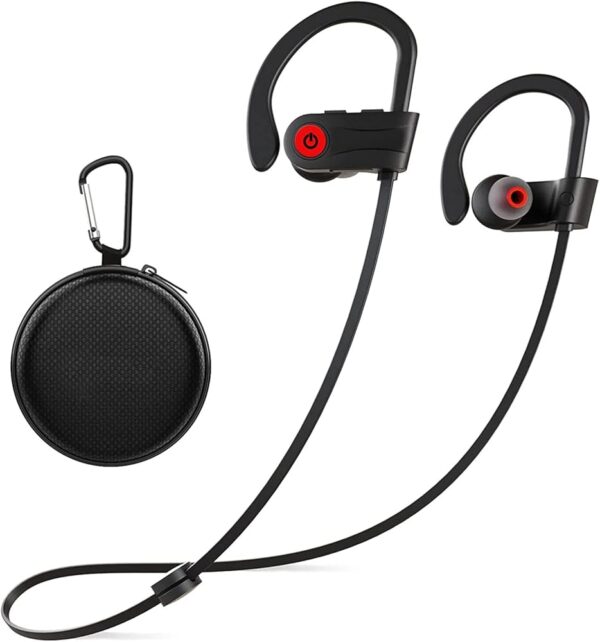
The Otium U18 is a neckband sports earphone: two sealed buds joined by a cable that runs behind the neck, with silicone ear hooks holding each side in place. Amazon first listed it in June 2017, and it has accumulated roughly 16,938 ratings at a 4.3 star average since then, ranking 1,472nd in Electronics and 229th among earbud and in-ear headphones.
That age is the first thing a buyer needs to understand, because it explains most of what follows. This is a listing that has been edited repeatedly over eight years while keeping the same product page. One bullet says so directly, noting that the Bluetooth device name was changed from “Otium” to “U18.” A long lived listing accumulates review history from earlier hardware revisions, and the specification you read today may not describe the unit that earned those reviews.
The Bluetooth claim does not fit the timeline
The bullets and the specification table both state Bluetooth 5.3. The listing first appeared in June 2017. The Bluetooth 5.3 specification was not published until 2021, and devices carrying it did not reach retail until 2022. A product listed in 2017 cannot have shipped with a radio standard that did not exist for another four years.
There are two plausible explanations, and the listing supports neither over the other. Either the hardware was revised during the life of the listing and the current unit genuinely carries a newer radio, or the specification was updated to look current without the hardware changing. If the Bluetooth version matters to you, treat it as unverified and confirm with the seller which revision ships today.
No Bluetooth audio codec is named anywhere on the page. SBC, the baseline every Bluetooth device supports, is all you can assume. There is no published evidence of AAC, which is what Apple devices use, and none of aptX or LDAC, which only work when the source device supports the same codec. The first bullet is headed “True HD High Fidelity Sound,” which is a claim with nothing behind it: no codec, no measured response, no sensitivity figure. Nothing on this listing supports describing the U18 as high resolution.
Range is given as 30 feet, or 10 meters, which is the usual line of sight figure and will fall sharply through walls and bodies. The specification table lists “Frequency Response = 2.4 GHz,” which is the radio band Bluetooth operates in and has nothing to do with audio frequency response. The charging port is Micro USB rather than USB-C, which is consistent with the product’s age and is worth knowing if every other cable you own is Type-C.
Battery: three numbers for one product
The Amazon title says 15 hours of playtime. The bullets say up to 16 hours of music with 240 hours of standby from a 1.5 hour charge. The specification table says Battery Life is 10 hours. Those cannot all describe the same earphone.
Because there is no charging case here, whichever figure is correct is the whole battery picture. That is the one structural advantage of the neckband format: there is no combined number quietly built from repeated case refills, and when the neckband is flat you plug it in. The prudent reading is the lowest published figure, 10 hours, with 15 or 16 as the optimistic ceiling. Quoted playtimes across the category are measured at moderate volume, and this listing does not state the test volume. The included components list mentions only a protective case, not a charging case, which confirms the format.
Fit, controls and what the water claim actually says
The U18 uses silicone ear hooks with sealed in-ear tips, and the bullets claim the buds will “never fall out.” The number of ear tip sizes in the box is not published anywhere, which is a real omission on a sealed earphone, because seal is what decides how much bass you hear. If these sound thin, tip size is the first thing to change, and this listing does not tell you what your options are.
The water rating is where the copy contradicts itself in a single bullet. The heading says “IPX7 Waterproof Rating.” The sentence underneath says the upgraded rating “100% prevents ordinary splashing water and rain.” Splashing water and rain is a description of IPX4 protection, not IPX7, which is an immersion rating covering fresh water at roughly one meter for about thirty minutes. The specification table then records the water resistance level as “Water Resistant,” with no code at all. Three statements, three different levels of protection. Treat the U18 as sweat and rain resistant, do not submerge it, and note that no IP rating covers seawater or high pressure water in any case. A claim that anything “100% prevents” water ingress is not a claim any manufacturer can support.
Controls are described three ways. The specification table lists Control Type as Button Control, Controller Type as Button Control, and Control Method as “Touch, Voice.” The bullets describe skip, play and pause without saying how. Given the neckband format an inline button remote is the likely answer, but the page does not settle it.
Noise handling, data quality and the alternatives
The specification field for noise control reads “Sound Isolation,” and the title says “Sound Isolation Headsets,” both of which are accurate. There is no active noise cancellation here. The fourth bullet mentions “Noise Suppression Technology” to reduce background noise, which in context describes microphone side processing for calls rather than anything that quiets your own listening.
The imported product data on this listing is visibly damaged. The second feature bullet begins with a stray comma and an unclosed quotation mark, which means the source record was truncated or malformed at import. The first bullet also ends mid sentence. Read the page knowing that some of the text you are seeing is fragmentary.
Because these seal the ear canal, they reduce your awareness of traffic, and they are not the right choice for road running or cycling however securely they fit. If your route involves vehicles, the designs in our open ear headphone reviews leave the canal clear instead. Within the neckband format, the Cuzabe CBH11 and the JOYWISE U18C, which publishes an IPX7 rating and a 16 hour figure, are the closest comparisons, and the Stiive U8I includes four ear tip sizes where this listing publishes none. For a true wireless alternative from a brand with a longer record, the JLab JBuds Air Sport is worth reading. The wider format sits in our earbud headphone reviews.
Buy it, or skip it
Buy the U18 if you want a cheap neckband with no case to manage, ear hook retention and a review history stretching back eight years. Skip it if you need the specification to be current, because a 2017 listing claiming Bluetooth 5.3 cannot be taken at face value. Skip it too if you need a confirmed water rating, a confirmed runtime, or any information at all about how many ear tip sizes come in the box.
![SAMSUNG Galaxy Buds 3 Pro AI True Wireless Bluetooth Earbuds, Noise Cancelling, Sound Optimization, Redesigned Comfort Fit, Silver [US Version, Amazon Exclusive, 2Yr Warranty]](https://wirelessemporium.com/wp-content/uploads/2025/04/samsung-galaxy-buds-3-pro-ai-true-wireless-bluetooth-earbuds-noise-300x300.jpg "SAMSUNG Galaxy Buds 3 Pro AI True Wireless Bluetooth Earbuds, Noise Cancelling, Sound Optimization, Redesigned Comfort Fit, Silver [US Version, Amazon Exclusive, 2Yr Warranty]")