Description
The Rulefiss Q38 is a hooked sports earbud that does two things almost nothing else at this level does: it names its codecs, and it publishes a latency figure that the structured data confirms. It also carries an age range that includes children with no volume limit published, and a frequency claim that goes past the limits of human hearing. All four are worth taking in order.
Who this is for
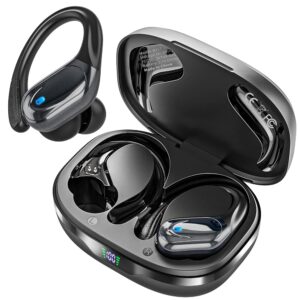
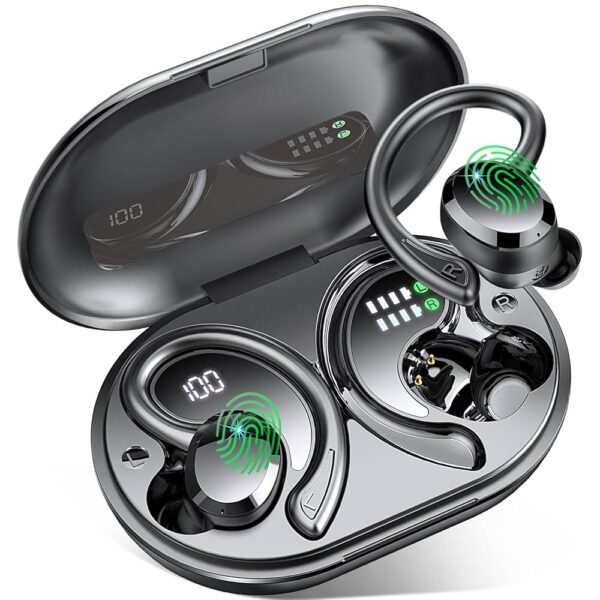
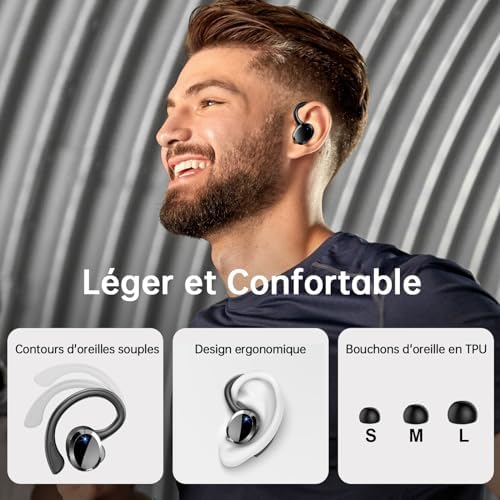
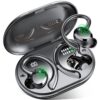
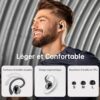
A soft 45 degree ear hook, a single bud weight of 8 grams and three sizes of silicone ear cap put this in the running and gym bracket. The contents list is unusually specific: a USB-C cable, two Q38 buds, a multilingual manual, an 800 milliamp hour charging case and six soft silicone ear caps in L, M and S. That is three pairs, correctly counted, and an 800 milliamp hour case is genuinely large for this price bracket.
The Noise Control field reads Passive Noise Cancellation, which is honest. There is no active cancellation here and Rulefiss does not claim any. Isolation comes from the ear tip seal, which also removes ambient cues, so anyone running or riding near traffic should be looking at an open design instead. Our open ear headphone reviews cover that group.
The age range field reads Kid, Teen and Adult. That changes what needs saying. Rulefiss publishes no volume limiting feature, no decibel cap and no parental control anywhere on this listing, so nothing about the product restricts how loud a child can play it. A product marketed in part to children with no stated volume limit should not be presented as safe for a child’s hearing, and this review does not do so. A volume limit only means anything when it cannot be bypassed, and here there is no limit at all.
Connection, codecs and a latency number that checks out
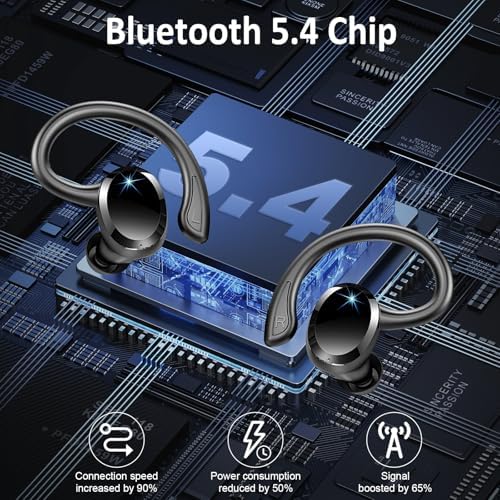
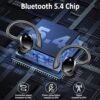
Rulefiss specifies Bluetooth 5.4 with dual channel transmission and a 20 meter range. It claims that compared with Bluetooth 5.3 the transmission speed is 100 percent higher and stability 70 percent better. Those two percentages are Rulefiss figures with no test method named, and should be read as marketing. What a version change genuinely affects is connection robustness, power draw and profile support.
The 41 millisecond latency claim is different, because the attribute table independently records Audio Latency as 41 Milliseconds. Two entries agreeing is meaningful, and 41 milliseconds is a plausible, respectable figure for a budget Bluetooth earbud. It is low enough that most video content will look synchronized, especially since many phones apply their own compensation. It is not zero, and Rulefiss does not claim it is.
AAC, SBC and the frequency claim
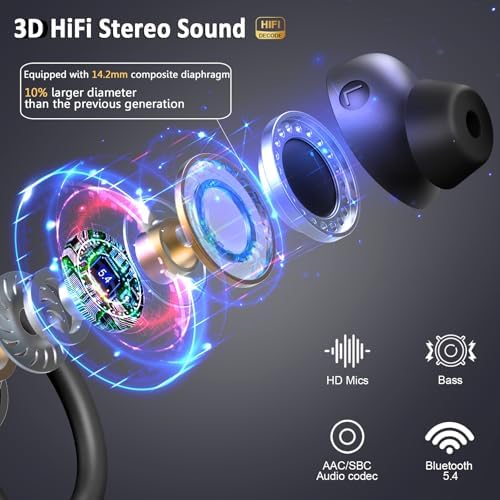
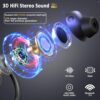
The first bullet names an AAC and SBC audio decoder. SBC is the baseline every Bluetooth device supports; AAC is the codec that matters on Apple devices, where iPhones default to it and generally get better results with it than with SBC, while Android handling varies by phone. Neither carries high resolution audio. There is no aptX and no LDAC on this listing, so there is no high resolution wireless path here regardless of your phone, and the Hi-Fi language in the product title is not supported by the codec list underneath it.
The same bullet claims the drivers increase the audio frequency by 75 percent to a range of 18Hz to 25kHz. Human hearing tops out around 20kHz for young ears and falls with age, so the portion above 20kHz is inaudible, and the 18Hz bottom end is below what a 14.2mm earbud driver can meaningfully reproduce at volume. Treat the range as a driver specification rather than something you will hear. Multipoint, wear detection and app support are all unmentioned and should be treated as absent. Rulefiss also states that the buds are not compatible with gaming devices, which is a voluntary limitation worth crediting.
Battery, and which field holds which number
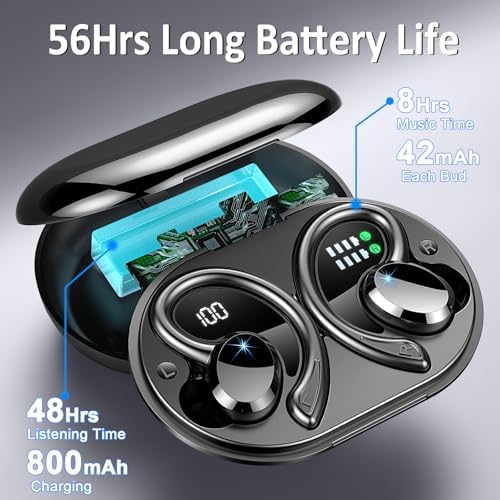
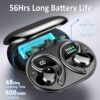
The bullets give 6 to 8 hours of playtime on a single charge and up to 56 hours with the case. The attribute table gives Battery Life as 56 Hours, which is the combined figure filed in the bud runtime field, and Carrying Case Battery Average Life as 48 Hours from an 800 milliamp hour case with a 1.5 hour charge time.
Eight plus forty eight is fifty six, so the numbers reconcile if the bud runtime is taken at the top of the stated range. Read the bullets, not the table: bud runtime is 6 to 8 hours and the 56 is the total. Publishing the bud figure as a range is more honest than a single number, because the answer genuinely depends on volume and on whether the call microphones are running. Plan on six. The 800 milliamp hour case is large enough to make the 48 hour reserve more credible than the 300 milliamp hour cases claiming similar figures elsewhere in this catalog.
Fit, and a water code written oddly but readable
Three tip sizes plus the 45 degree hook covers fit, and the tips do most of the work for sound because the seal decides whether the bass from the 14.2mm composite diaphragm actually arrives. Controls are a touch panel on each bud handling playback, volume, calls and both Siri and Google Assistant.
On water, Rulefiss writes IP-X7 with a hyphen. That is non standard formatting for what is clearly intended as IPX7, which means immersion in fresh water to one meter for thirty minutes. Unlike several products in this catalog that write an invalid IP7, this one is recoverable and describes a real rating. The attribute table then falls back to Water Resistance Level: Waterproof with no code. Two caveats apply as always: no IP rating covers seawater, hot water or high pressure water, and the seals that produce a rating degrade with age and sweat exposure, so an IPX7 rating on a two year old sweat soaked earbud is not the rating it shipped with. A listing that writes an invalid code, such as the Qecnato T12 with its IP7 claim, is the harder case to plan around.
What the data gets wrong, and the alternatives
Frequency Response reads 20 KHz, a single number where a response needs a range. Headphones Jack reads USB on a true wireless earbud. Number of Items reads 5. The Batteries field claims one P76 battery is required, which is nonsense for sealed lithium cells. Item Weight is 71.8 grams and 2.53 ounces, both describing the package rather than the 8 gram buds. Ear Placement and Form Factor both read Over Ear, which describes a full sized headphone. Usable figures are a 14.2mm dynamic driver, 108 dB sensitivity, 32 ohm impedance, a 55 gram case and Bluetooth 5.4.
Amazon showed 4.6 out of 5 from 284 ratings, ranked 420th in Electronics and 77th in earbud and in ear headphones, first available December 2024. The rating count is small, so the average carries less weight than it would on a product with thousands. For alternatives, the Aptkdoe HD65 uses physical buttons instead of touch, the Kurdene SP9i fits a larger driver, and the Btootos A90 PRO also names AAC and SBC. The full group is in our earbud headphone reviews.
Who should buy it and who should not
Buy the Q38 if you want a hooked sports bud from a listing that names its codecs, publishes a latency figure the data confirms, and ships a genuinely large case. The 6 to 8 hour range and the gaming device warning are both more honest than the norm here.
Do not expect high resolution audio, because AAC and SBC do not carry it. Do not read the 18Hz to 25kHz range as something audible. And do not treat this as a children’s product on the strength of the age range field, because no volume limit is published anywhere.