

Description
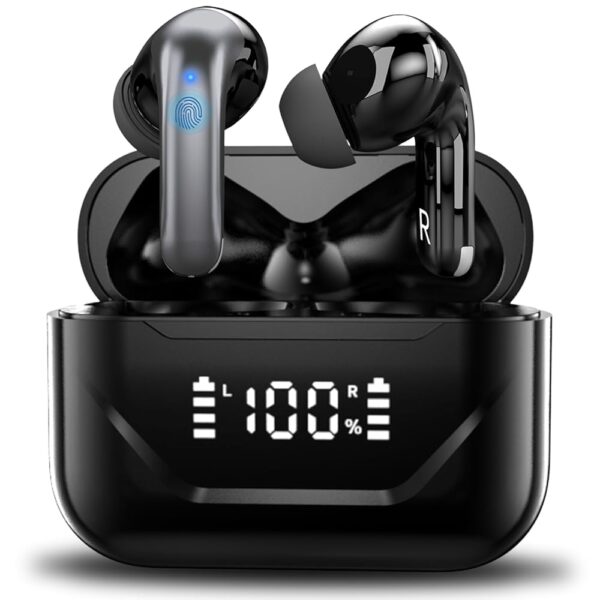
The Electric Whale A17 Pro is a sealing in ear true wireless set on Bluetooth 5.4, one of the newest radios in this catalog, with 13 mm double layer drivers, three ear cap sizes and full touch control including volume. It is also one of the few listings here that attaches a decibel figure to its noise reduction claim, which is worth examining closely, and one that publishes three different battery totals across three places.
Who this suits
This is a general purpose bud. Electric Whale names music, calling and gaming as the recommended uses, and the physical design supports the first two: each earbud weighs 4.2 grams, the case is 50 grams, and three silicone ear caps in small, medium and large ship in the box. There is no hook and no wing, so retention depends entirely on the tip seal, which limits how much movement it will tolerate. Commuting, calls and desk work are the natural fit.
Because the tips seal the canal, awareness of surroundings falls and no transparency mode is published to restore it. That rules out road running and cycling in traffic. Anyone who needs to hear a vehicle should be shopping the clip and hook designs in the open ear headphone category. In noisy places a sealed bud also tempts the listener to raise the level until the music beats the room, and sustained high volume is the ordinary route to hearing damage that gives no warning while it happens.
Connection: Bluetooth 5.4, and no codec named
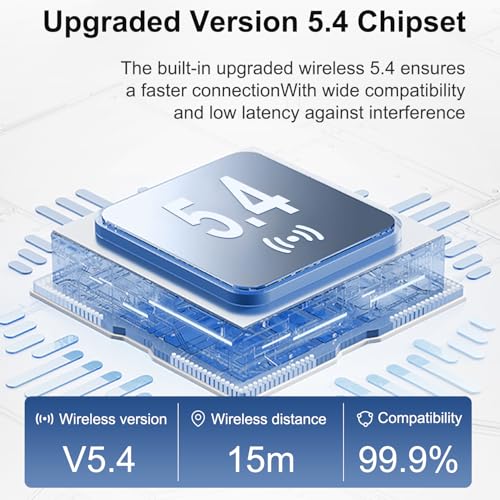
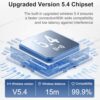
Bluetooth 5.4 is the most recent version in this part of the catalog and it is a genuine advantage over the 5.0 and 5.2 radios on several neighboring products. It brings incremental improvements in connection stability and power efficiency over 5.3 and continues the LE Audio groundwork. It does not raise audio quality on its own, and the first bullet’s claim that 5.4 provides a high quality bass stereo experience asks a radio specification to carry an audio claim.
Gaming, latency and the codec gap
Gaming appears in the recommended uses field with nothing behind it. There is no latency figure in milliseconds, no low latency or gaming mode, and no low latency codec named. No codec is named anywhere in this listing, so SBC is the only one a buyer can rely on, and SBC carries the highest latency of the common options. Buyers who want a codec they can verify against their own phone should compare the EarFun Air Pro 3 review, which names aptX Adaptive and states the source device requirement openly. Multipoint pairing, wear detection and app support are all absent from this listing.
The 25 dB figure, and what it actually applies to
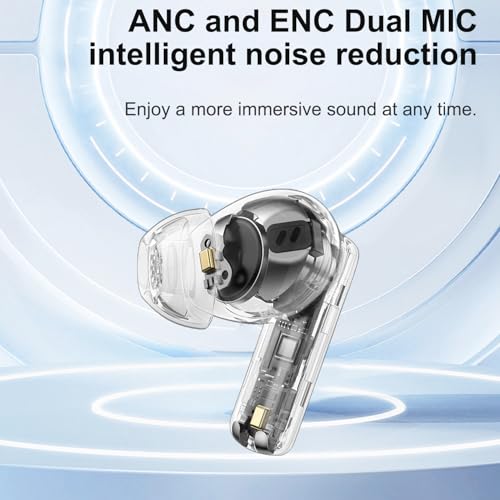
The product title advertises a 25 dB ENC noise canceling microphone. A specific number is rare here and deserves credit, but it needs two qualifications.
The first is what it applies to. ENC stands for environmental noise cancellation and it processes the outbound microphone signal, so that the person on the other end of a phone call hears the speaker rather than the street. The 25 dB reduction is applied to the call audio being transmitted. It does nothing to reduce what the wearer hears during music playback. The structured Noise Control field records Active Noise Cancellation, which describes an entirely different technology aimed at the wearer, and nothing in the feature bullets supports that description. We are naming the contradiction rather than resolving it.
The second qualification is that no test standard is named. A decibel reduction figure only means something relative to a defined measurement method, a defined noise profile and a defined frequency band, and none of those is given here. Treat the number as manufacturer stated rather than verified. Buyers who want cancellation aimed at the wearer should compare a set that documents it, such as the Skullcandy Sesh ANC review.
Battery: three totals in three places
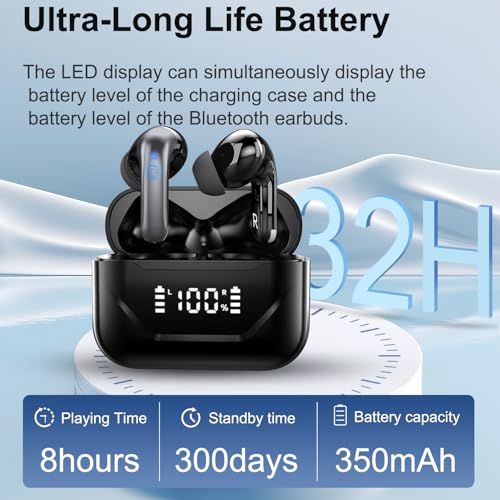
The product title says 45 hours of playtime. The third bullet is headed 32H playtime and then states that the buds last 8 hours from a single charge and the case provides an extra 32 hours. Eight plus thirty two is 40, not 45 and not 32. There is no Battery Life field in the structured specification at all, so nothing arbitrates between them.
Three numbers, none of which reconcile. What is stated consistently and most usefully is the bud runtime: 8 hours from a full charge, which is a competitive figure and the one that actually governs a commute, a flight or a workday. Treat the total as somewhere in the region of 40 hours and treat the 45 hour headline as unsupported. All playtime figures in this category are best case ratings taken at moderate volume, and there is no cancellation circuitry here to drain the reserve further. No case capacity in milliamp hours and no charging time are published, and no fast charge claim is made.
Fit, controls and the IPX5 rating
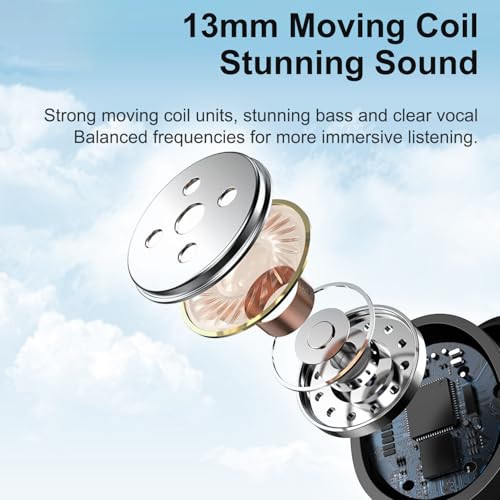
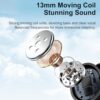
Three ear caps ship in the box in small, medium and large. Tip fit is the specification with the largest practical effect on how a sealing earbud sounds, because a leaking seal drains low frequency energy and leaves the result thin and bright regardless of what the driver measures. The driver is 13 mm with a double layer diaphragm, a reasonable size for this shape, and the frequency range is the standard 20 to 20,000 Hz span, which conveys nothing about tuning. No impedance or sensitivity figure is published.
Controls are touch panels on both buds, with a documented gesture set covering volume up and down, play and pause, previous and next track, call handling and voice assistant. Volume control on the bud itself is not universal at this end of the market and is genuinely useful.
The water rating is IPX5 according to the product title, while the structured Water Resistance Level field says only Water Resistant. IPX5 covers low pressure water jets from any direction, which in practice means sweat and rain. It does not cover immersion, so these should not go near a shower, a pool or a sink. Electric Whale avoids the word waterproof, which is more careful than most listings here manage. No IP rating covers seawater or high pressure water in any case, and seals degrade as they age and as sweat salt accumulates.
Data notes and alternatives
The manufacturer is recorded as Shenzhen Chaoyasi Electronics Co., Ltd., which is an unusually specific and transparent entry for this catalog; most listings here record a brand name in the manufacturer field. A Theme field holds the values Tech and Modern. Item weight of 4.6 ounces describes the shipped package rather than the 4.2 gram buds. Electric Whale states a 4.1 out of 5 average across 37 ratings, a small sample that should not carry much weight, alongside an Amazon rank of 14,753rd in Electronics.
Buyers who want a compact sealing bud with a published codec and a consistent battery figure should compare the Sony WF-C510 review or the Soundcore Life P2 Mini review. More sealing designs sit in the true wireless earbud listings.
Who should buy it and who should not
Buy the Electric Whale A17 Pro if you want a current Bluetooth 5.4 radio, 8 hours per charge, three tip sizes and full touch control including volume, and if calls in noisy places are a priority. Skip it if you want cancellation aimed at your own ears rather than at the caller, a named codec, a latency figure for gaming, or immersion resistance, since IPX5 does not provide it. Ask the seller which total playtime figure is current before ordering, because the listing publishes 45, 40 and 32.