

Description
What a semi in-ear design actually changes
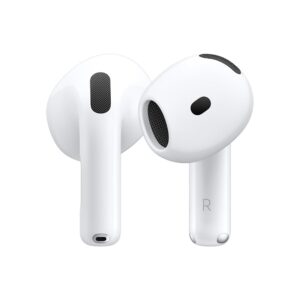
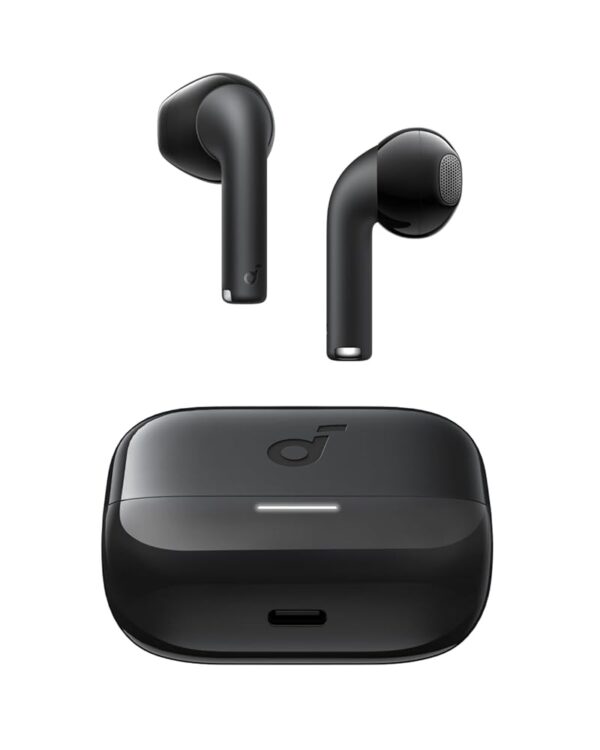
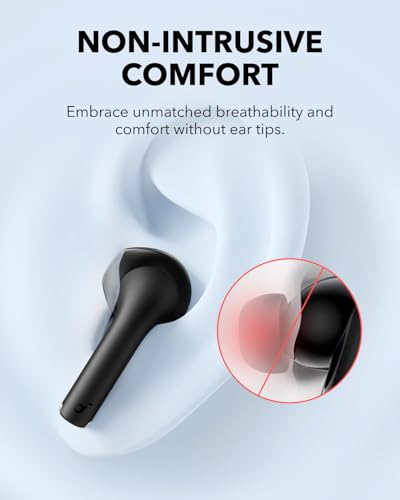
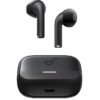
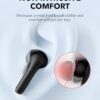
The Soundcore K20i is a semi in-ear earbud, and Anker states the consequence plainly in its own bullet: these stay secure in your ears without the need for ear tips. That single sentence is the most important thing on the listing. A semi in-ear bud rests at the entrance of the ear canal rather than sealing inside it, in the same manner as standard Apple AirPods and their unsealed shape.
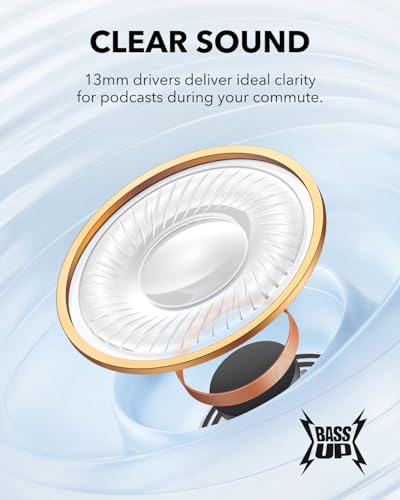
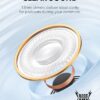
What that buys you is comfort. There is no pressure, no plugged feeling, no occlusion effect when you walk, and nothing to lose or replace since there are no tips. What it costs you is bass and isolation, both of which depend on a sealed volume of air between the driver and the eardrum. Anker’s own positioning acknowledges this: the second bullet describes the 13mm driver and BassUp technology as ideal for podcasts, which is an honest way of pointing a product at spoken word rather than at bass heavy music. The published rating is 4.0 out of 5 across 2,442 ratings, and the listing places the model 427th in the earbud and in-ear headphone category. It first appeared in July 2024 under model code A3994.
Where the specification contradicts the design
Several fields on this page describe a different product from the one the bullets describe. Noise Control reads Sound Isolation, which a design with no seal cannot deliver. Ear Placement and Form Factor both read In Ear, and Earpiece Shape reads Rounded Tip, all of which point at a sealing bud rather than a semi in-ear one. The bullets are the more credible source here, because they describe the design in specific terms and explain why there are no ear tips.
Connection and codecs
The specification gives Bluetooth 5.3, with the range field reading 1E plus 1 Meters, which is scientific notation for 10 meters. Bluetooth 5.3 governs connection stability and power efficiency rather than sound quality.
No audio codec is named anywhere on this listing. SBC is the guaranteed baseline, AAC is unconfirmed, and neither aptX nor LDAC is claimed. That is a notable difference from Anker’s own Liberty 4 NC, which names LDAC explicitly, and it means nothing here supports a high resolution or lossless description. Multipoint pairing is not mentioned. Compatible Devices reads simply Bluetooth-enabled devices, which is a non answer.
What is genuinely on offer is app control. The Soundcore app provides 22 equalizer presets plus a custom equalizer, and a Game Mode described as reducing latency for footsteps and gunfire, though no latency figure in milliseconds is published anywhere to support it. Calls are handled by a dual microphone ENC system with what Anker calls AI powered noise reduction, which works on the outgoing signal so callers hear less of your surroundings. It does nothing to quiet the world for you, and there is no active noise cancellation on this model.
Battery, and the number Anker did not publish
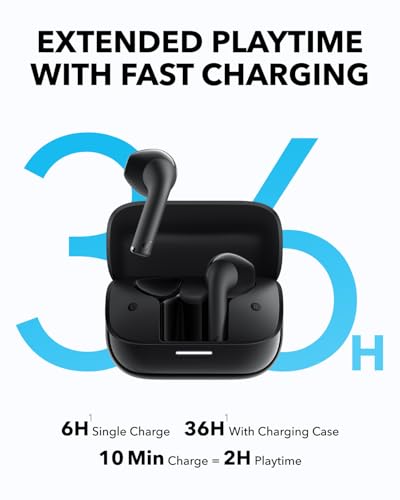
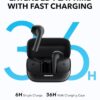
This is the weakest disclosure on the page. The Battery Life field says 36 hours and the bullet says up to 36 hours of music with the charging case. Nowhere does Anker publish the bud runtime on a single charge. That omission is conspicuous, because Anker publishes both figures on its higher end products, quoting bud and case runtimes separately and even splitting them by cancellation mode. Here you get only the combined total.
The one charging figure given is a ten minute quick charge returning an additional 2 hours of playback, which is useful. The Charging Time field reads 1E plus 1 minutes, which is scientific notation for 10 minutes, and that is the quick charge duration rather than a full charge cycle. The full charge time is not published either. Anker quotes 3.3 grams per earbud, and the item weight figures of 0.1 pounds and 1.6 ounces agree with each other and describe the packaged set.
Fit, controls and the water rating
Fit is the whole argument for a semi in-ear design and there is nothing to size. That removes the tip count question entirely, and it is genuinely one of the format’s advantages: nothing to buy, nothing to lose, no wrong size. It also means fit varies by ear shape rather than canal size, and semi in-ear buds are the shape most likely to work loose during vigorous exercise, since there is no seal holding them in. If you have found AirPod style buds fall out, this shape will behave the same way.
The water rating appears only in the product title, as IPX5. The Water Resistance Level field says nothing more than Water Resistant. IPX5 would mean protection against a low pressure water jet from any direction, which covers sweat and rain and stops well short of immersion. It is not waterproof. Because the code appears in the title alone with no supporting specification entry, treat it as a claim to verify rather than a published rating. No IP code covers seawater, chlorinated pool water or pressurized hot water, the X means no dust testing was performed, and seals degrade with age.
One field is unusable and should be ignored outright. Frequency Range reads 20 Hz to 4 kHz, followed by the word estimated in parentheses. A headphone that stopped at 4,000 Hz would reproduce almost no treble at all and would sound like a telephone. Impedance is listed as 16 ohms, which is normal and plausible.
One more thing the listing does not address is call performance beyond the ENC mention. No microphone count is given, and on a semi in-ear design the microphone sits further from your mouth than it does on a sealed bud that anchors in the canal, so more of the room around you reaches it. Anker describes AI powered noise reduction but publishes no detail about how many microphones do the work. For a product positioned partly at podcasts and meetings, that is a gap worth noting, and it is the sort of thing Anker documents properly on its more expensive models.
What else to consider
If the semi in-ear shape is the appeal, that is the specification to compare on rather than the feature list. If you would rather have a sealed fit from the same brand, the Soundcore A20i and the Soundcore Life A1 with a 40 hour case total sit nearby, and the Soundcore P40i with adaptive cancellation is the step up if blocking noise matters. Browse the true wireless earbud section and the wider in-ear headphone listings for the rest.
Who should buy it, who should not
Buy it if sealed earbuds are uncomfortable for you, if you listen mostly to podcasts and spoken word, and if app based equalizer control at a low price appeals. Skip it if you want deep bass or any isolation, because the unsealed design cannot provide either. Skip it if you need to know your per charge runtime before buying, because Anker publishes only the 36 hour combined figure here, and treat the IPX5 rating as a title claim to confirm rather than a documented specification.