
Description
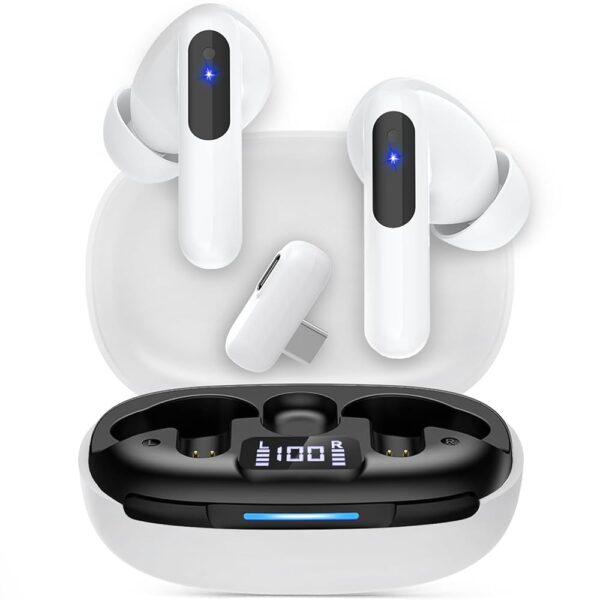
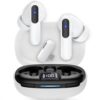
The RYR Neo100 is a gaming oriented true wireless earbud built around something most earbuds in this catalog do not have: a 2.4GHz USB-C dongle running alongside a Bluetooth 5.3 radio, with both connections active at the same time. That dual radio arrangement is the entire reason this product exists, and it addresses the one problem that makes ordinary Bluetooth earbuds frustrating for gaming. Whether the rest of the listing supports the price is a separate question, and the specification data here is among the more keyword stuffed in the catalog.
Who this is for, and the one real technical advantage
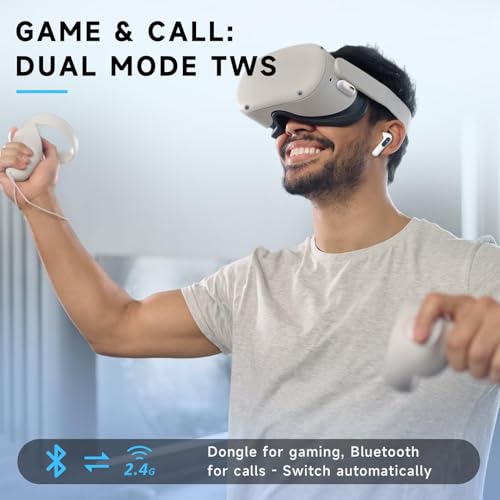
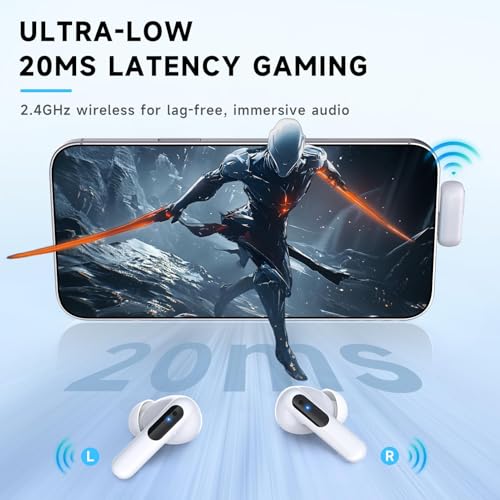
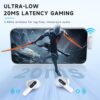
RYR names Meta Quest 3 and Quest 2, PC, PS5, PS4, Steam Deck and Switch as target platforms. The dongle is the mechanism. A 2.4GHz proprietary link plugged into the console or headset carries audio on a dedicated radio path rather than through the Bluetooth stack, and it is the standard approach for wireless gaming headsets because it sidesteps Bluetooth’s latency entirely.
The latency claim is under 20 milliseconds, and the specification field agrees, listing Audio Latency as 20 milliseconds. Those two figures at least match each other, which is more consistency than most listings here manage. Twenty milliseconds is low enough that audio and picture read as synchronized, which matters most in VR where a mismatch between a sound and its visual source is disorienting rather than merely annoying. For comparison, standard Bluetooth audio latency typically runs several times that.
The dual connection is the other genuine feature. RYR describes running the dongle to a console and Bluetooth to a phone simultaneously, so a call can be answered without leaving the game. That is a real convenience and it is not common at this price.
The 2.4GHz path sidesteps the codec question entirely
No Bluetooth codec is named anywhere on this listing. For the Bluetooth connection, that means SBC is the baseline assumption and nothing further can be inferred, so no high resolution claim can be supported for phone use. On the dongle connection the question is different, because a proprietary 2.4GHz link does not use Bluetooth codecs at all. RYR publishes nothing about the sample rate, bit depth or compression used over the dongle either, so the honest position is that audio quality over both paths is undocumented.
Battery: figures that reconcile, unusually
RYR publishes both numbers a buyer needs and they add up. Each earbud is stated to last 8 hours on a single charge. The 500 milliamp hour case is stated to provide 3.5 additional full charges. Eight hours multiplied by four and a half total charges gives 36 hours, which is exactly the total advertised and exactly what the Carrying Case Battery Average Life field records. Case charging time is listed as 90 minutes.
Eight hours from a bud is a solid figure. The usual caveat applies, that quoted playtime assumes a moderate volume and a single connection, and it is worth adding a caveat specific to this product: running the 2.4GHz radio and the Bluetooth radio simultaneously will draw more power than either alone, and RYR does not publish a runtime figure for dual connection use. Assume less than 8 hours when both links are active.
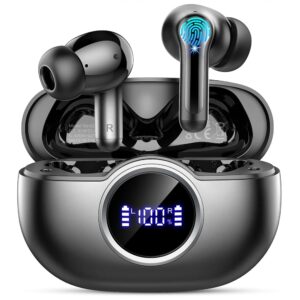
A dual LED display inside the case reports the charge level of the case and each earbud numerically, counting from 1 to 100 while charging. That is a practical touch that removes the guesswork of indicator lights.
Fit, water resistance and a rating that is not waterproof
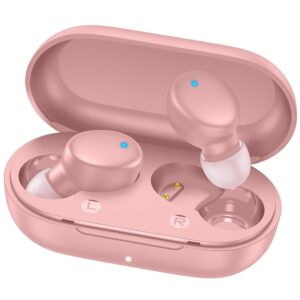
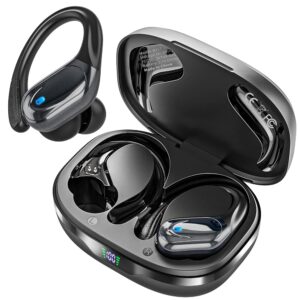
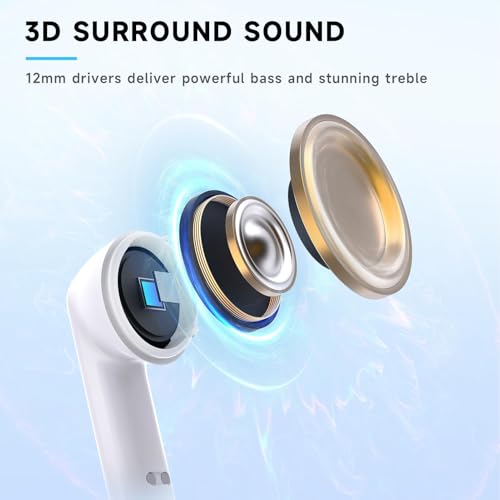
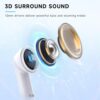
Three ear tip sizes are listed in the included components, which is the standard set and covers the seal question. That matters because this is a sealed in ear design and the seal is what produces the bass from the 12mm triple layer composite diaphragm drivers. A tip that leaks makes any earbud sound thin, and no amount of driver quality compensates. Controls are touch based on either bud, covering track changes, calls and switching between the two connections.
The water rating is IPX4, stated in the feature bullet, and the listing calls it IPX4 waterproof. It is not. IPX4 means protection against splashing water from any direction. It covers sweat and light rain during exercise, and that is the correct way to describe it. It does not cover immersion, showering or swimming, and this product should never be described as waterproof. The specification field is more accurate than the bullet, reading simply Water Resistant. Note also that the X in IPX4 means no dust rating was published, that no IP rating covers seawater or pressurized water, and that seals degrade with age and with debris around the acoustic mesh.
Being a sealed design with only passive isolation and no transparency mode, this is not appropriate for road cycling or road running. Its intended environment is a chair in front of a screen, which is where the dongle needs to be anyway.
The hearing safety note, and the junk in the specification block
The age range field reads adult, teen and kid. Nothing on this listing describes a volume limiter, a safe listening mode or a maximum output figure, and gaming sessions are typically long. A sealed earbud in a room with other noise invites the listener to raise the volume, and long sessions at high volume are the pattern to avoid. We are not going to describe this or any product as safe for a child’s hearing, because nothing published here would support that. If the buyer is a parent, the volume control lives on the source device and on the earbud, and neither is locked.
Several specification fields on this page contain keyword strings rather than data. Sensitivity is listed as 2.4 GHz, which is a radio frequency filed into an audio sensitivity field and is meaningless. The Cartoon Character field contains the string gaming earbuds, ps5 earbuds, VR earbuds, meta quest3 headphones. The Theme, Style, Customer Package Type and Recommended Uses fields all hold similar keyword lists. Frequency Response is given as 20 KHz, a single number rather than a response, while Frequency Range separately reads 20 Hz to 20,000 Hz. Included Components lists a charging cable, three ear tips, a manual, a transmitter and a C to A adapter, but does not list the charging case itself, despite the case being described in detail in the bullets. Item weight of 5.6 ounces is the packaged figure, with the case listed separately at 41.28 grams. Impedance at 32 Ohm and the 12mm driver size are the only audio figures here that look plausible.
What to compare it against
The direct comparison is other gaming focused wireless audio rather than other earbuds. The JBL Quantum TWS and the Asus ROG Cetra are the branded earbud alternatives in this catalog, both from manufacturers with established support paths. If the form factor is negotiable, a full size wireless gaming headset such as the Astro A20 Gen 2 or the Turtle Beach Stealth 700 Gen 2 Max will generally offer a better microphone and longer runtime for the same money, and those sit in our wireless headphones category. For everyday listening away from a console, the sealed designs in our wireless earbuds category cover the same ground without the dongle.
Who should buy it, who should not
Buy it if you play in VR or on a console and want earbuds rather than a headset, and if low latency is the specific problem you are solving. The 2.4GHz dongle is the real feature, the sub 20 millisecond figure is stated consistently in two places, the dual connection is genuinely useful, and the battery arithmetic reconciles. The rating stands at 4.4 out of 5 across 755 ratings, placing it 461st in earbud and in ear headphones.
Do not buy it as a general purpose earbud, because on Bluetooth alone it offers no codec information, no active cancellation, no app and no multipoint beyond the dongle pairing. Do not read IPX4 as waterproof. Do not expect the 8 hour runtime to hold with both radios running. And treat the specification block on this listing as largely unusable, because much of it is keyword text rather than measurement.